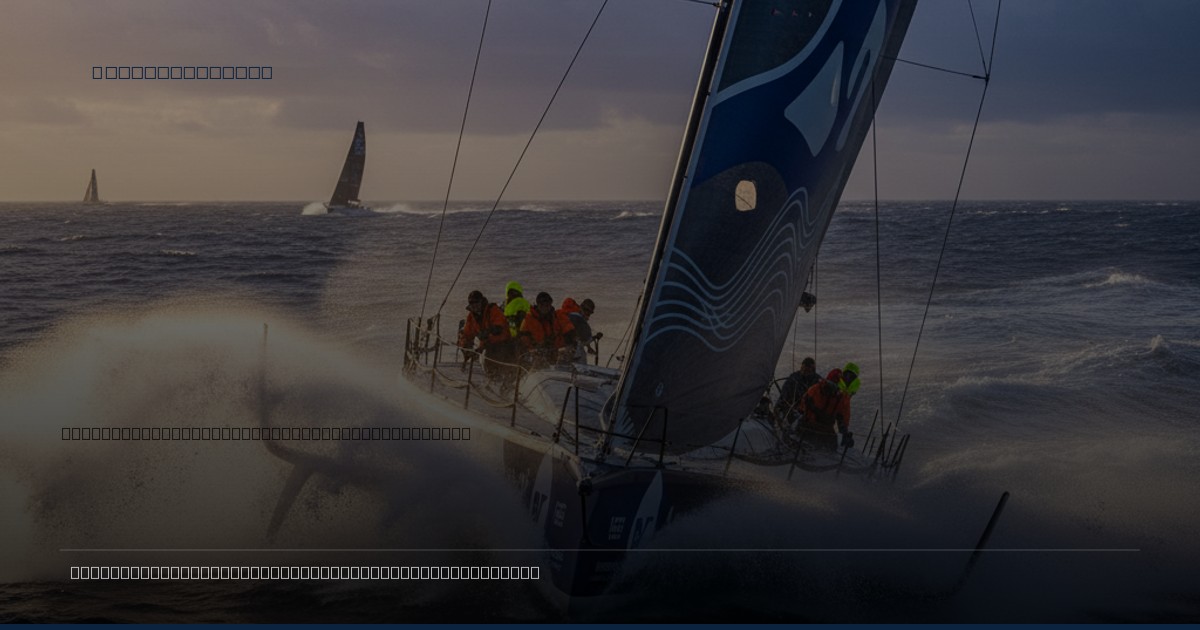
In an era where the wake left by our sport extends beyond the transom to encompass our environmental impact, the Class40 association has announced a notable, if incremental, step forward. Their latest audit reveals a 2025 carbon footprint of 1,780 tonnes of CO2e, representing a 6.26% reduction in just two years. This progress, while not a silver bullet, aligns with the ambitious targets laid out by the Paris Agreement, and it’s a conversation starter for the broader grand prix circuit.
For those of us who’ve seen the oceans change over decades, this commitment from a class as vibrant and accessible as the Class40 is significant. Unlike the America's Cup, where the sheer R&D and logistical demands of a $100M campaign make carbon reduction a monumental task, the Class40 operates on a more constrained budget, highlighting the ingenuity required to achieve these gains. We’re talking about optimizing logistics, scrutinizing material choices – from the resins in the hull to the fibers in a North Sails main – and a conscious effort to minimize air freight for spares from suppliers like Harken or Southern Spars.
While a 6.26% drop might seem small to some, it’s a hard-won victory in a sport inherently reliant on global travel and specialized manufacturing. It sets a precedent, demonstrating that even without the colossal budgets of a SailGP team or The Ocean Race, tangible reductions are achievable. The challenge now is to accelerate this trajectory, to push beyond the low-hanging fruit and truly integrate sustainability into the very fabric of competitive sailing, from design to delivery. The ocean is our playground; we owe it more than just our respect on the racecourse.