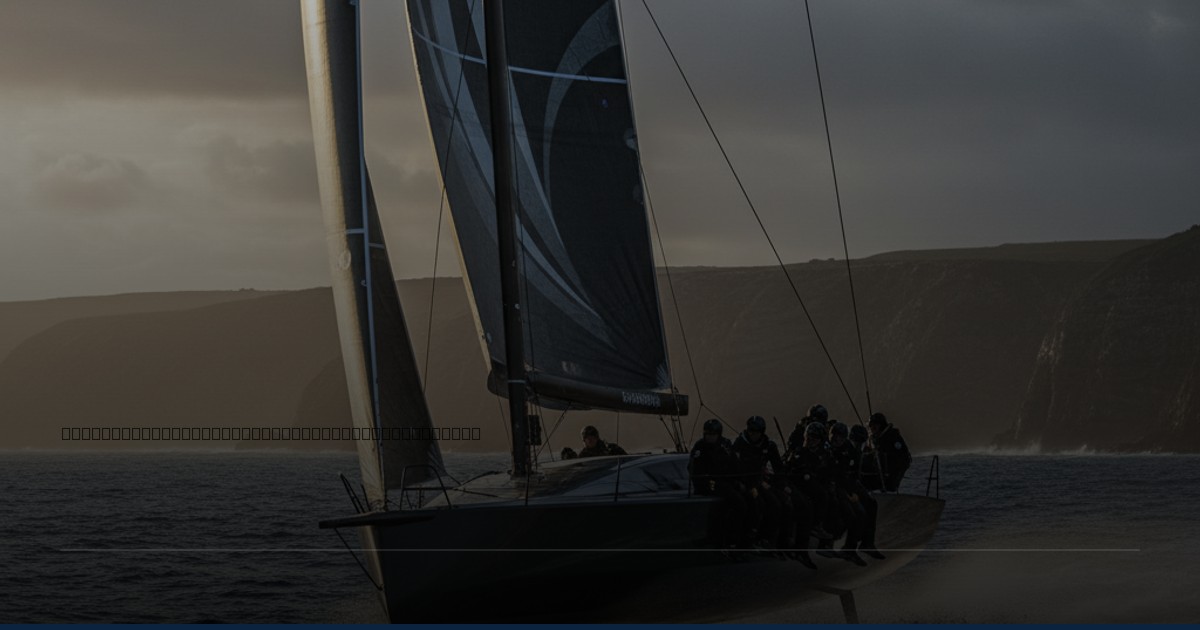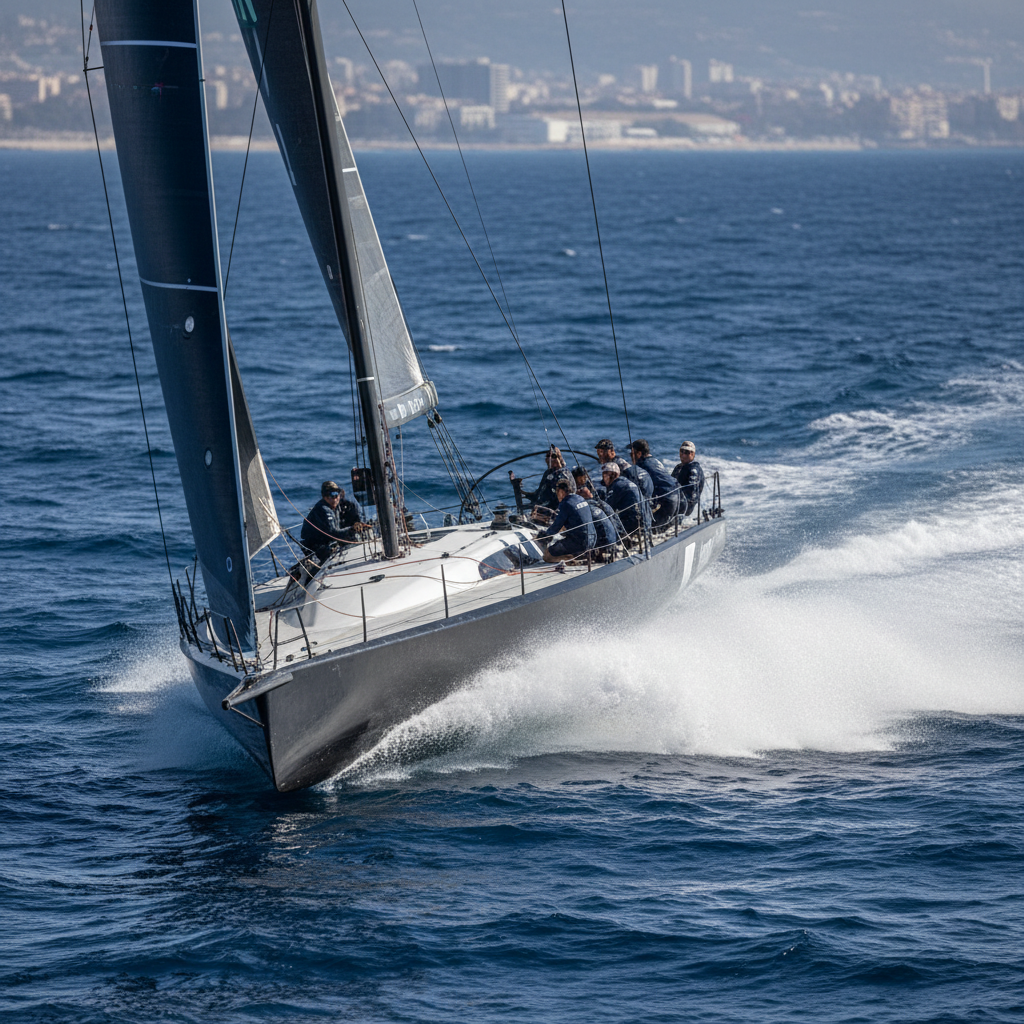
For decades, the pursuit of speed offshore has largely been an exercise in refining the pointed bow, slicing through waves with elegant, if sometimes punishing, efficiency. But as Louay Habib's report for Yachting World highlights, the Mach 50 Palanad 4 is throwing that playbook overboard, quite literally, with its unapologetically blunt scow bow. This isn't just a design tweak; it's a fundamental reimagining of what a 50-foot offshore racer can be.
The scow concept, long a staple of smaller, dinghy-style boats for its immense power and stability, is now being scaled up with Palanad 4. The immediate visual impact is striking – a vessel that looks less like a sleek offshore greyhound and more like a marine bulldozer. But beneath the unconventional aesthetics lies a calculated gamble on performance. The increased volume forward promises greater buoyancy and lift, potentially allowing the boat to plane earlier and maintain higher average speeds in a broader range of conditions, particularly off the wind.
This radical departure is bound to ignite debate within the IRC community. Will the raw power and stability of the scow outweigh potential penalties in light air or upwind performance? The IRC rule, with its complex algorithms, has historically favored more traditional hull forms. However, if Palanad 4 delivers on its promise of sustained high-speed offshore, it could force a re-evaluation of design priorities and even prompt adjustments to rating systems. This isn't just a new boat; it's a gauntlet thrown down to naval architects and race organizers alike, daring them to consider a future where the blunt end leads the charge.