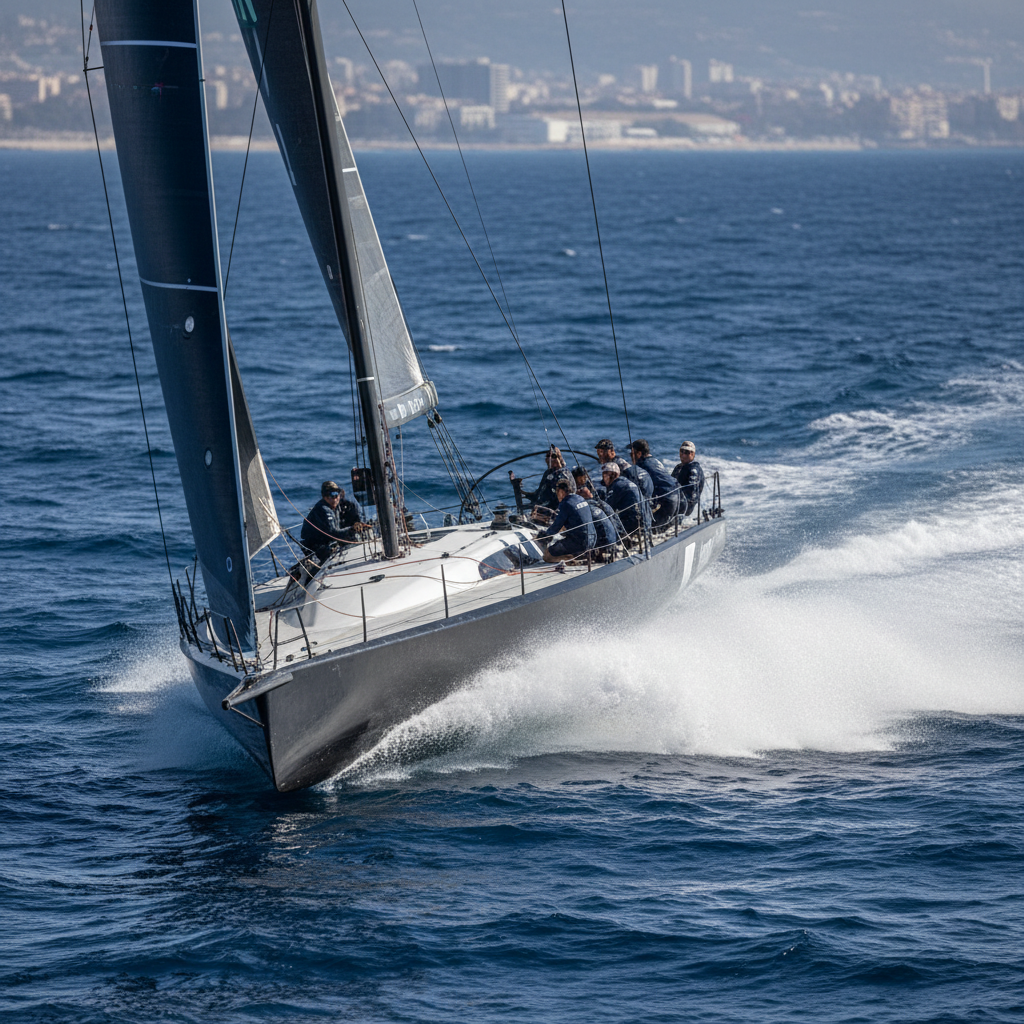
Barcelona, Spain – The ever-watchful eyes of the America's Cup reconnaissance teams were fixed on Emirates Team New Zealand this past Wednesday, as the defenders continued their second block of crucial testing aboard their AC75, 'Te Rehutai'. What began as a whisper of a breeze in the early hours steadily built into a respectable 15 knots by midday, offering the Kiwis a perfect canvas of flat water to put their foiling package through its paces.
For those of us who've tracked these campaigns for decades, observing the subtle nuances of these early test sessions is akin to reading tea leaves. The recon footage, coupled with post-session interviews, provides invaluable intel. While the specific data points remain closely guarded secrets within the ETNZ camp, the visual evidence suggests a focused effort on optimizing their foil designs and control systems. In conditions like Wednesday's, where the wind offers enough grunt to get airborne but the sea state remains benign, teams can truly push the envelope on foil efficiency and stability – critical factors for sustained high-speed flight.
The AC75s, with their colossal Southern Spars rigs and intricate Harken hydraulic systems, are a ballet of engineering and athleticism. Every adjustment, every trim, speaks volumes about a team's strategic direction. The Kiwis, known for their innovative approach to hydrodynamics and wing-sail development, are undoubtedly refining their 'take-off' and 'touch-down' profiles, as well as their sustained flight efficiency. As the 37th America's Cup draws closer, these recon reports become increasingly vital, offering a rare window into the multi-million dollar chess match unfolding on the waters of Barcelona.