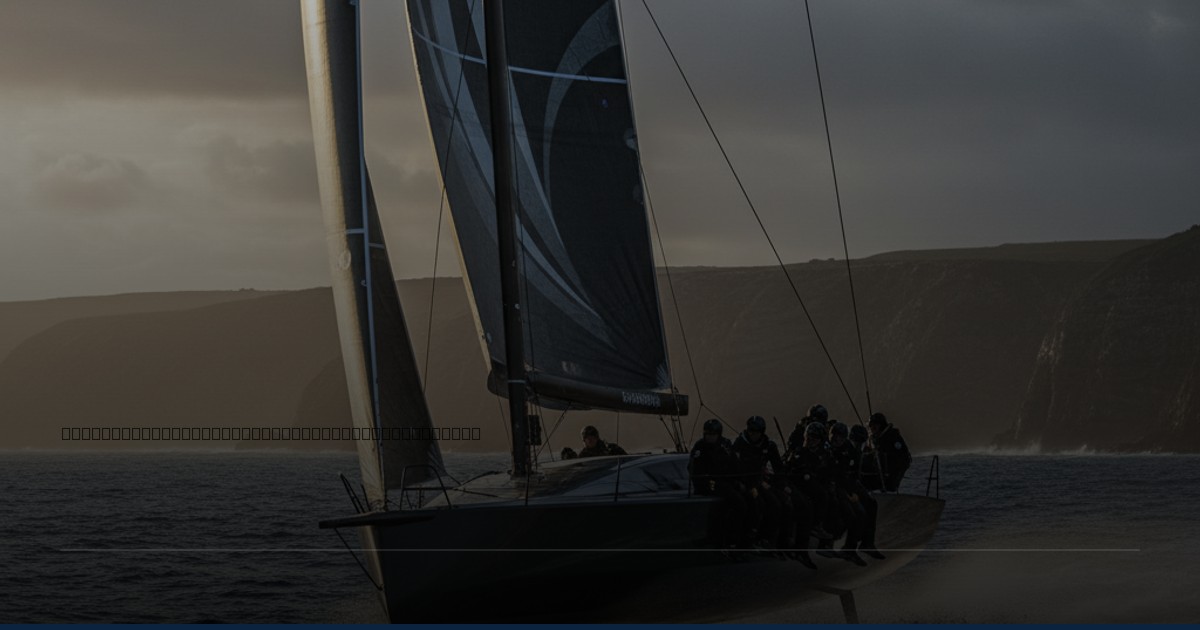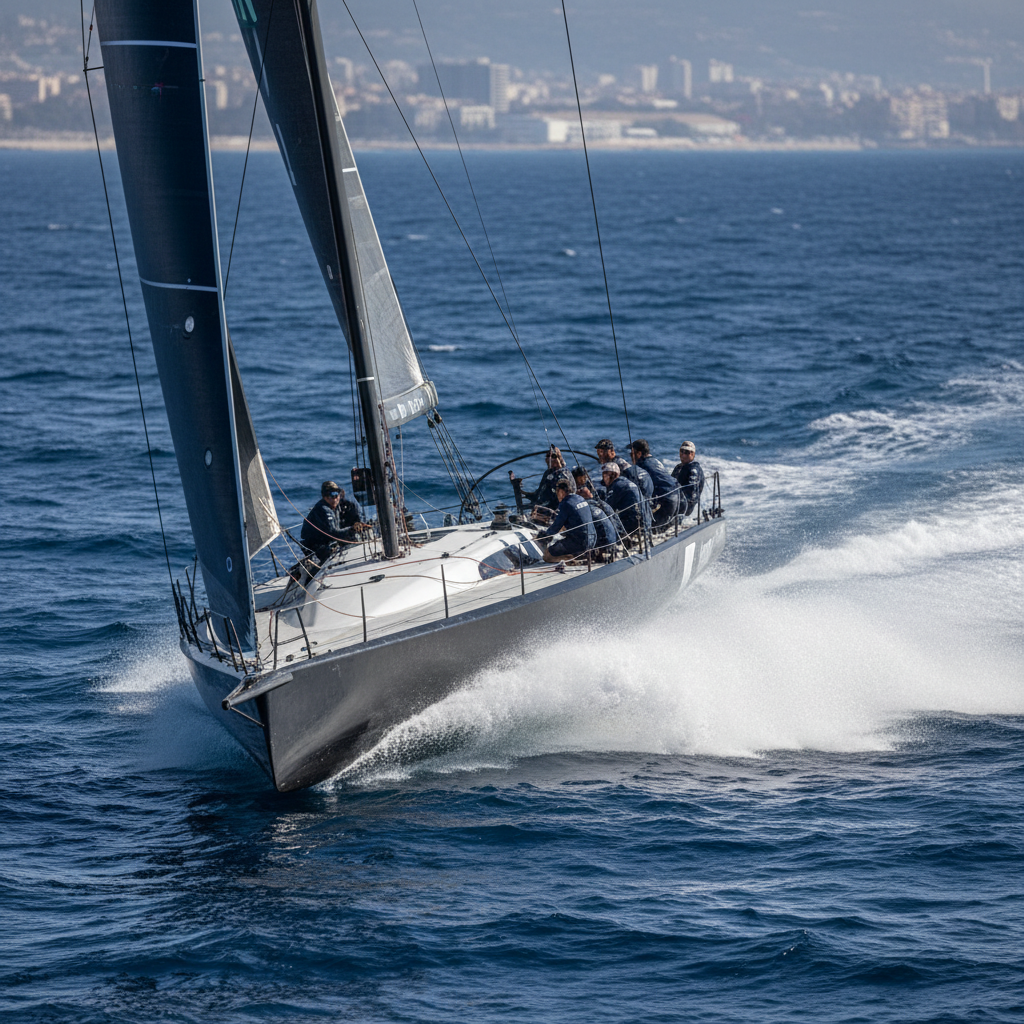
The waters off Auckland were once again the proving ground for Emirates Team New Zealand this past Wednesday, as the defenders of the Auld Mug continued their rigorous second block of testing. What began as a whisper of a breeze, barely enough to ruffle the surface, steadily built throughout the morning into a respectable 15 knots, offering the perfect conditions for their AC75 to stretch its legs on a flat sea state.
For those of us who've witnessed the evolution of these magnificent machines, these recon sessions are gold. Every angle captured by the chase boats, every subtle adjustment by the crew – it all tells a story. While the specifics of their latest foil iterations remain shrouded in the usual America's Cup secrecy, the visual evidence suggests a continued focus on efficiency and control across a broader wind range. The transition from displacement to full foiling, even in the lighter air, appeared seamless, a testament to the meticulous design work coming out of their Auckland base and the expertise of their Southern Spars rig package.
One can only imagine the data flowing back to the design office after a session like this. The interplay between the North Sails wing, the complex hydraulics of the Harken systems, and the nuanced adjustments from the helmsman and trimmers is a symphony of high-performance sailing. The ability to maintain optimal flight in varying conditions, particularly as the breeze built, will be paramount in Barcelona. These early testing blocks are not just about raw speed; they're about understanding the platform's limits and pushing them further, a process that will ultimately dictate the success of their defense against formidable challengers like INEOS Britannia and American Magic.