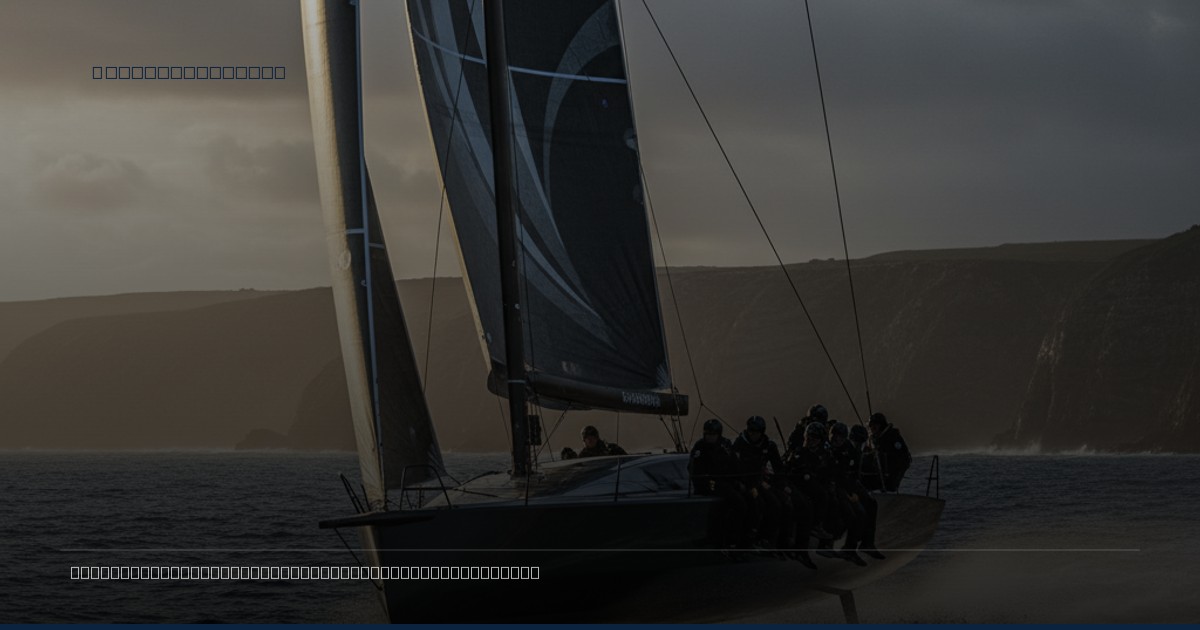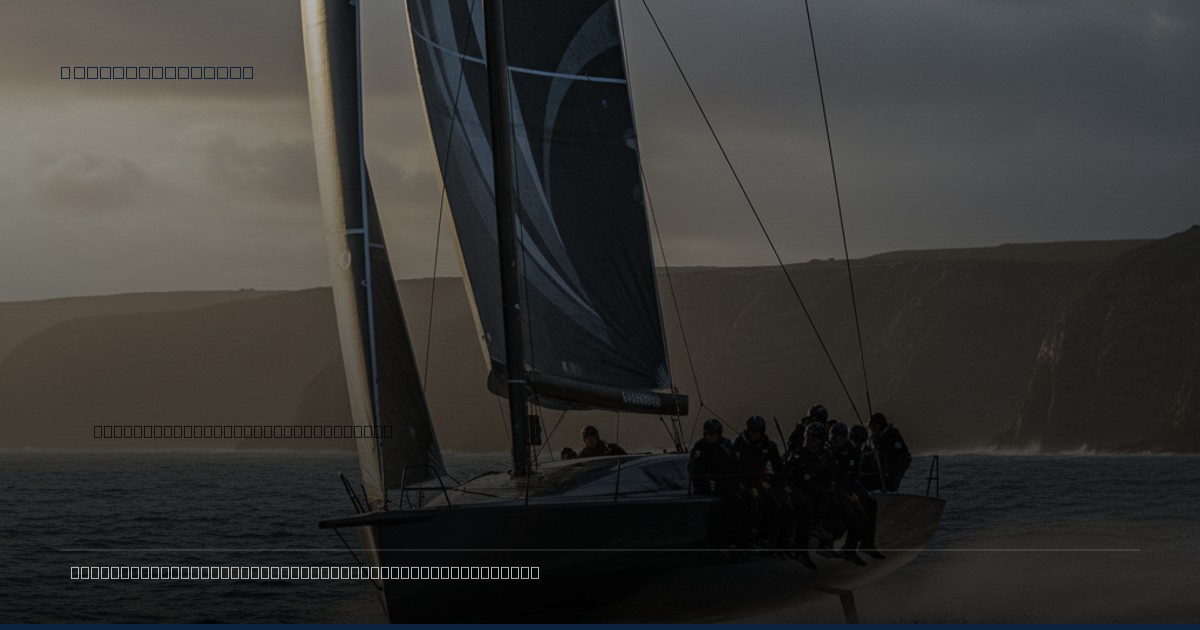
The sailing world is no stranger to radical departures, but the Mach 50 Palanad 4, as reported by Louay Habib for Yachting World, isn't just a new boat; it's a gauntlet thrown. Scaling the scow-bow concept to a 50-foot offshore racer is a bold move, one that immediately conjures images of IMOCA 60s and Mini Transats, not the typical IRC-optimized grand prix monohull.
This blunt-nosed behemoth, designed for raw power and speed, directly confronts the established aesthetic and performance metrics of the IRC rating system. For decades, designers have meticulously honed hull shapes to exploit every nuance of the rulebook, often resulting in elegant, if sometimes compromised, forms. Palanad 4, however, seems to declare, 'To hell with compromise.' Its wide, powerful bow promises immense volume forward, translating to lift and reduced pitching in a seaway – a distinct advantage when pushing hard offshore, particularly downwind.
But herein lies the rub for the competitive circuit. Will the IRC rule adequately penalize such a radical departure, or will Palanad 4 expose a loophole, forcing a re-evaluation of how these offshore beasts are rated? The business of grand prix sailing, with its multi-million dollar campaigns and bespoke Southern Spars rigs and North Sails inventories, thrives on innovation. Yet, it also demands a level playing field, or at least a predictable one. If Palanad 4 proves to be a consistent winner, expect a flurry of similar designs, and potentially, a significant shift in the competitive landscape for offshore monohulls. This isn't just about one boat; it's about the evolution of a class and the rules that define it.