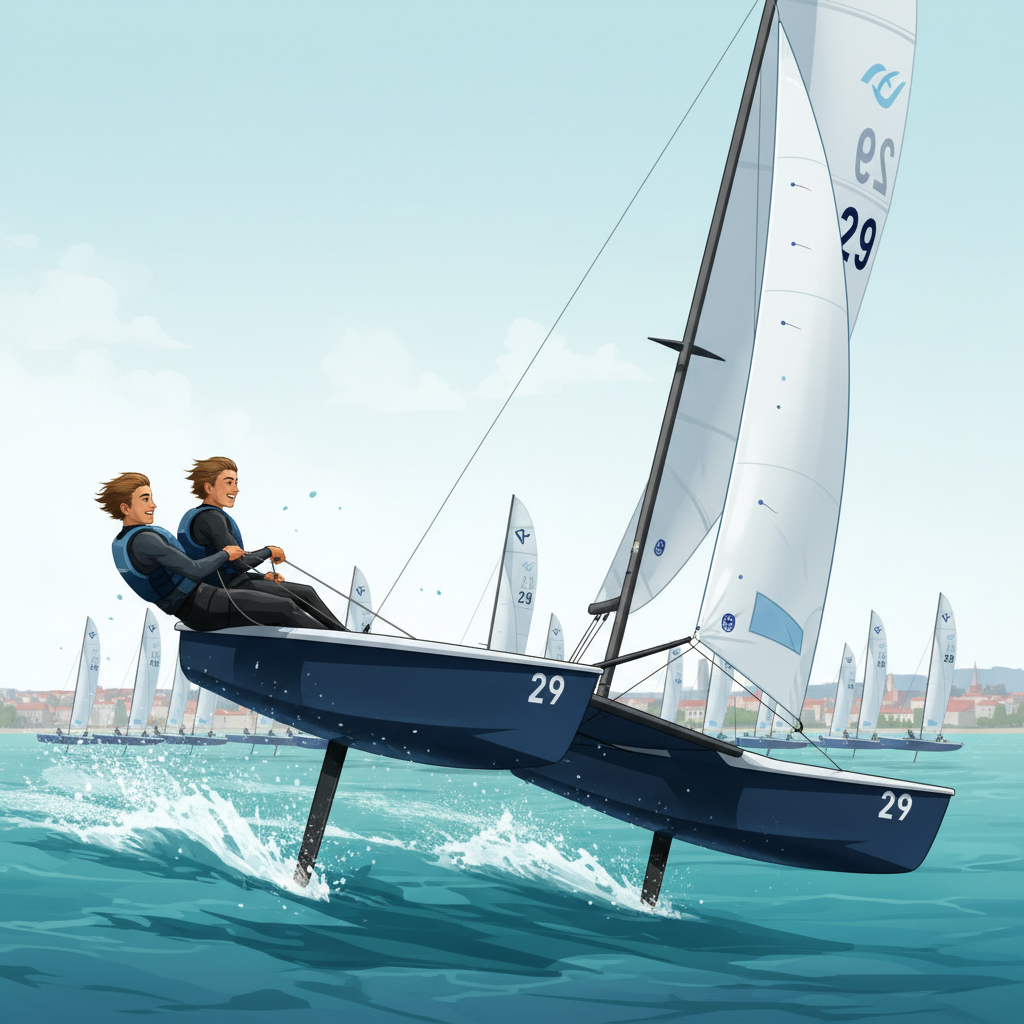
Koper, Slovenia – The Adriatic Sea, often a crucible for emerging talent, once again delivered a compelling spectacle as the 2026 29er EuroCup 3 concluded its four-day run. Ten races were successfully completed, a testament to both the race committee's efficiency and the youthful exuberance of the competitors. While the 29er, with its asymmetric spinnaker and trapeze, is a far cry from the AC75s or SailGP F50s, it remains a vital proving ground, honing the boat handling, tactical acumen, and sheer athleticism required at the pinnacle of our sport.
For those of us who've watched the likes of Peter Burling and Tom Slingsby rise through the ranks, the 29er EuroCup is more than just a series of regattas; it's a scouting report. The precision required to manage a skiff in varying conditions, the quick decision-making under pressure, and the relentless pursuit of speed are all foundational skills that translate directly to the high-stakes world of foiling catamarans and monohulls. We're looking for the sailors who can not only master the boat but also read the wind shifts, understand tidal gates, and execute flawless maneuvers under duress. These are the future helmsmen and wing trimmers of Emirates Team New Zealand, INEOS Britannia, and Luna Rossa Prada Pirelli.
The competitive landscape in Koper was fierce, with every point hard-fought. While specific results are still being digested, the overall impression is one of a deeply talented fleet. The technical demands of the 29er, often rigged with North Sails and Harken hardware, push these young athletes to understand the fine margins of trim and tuning. The lessons learned here, from sail shape optimization to downwind strategy, will be invaluable as they progress to larger, more complex machines. The EuroCup circuit is, in essence, the first rung on a ladder that leads directly to the America's Cup and Olympic glory. Keep these names in mind; we'll be seeing them again.