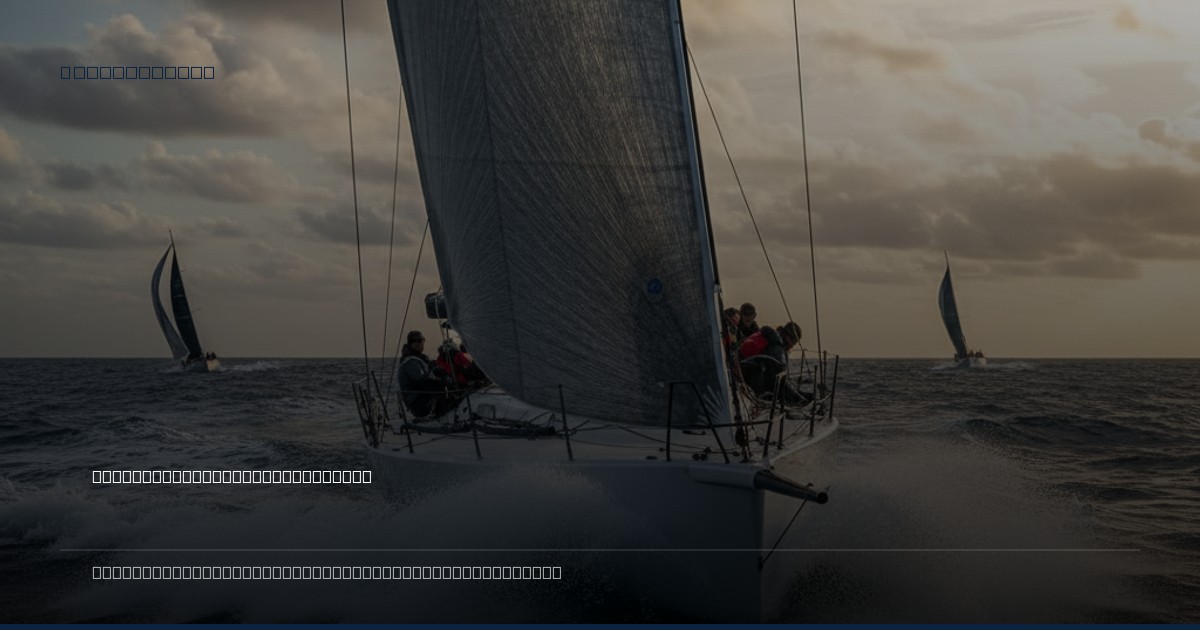
In the cutthroat world of offshore racing, where hundredths of a knot can mean the difference between glory and an also-ran, it's easy to blame soft sails, a heavy boat, or a fickle breeze. But as veteran offshore coach Stuart Greenfield points out, the real culprit for many underperforming teams isn't bad sailing; it's bad data.
Greenfield, whose insights are honed over countless miles and campaigns, often finds a common thread in his initial coaching engagements: teams are looking at the wrong numbers. Or, perhaps more accurately, they're looking at numbers that are fundamentally flawed due to improper instrument calibration and setup. "There is a moment, early in any race-boat coaching engagement, when I know whether I am in for a long haul or a quick fix," he explains. That moment often arrives when he delves into the boat's electronics.
Imagine a state-of-the-art grand prix machine, bristling with Harken hydraulics and a Southern Spars rig, yet its true wind angle is off by five degrees, or its boat speed sensor is consistently under-reading. This isn't just a minor inconvenience; it's a navigational and tactical disaster waiting to happen. How can a navigator accurately plot a weather routing strategy if the boat's polar data is being fed incorrect inputs? How can a trim team optimize for VMG if the apparent wind information is compromised?
The business of competitive sailing, from the America's Cup's multi-million dollar campaigns to the more accessible grand prix circuits, relies on precision. North Sails designs sails with exacting polars in mind, but those polars are useless if the boat isn't accurately measuring its performance against them. Greenfield's message is a stark reminder: before you invest in the next carbon fiber upgrade or a new set of sails, ensure your fundamental data acquisition is beyond reproach. The silent killer of speed isn't a lack of talent, but a lack of accurate information.