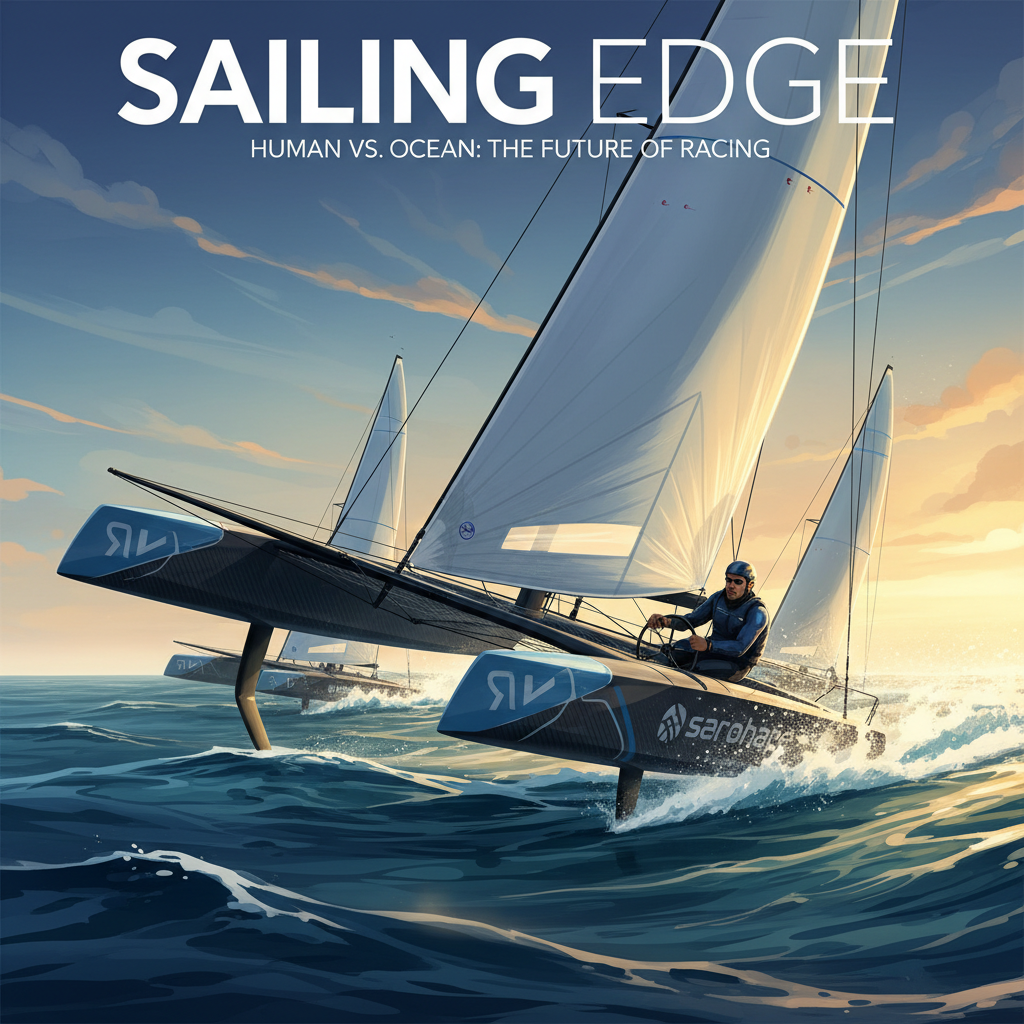
Craig Leweck's recent musings on AI's potential takeover of the Academy Awards hosting duties, while humorous, strikes a deeper chord within the competitive sailing community. If AI can craft a witty monologue, can it also chart a perfect layline, execute a flawless foil-to-foil gybe, or even call the winning shift in an America's Cup match?
The notion isn't entirely far-fetched. We've seen the evolution of weather routing software, from rudimentary GRIB file overlays to sophisticated predictive models that integrate current, wind, and wave data with unprecedented accuracy. Modern grand prix yachts, bristling with sensors from Southern Spars and Harken, generate terabytes of data per race, ripe for algorithmic analysis. Teams like Emirates Team New Zealand and INEOS Britannia already employ data scientists who dissect performance metrics, optimizing everything from sail trim (North Sails' 3Di designs are a prime example) to crew movements.
But the leap from data analysis to autonomous decision-making at 50 knots is monumental. The human element – the gut feeling, the peripheral vision, the ability to read the water and an opponent's body language – has always been paramount. Could an AI truly replicate Ben Ainslie's tactical brilliance or Peter Burling's uncanny boat handling under pressure? The complexity of wind strategy, tidal gates, and the sheer unpredictability of the marine environment present formidable challenges.
While AI will undoubtedly continue to refine performance analysis and potentially even 'coach' sailors in real-time, the idea of an AI-skippered AC75 or Olympic dinghy winning gold remains, for now, the stuff of science fiction. The $100M campaigns aren't just about technology; they're about the human spirit, the relentless pursuit of perfection, and the raw, visceral thrill of competition. Let's hope Conan O'Brien's joke doesn't become our reality on the racecourse.