Craig Leweck's recent Scuttlebutt piece, referencing Conan O'Brien's jest about AI taking over the Academy Awards, struck a chord that resonates deeply within the competitive sailing community. While the image of a Waymo-esque robot accepting an Oscar is amusing, the prospect of an AI-driven strategist calling tactics on an AC75, or even routing a Vendée Globe campaign, is no longer the stuff of science fiction.
We've seen the creeping influence already. Weather routing software, like those used by The Ocean Race navigators, has long been a sophisticated algorithm, but it's still a tool, not the decision-maker. The real question isn't *if* AI will be involved, but *how deeply*. Could an AI, fed terabytes of historical wind data, tidal current models, and real-time sensor input from Southern Spars and Harken systems, predict a wind shift or a tactical opportunity faster and more accurately than even Peter Burling or Tom Slingsby?
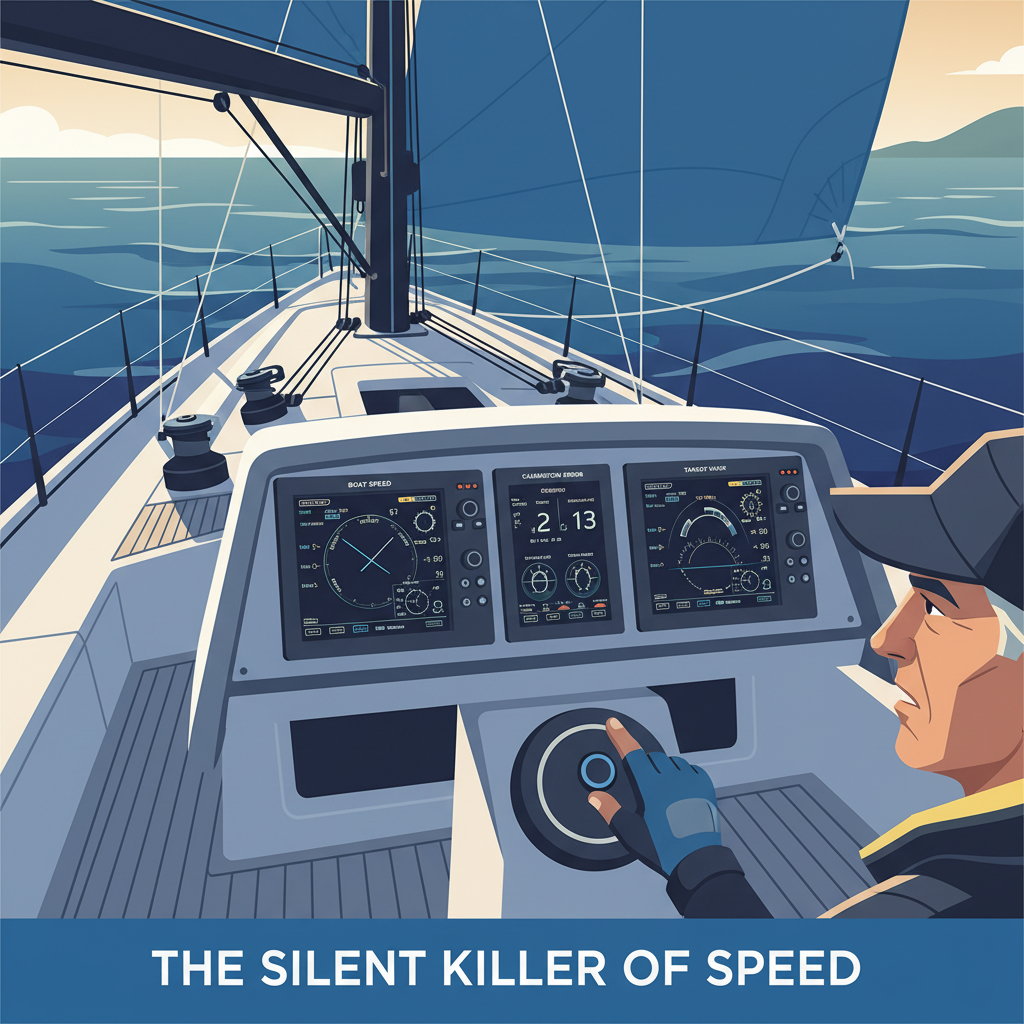
Consider the sheer volume of data points on a modern foiling cat – sail shape, foil angle, boat speed, true wind, apparent wind, VMG. An AI could process this instantaneously, optimizing trim and trajectory with precision a human could only dream of. Teams like Emirates Team New Zealand and INEOS Britannia already employ vast data analysis departments. The leap to an AI making real-time, autonomous tactical calls, perhaps even overriding a human skipper in critical moments, is a logical, albeit unsettling, progression.
The America's Cup, a crucible of innovation where $100 million budgets fuel technological arms races, is fertile ground for such advancements. Imagine an AI, having 'raced' a million virtual scenarios, making the call at the pre-start, or identifying the optimal layline through a complex tidal gate. The human element – the gut feeling, the psychological warfare, the sheer artistry of a Ben Ainslie or Jimmy Spithill – is what defines our sport. But as Conan O'Brien quipped, sometimes the future arrives whether we're ready or not. The algorithmic helm might just be closer than we think.