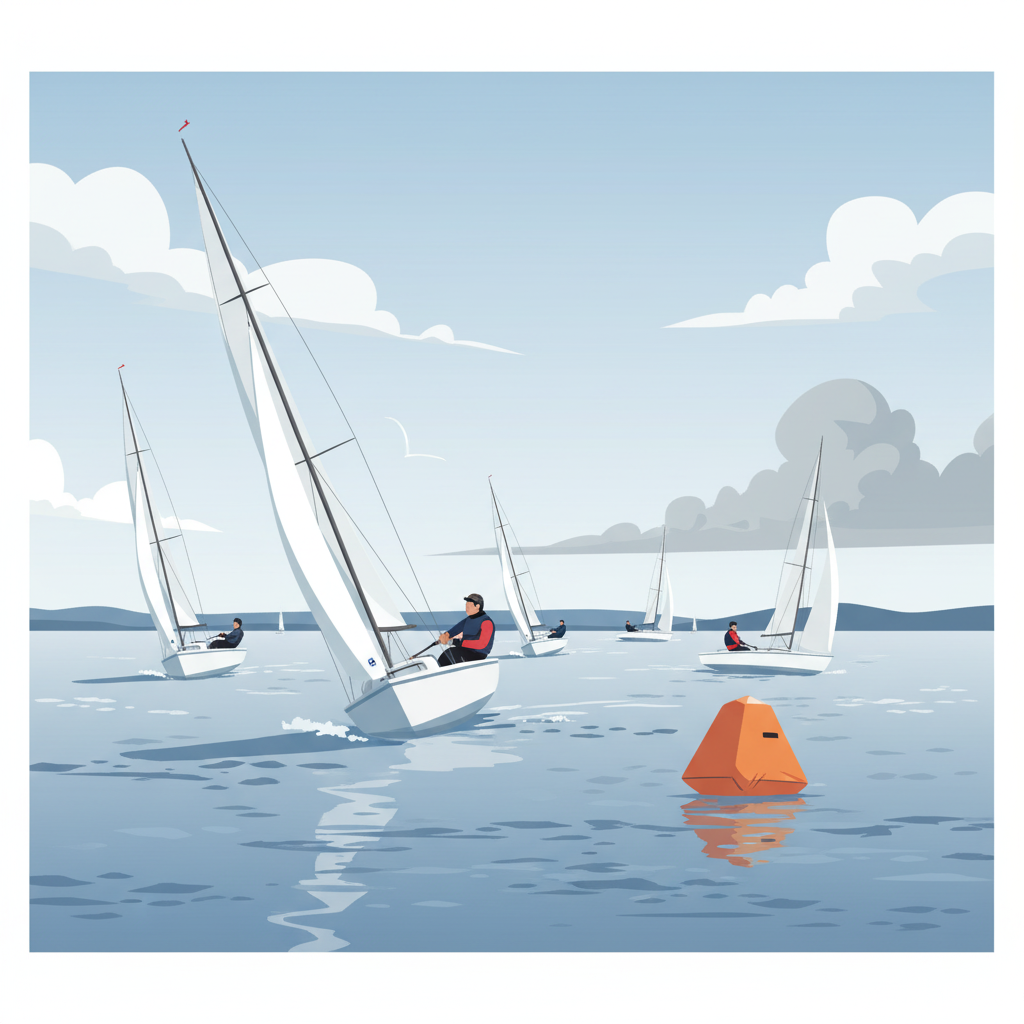
Grafham Water, a perennial favorite on the UK inland racing circuit, recently played host to the Flying Fifteen Inland Championships, drawing a robust fleet of 28 boats. While the global grand prix scene grapples with billion-dollar budgets and carbon-fiber wizardry, events like this remind us of the enduring appeal of pure, unadulterated monohull racing – where the nuance of a well-trimmed soft sail and the acute observation of a wind shift can be the difference between glory and frustration.
The weekend's narrative was largely written by the wind, or rather, its capricious nature. Fine sunshine belied a breeze that struggled to commit, offering a tactical smorgasbord that demanded more than just boat speed. Sailors accustomed to the predictable pressure of coastal venues were forced to recalibrate, scanning the water for the faintest ripple, anticipating the next header or lift. This wasn't a race for the heavy-footed; it was a chess match played on an ever-shifting board.
For those of us who cut our teeth on similar waters, the scene is familiar: the frantic adjustments of jib sheets, the whispered debates about the next tack, the sheer concentration etched on faces as a puff fills the spinnaker. While the Flying Fifteen might not boast the hydrofoiling acrobatics of an AC75 or the sheer power of a SailGP F50, the principles remain the same: superior boat handling, astute tactical calls, and an unwavering focus on the ever-changing environment. It's a testament to the class's enduring appeal that it continues to draw such competitive fleets, proving that the art of sailing, in its purest form, is still very much alive and thriving.