Fleetwood, UK – While the grand prix circuit, from SailGP's foiling gladiators to the America's Cup behemoths, often grapples with the capriciousness of the elements, it was a decidedly more intimate, yet no less challenging, scene that unfolded at the Topham Cup for 36R Vane boats. The forecast had been ominous, a familiar dread for any race committee, and unfortunately, the predictions proved devastatingly accurate.
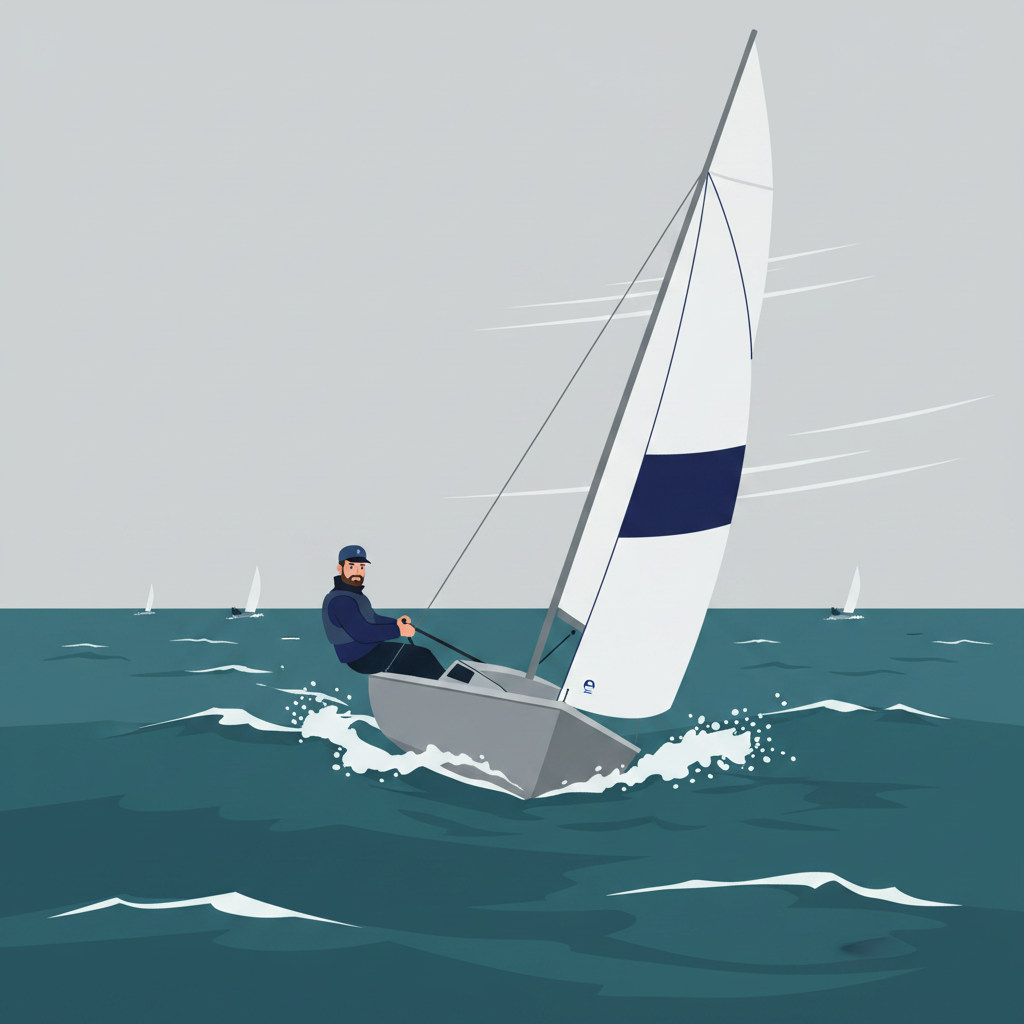
From the first gun, a persistent drizzle escalated into a full-blown downpour, transforming the racecourse into a shimmering, wind-swept tableau. These 36-inch marvels, guided by their intricate vane steering systems rather than remote control, demand an almost zen-like understanding of wind shifts and current. Yet, even the most seasoned 'skippers' found themselves running for cover as the heavens opened, pausing racing for a crucial half-hour interlude – a tactical timeout dictated by sheer survival, reminiscent of a squall-induced postponement in The Ocean Race.
Despite the sodden conditions, the miniature fleet pressed on. The challenge wasn't just in keeping the delicate rigs aloft, but in reading the wind's subtle nuances through the sheeting rain, a task that would test even the likes of Peter Burling or Jimmy Spithill on their AC75s. The efficacy of sail trim, the precise angle of attack, and the crucial decision of when to ease or sheet on, all magnified on this smaller scale, became a masterclass in micro-tactics. While no $100M campaigns were on the line, the pursuit of the Topham Cup, under such trying conditions, underscored a fundamental truth of sailing: the best sailors, regardless of boat size, are those who can adapt, persist, and find the advantage when the weather gods refuse to cooperate.