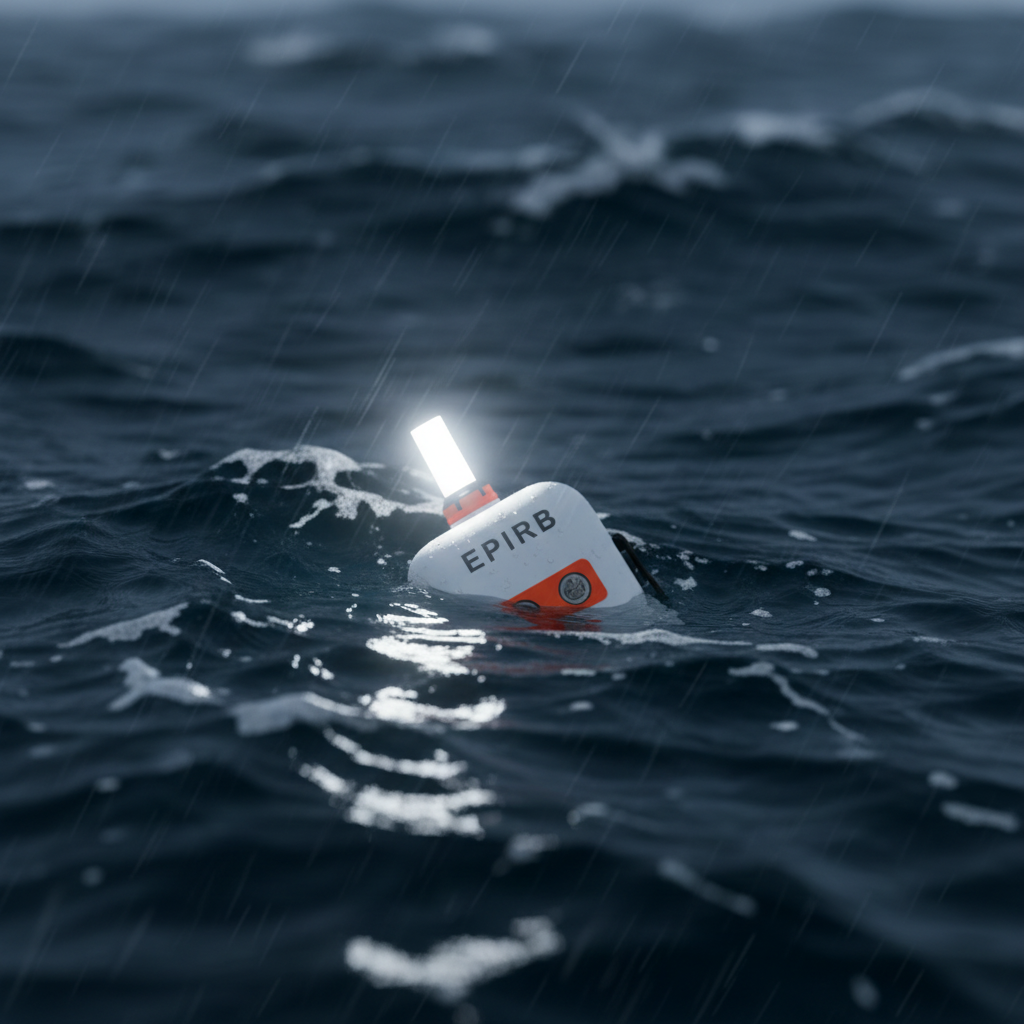
The rhythmic hum of an offshore passage can be deceptive. One moment, you're enjoying the solitude, the next, a piercing alarm shatters the calm. Alison O’Leary’s recent account on Soundings, picked up by Sailing Scuttlebutt, offers a stark, albeit ultimately reassuring, reminder of the efficacy of our modern safety nets – and the human element that underpins them.
It took mere minutes for their EPIRB to ping a NOAA satellite, initiating a cascade of events that would impress even the most seasoned race committee. From satellite to the Coast Guard’s Southeast Command Center in Miami, then simultaneously to a watchstander for verification and a helicopter crew for immediate deployment – the system worked with chilling efficiency. This wasn't a distress call from a dismasted IMOCA 60 in the Southern Ocean, but a false alarm from a cruising boat. Yet, the response was identical in its urgency and precision.
This incident underscores several vital points for anyone venturing offshore, from the weekend cruiser to the America's Cup chase boat crew. Firstly, the technology works. Harken's robust deck gear and Southern Spars' meticulously engineered rigs are critical, but so too are the unseen electronic guardians like EPIRBs. Secondly, the human element is paramount. The watchstander's swift verification, the helicopter crew's readiness – these are the people who transform a digital signal into a lifeline. Finally, the importance of accurate registration cannot be overstated. A quickly verified contact number can prevent unnecessary deployments and ensure resources are available for genuine emergencies. In the unforgiving arena of the sea, where every second counts, this rapid-fire response, even to a false alarm, is a testament to a system that, when called upon, delivers.