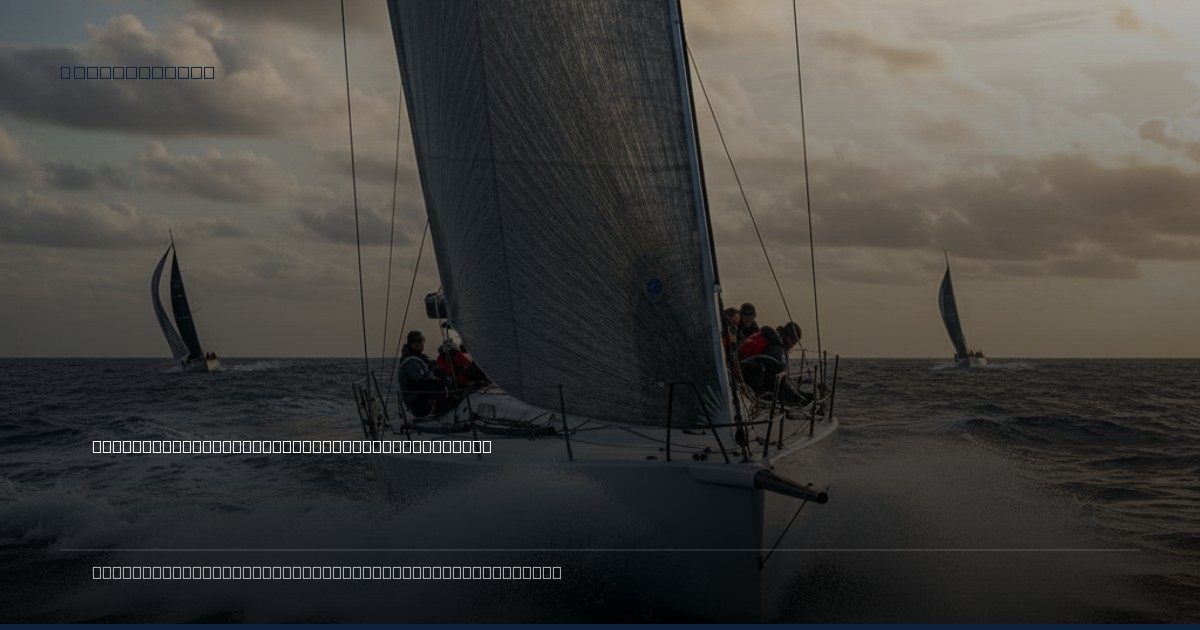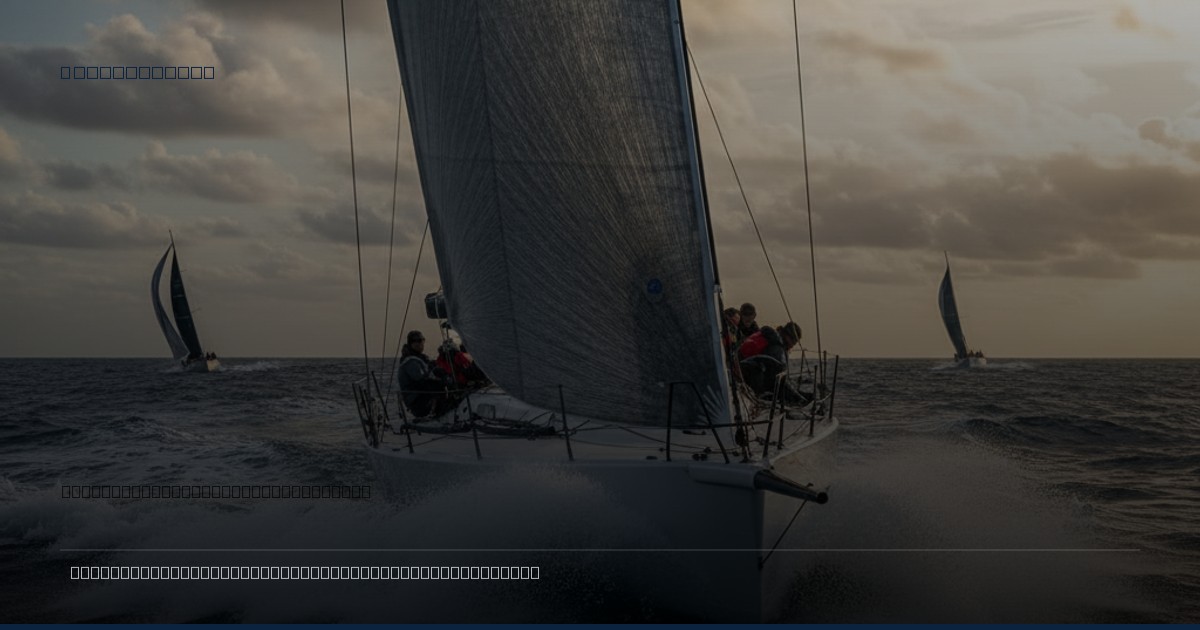
The siren song of speed often drowns out the quiet hum of prudence. James Evenson's recent account on Sailing Scuttlebutt, 'Born To Race, Built To Fail,' serves as a chilling reminder that even the most exhilarating yachts can become vulnerable when pushed beyond their design brief. The narrative, a visceral tale of a performance cruiser battling a ferocious Caribbean gale, underscores a critical distinction in the world of high-performance sailing: the chasm between a boat built to win a windward-leeward race and one engineered to cross oceans.
The bilge pump, a prosaic piece of equipment, became the harbinger of trouble somewhere off Haiti. Initially dismissed, its persistent cycling was a stark warning that the vessel, designed for blistering pace, was struggling with the very conditions it was now forced to endure. Thirty-five knots, gusting to 45 – these are gale-force winds that demand respect, even from the most robust offshore machines. For a boat optimized for speed, likely with a shallower hull, less internal volume, and perhaps a more delicate structural matrix than a true bluewater cruiser, such conditions are an existential threat.
Triple-reefed mainsails are a testament to the crew's efforts to depower, but a boat 'designed to go fast, not far' often lacks the inherent stability and structural integrity to shrug off sustained punishment. We've seen this play out on the grand prix circuit, where the margins are razor-thin, and the line between triumph and catastrophic failure is often defined by a single component or a miscalculation in design. This incident, while not on the scale of an America's Cup campaign or a Vendée Globe, echoes the fundamental challenge: pushing the limits of design always carries inherent risks. It's a stark reminder that even with the best intentions and skilled hands, the ocean has the final say.