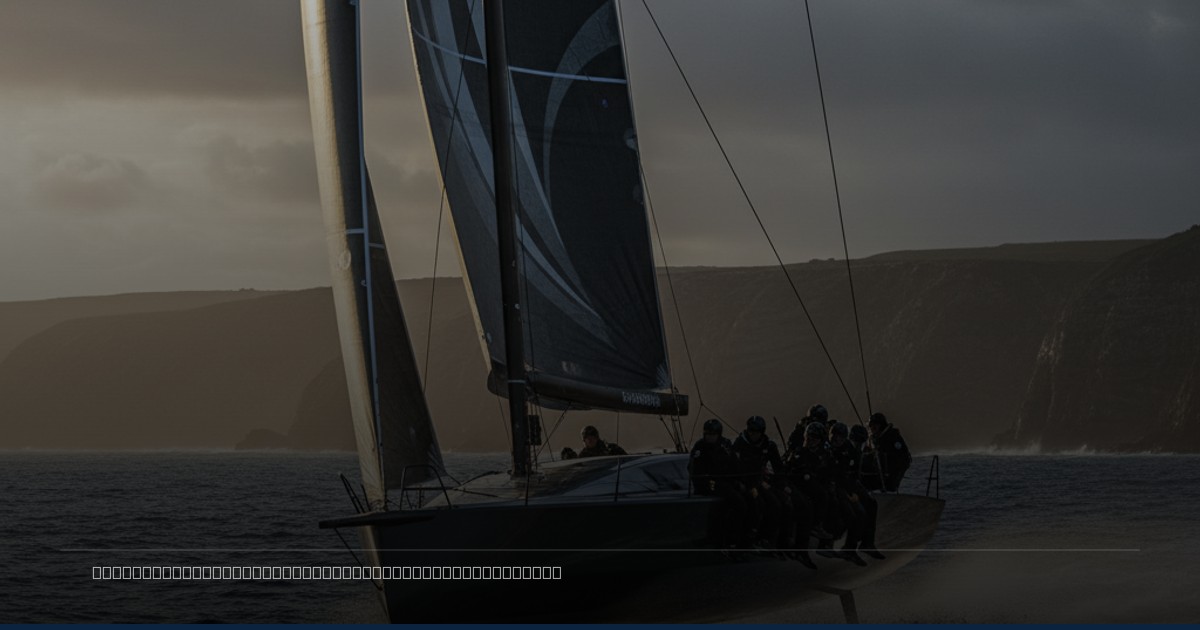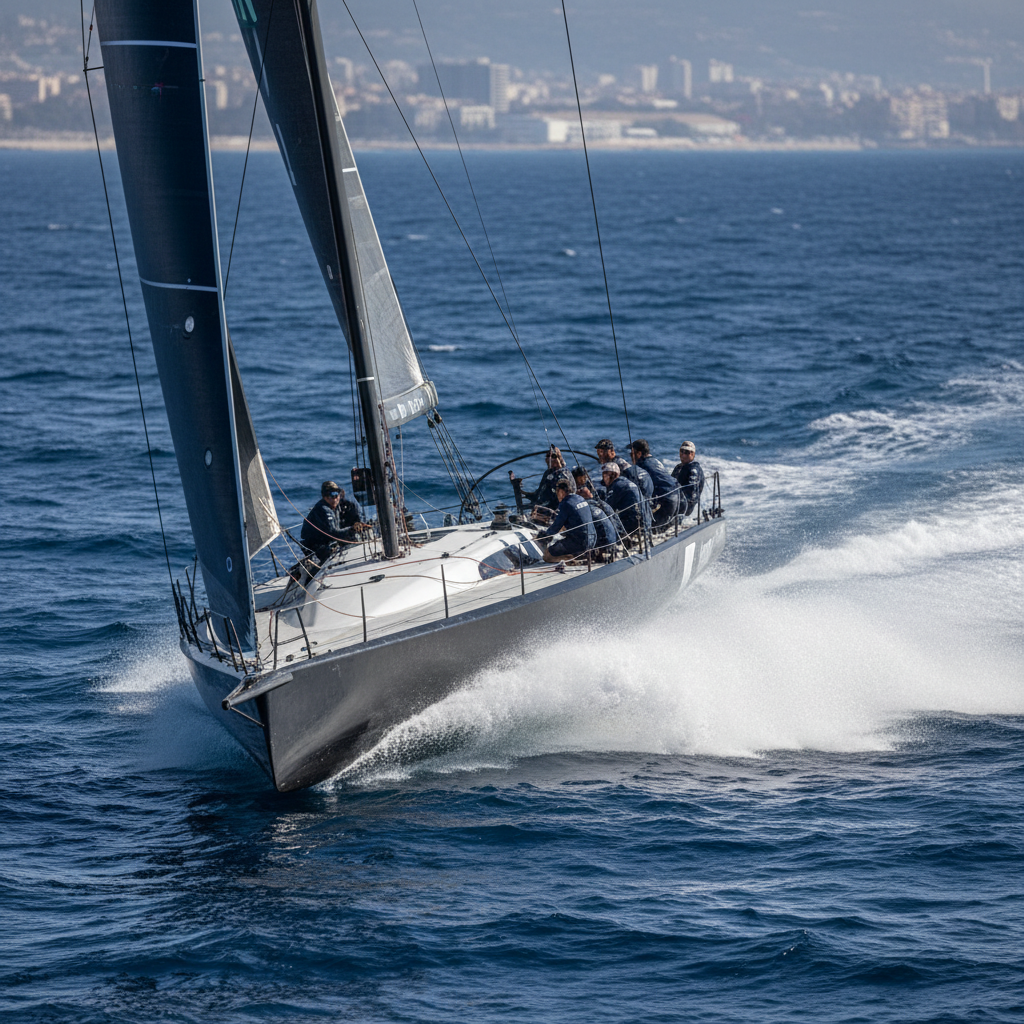
For decades, the sleek, pointed bow has been the undisputed emblem of offshore racing prowess. Yet, as Louay Habib's report for Yachting World on the Mach 50 Palanad 4 vividly illustrates, that paradigm is being aggressively challenged. This isn't merely a new boat; it's a statement, a bold reinterpretation of what a 50-foot offshore racer can and should be.
At first glance, Palanad 4's scow-bow design is jarring, a brutalist aesthetic that seems more at home on a Mini Transat than a sophisticated IRC-optimized machine. But make no mistake, this isn't about aesthetics; it's about physics. The blunt nose maximizes waterline length, increases form stability, and, crucially, provides immense volume forward – a game-changer for reducing pitching and maintaining speed through waves. This is the kind of radical thinking that echoes the early days of foiling, where traditionalists scoffed until the undeniable speed gains spoke for themselves.
For competitive sailors accustomed to the finely-tuned nuances of IRC ratings, Palanad 4 presents a fascinating dilemma. How will this raw power and unconventional hull form translate on the racecourse against more traditional designs? Will its upwind performance suffer, or will the added stability allow for greater sail carrying capacity, perhaps from a custom North Sails inventory, compensating for any perceived drag? The implications for sail plans, rig design – perhaps even a move away from conventional Southern Spars setups to accommodate wider sheeting angles – are profound. This isn't just about a boat; it's about the evolution of the sport itself, pushing boundaries in much the same way the AC75s have redefined America's Cup sailing.