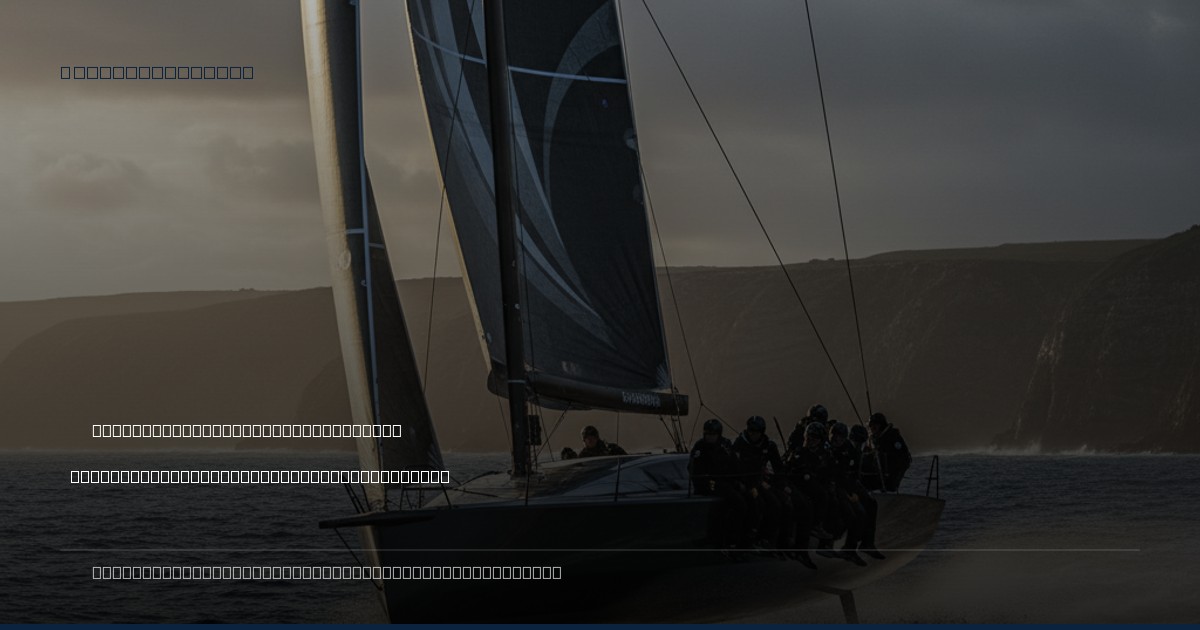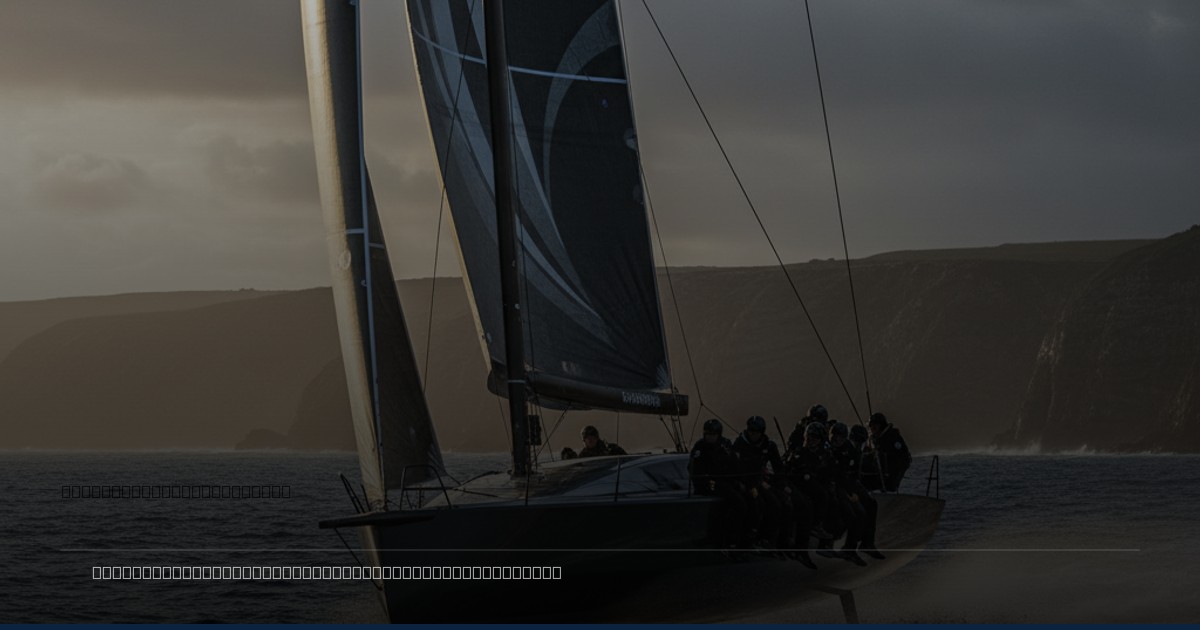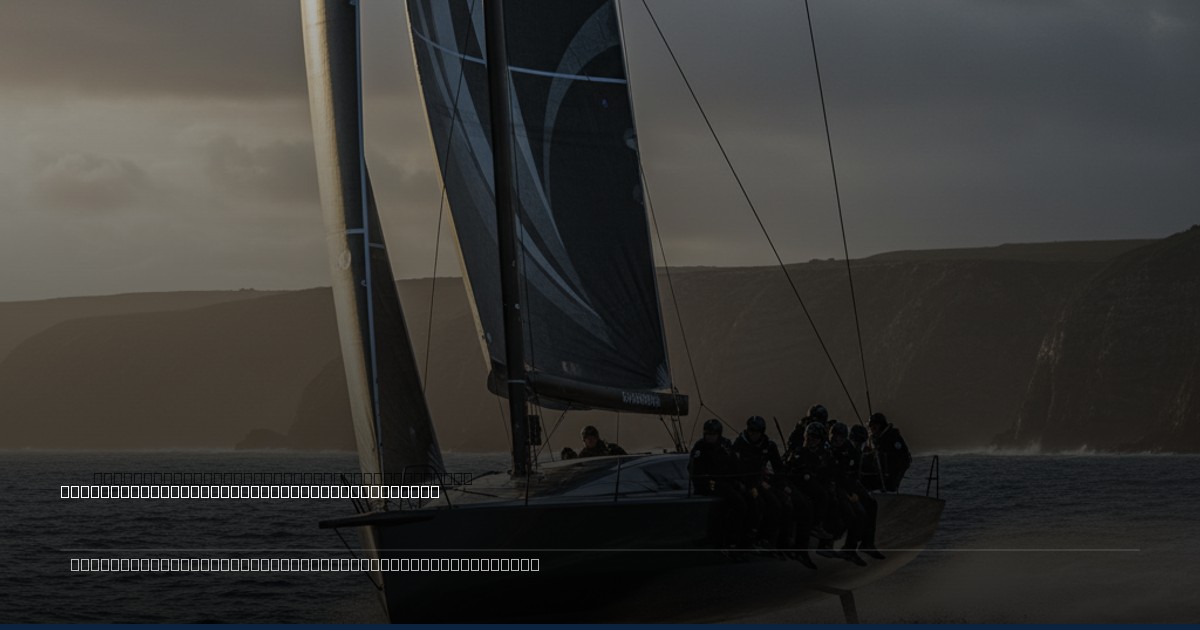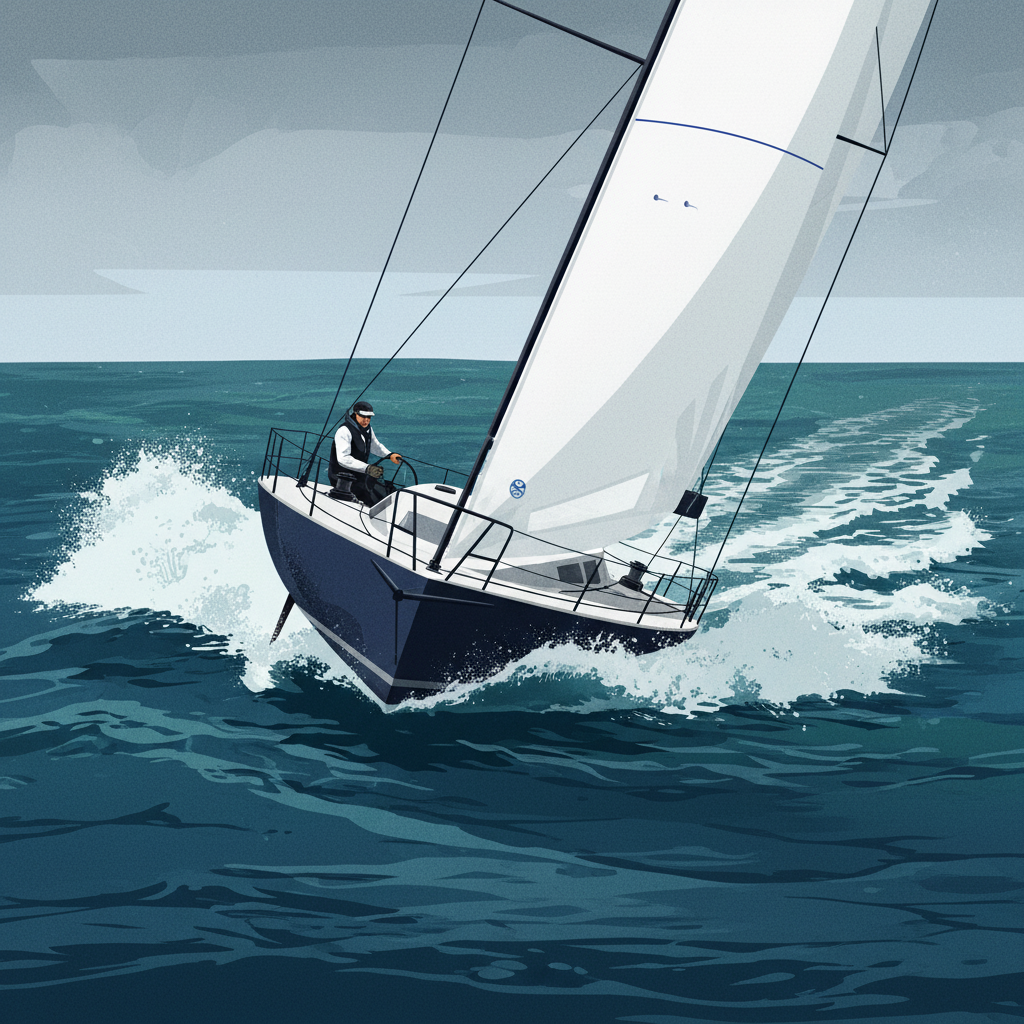
For decades, the sleek, pointed bow has been the undisputed symbol of speed and efficiency in offshore racing. But as Louay Habib's report in Yachting World on the Mach 50 Palanad 4 reveals, that paradigm is being aggressively challenged. This isn't merely an evolution; it's a revolution, scaling the once-niche scow-bow concept to a formidable 50-foot offshore platform.
The Palanad 4, with its unapologetically blunt nose, looks less like a conventional IRC racer and more like a refugee from the Mini Transat circuit, albeit super-sized. This radical departure isn't just aesthetic; it's a fundamental rethinking of hydrodynamics. The immense volume forward promises enhanced buoyancy, reducing pitching and theoretically allowing the boat to carry more sail area in a broader range of conditions. For navigators accustomed to the fine entry of a traditional bow slicing through waves, the Palanad 4's approach is akin to bulldozing them aside.
This design philosophy, while startling to some, holds immense potential for downwind and reaching legs, where the increased wetted surface might be offset by the ability to plane earlier and maintain higher average speeds. The challenge, of course, will be its upwind performance and how it interacts with the complex IRC rating rule, which often penalizes unconventional designs. Will the raw power and stability outweigh potential drag penalties? The grand prix circuit, ever hungry for speed, will be watching closely. If Palanad 4 delivers on its promise, we could be witnessing the dawn of a new era for offshore yacht design, where the scow's blunt force redefines what's fast.