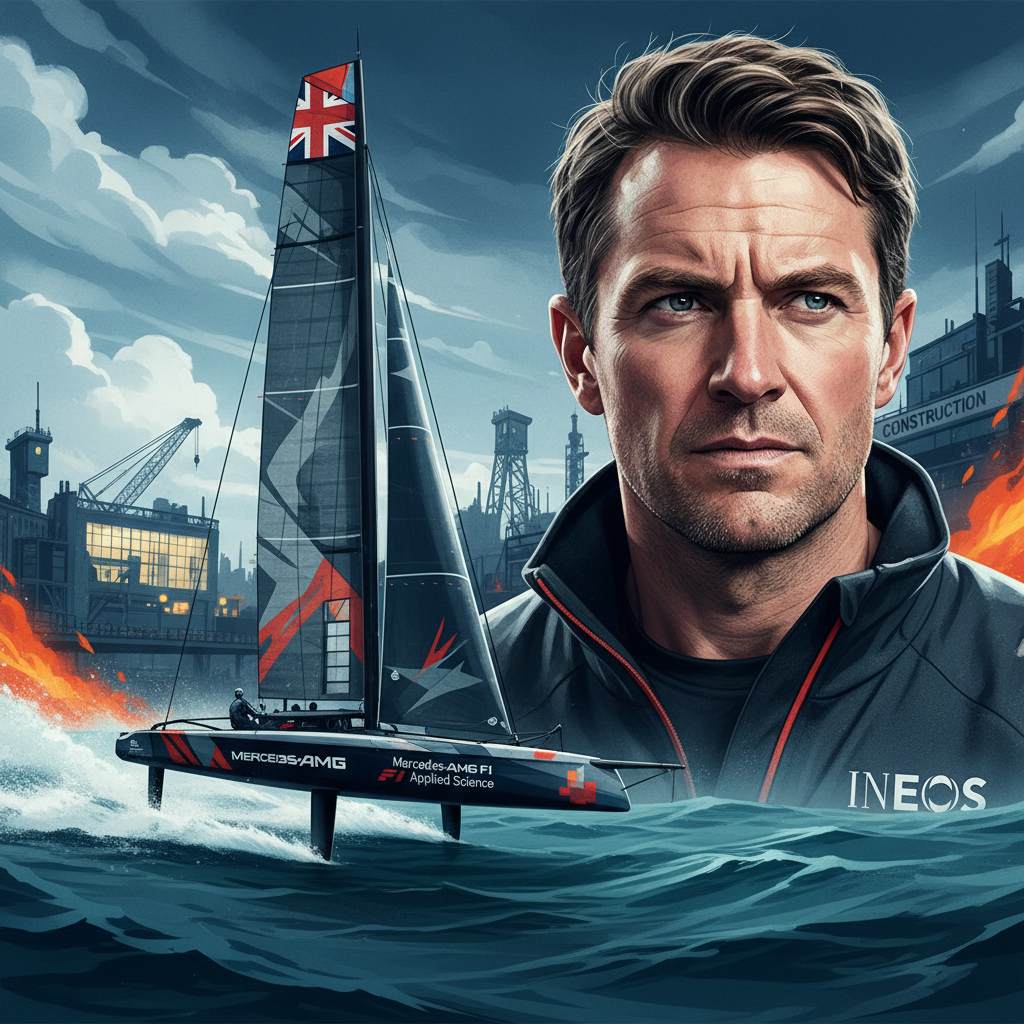
David Fuller's recent musings on Yacht Racing Business, as highlighted by Sailing Scuttlebutt, cut right to the chase of a fundamental truth in the America's Cup: the only consistent winners are often the legal teams and, perhaps, the boat builders themselves. The latest chapter in this saga appears to involve the formidable Sir Jim Ratcliffe of INEOS and the equally formidable Sir Ben Ainslie, skipper of INEOS Britannia.
This isn't merely about who gets to keep the carbon fiber sculpture after the champagne has dried. It's about the intricate web of intellectual property, design secrets, and the sheer financial outlay that underpins these multi-million dollar campaigns. When a titan like INEOS pours hundreds of millions into a challenge, funding everything from the Southern Spars rigs to the bespoke Harken hydraulics and the North Sails 3Di inventory, the expectation of a tangible return, beyond just a shot at the Auld Mug, is immense.
Does Ratcliffe, having bankrolled the entire operation, have a claim on the AC75 designs, the foiling wizardry developed by the likes of Martin Fischer, or even the physical boat itself? Historically, the lines have been blurred. Teams like Emirates Team New Zealand have meticulously guarded their IP, understanding its value far beyond the current cycle. American Magic, too, has invested heavily in its design team, knowing that institutional knowledge is paramount.
This isn't just a squabble; it's a reflection of the high-stakes business model of the Cup. The boats are cutting-edge prototypes, pushing the boundaries of hydrodynamics and aerodynamics. They are, in essence, floating R&D labs. The question of who truly 'owns' the fruits of that labor – the data, the designs, the physical asset – is a complex one, and as Fuller rightly points out, it's a question that often leaves the principal investors feeling like they're navigating a perpetual motion machine, constantly funding the next iteration with little direct equity in the last.