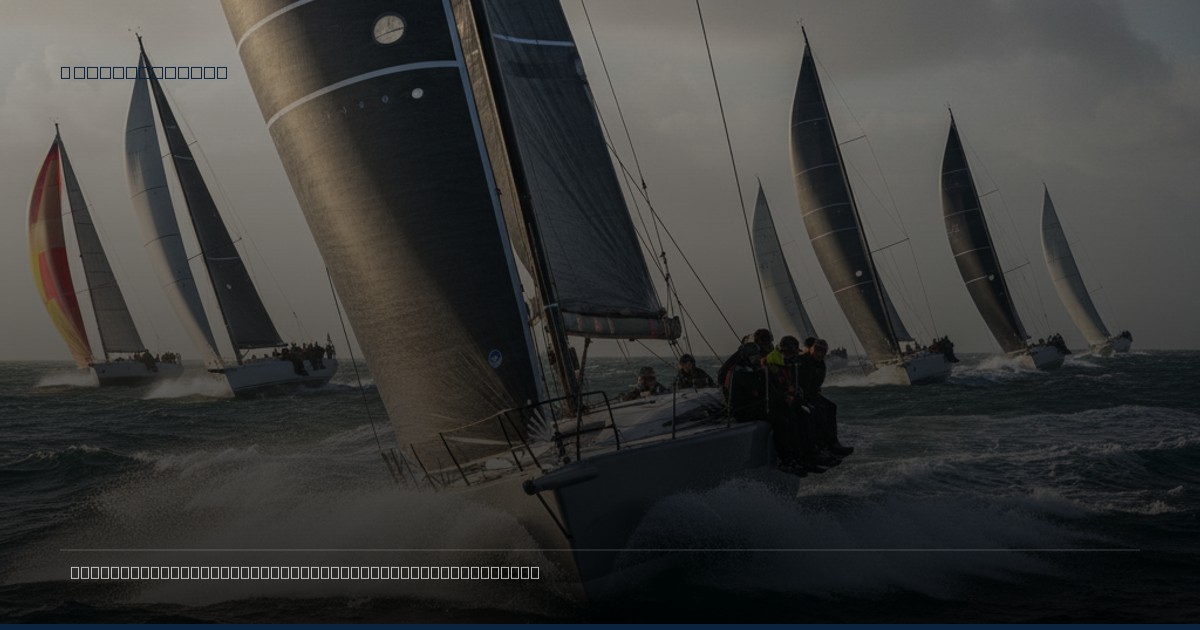
World Sailing has fired the starting gun on a crucial tender process, inviting bids for the Host Broadcast Production and Distribution of its 2027 World Championships in Brazil and Poland. This isn't merely a procedural announcement; it's a pivotal moment for a sport grappling with the balance between its traditional roots and the imperative of reaching a broader, more engaged audience.
For those of us who've witnessed the evolution of sailing coverage from grainy VHS tapes of the Whitbread to the real-time, data-rich broadcasts of SailGP and the America's Cup, the importance of this decision cannot be overstated. The right broadcast partner can elevate the narrative, translating the nuanced ballet of wind shifts, tidal gates, and tactical gambits – the very essence of grand prix racing – into compelling television.
Consider the technological leaps: the intricate on-board cameras, the drone footage that paints a breathtaking picture of foiling AC75s and Moth fleets, the augmented reality graphics explaining wind strategy and laylines. These aren't just bells and whistles; they are essential tools for demystifying a complex sport for the uninitiated, while still offering the depth competitive sailors and industry professionals demand. A tender process like this isn't just about cameras and cables; it's about storytelling, about capturing the grit of an Olympic hopeful and the precision of a North Sails-powered Finn, about showcasing the Harken hardware and Southern Spars rigs that define performance.
The chosen partner will not only shape how the world perceives the pinnacle of Olympic-class sailing but also influence the commercial landscape for future events. In an era where every sport is vying for screen time and sponsorship dollars, World Sailing's move is a clear signal of intent: to put the sport's best foot forward, both on the water and on our screens.