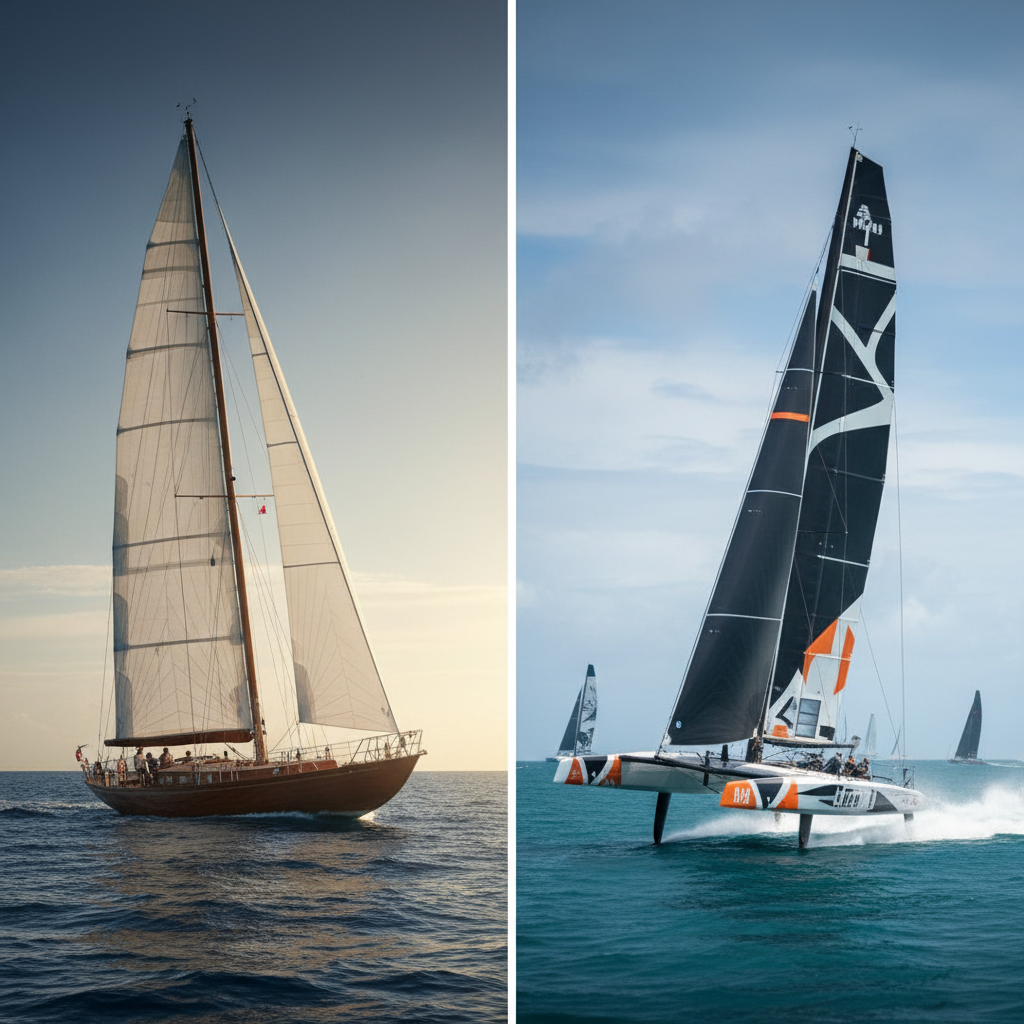
The recent discourse sparked by Scuttlebutt, and eloquently addressed by Mark Johnson, cuts to the very core of competitive sailing's identity in the 21st century. Indeed, glance at nearly any other major sport, and the fundamental mechanics remain largely unchanged from half a century ago. A football pitch is still a football pitch; a tennis court, a tennis court. But sailing? The transformation has been nothing short of revolutionary.
From the America's Cup AC72s that first truly took flight, to the ubiquitous F50s of SailGP, and even the radical designs emerging in The Ocean Race, foiling has redefined speed, strategy, and even the very aesthetic of our sport. The ingenuity of teams like Emirates Team New Zealand, pushing the boundaries with Southern Spars rigs and North Sails' cutting-edge membranes, is undeniable. The spectacle is breathtaking, attracting new eyeballs and showcasing sailing as a high-octane, technologically advanced pursuit.
Yet, Johnson's query resonates deeply: is the sport *better*? While the grand prix circuit, with its Ben Ainslies and Peter Burlings, thrives on this innovation, one must consider the broader ecosystem. The sheer cost of entry, the complexity of these machines, and the specialized skill sets required, create a significant chasm between the elite and the grassroots. Are we fostering a future where the traditional skills of wind strategy, tidal gate navigation, and the nuanced feel for a soft-sailed monohull become relics of a bygone era?
The lack of stringent, prescriptive rules from our international federation has, as Johnson notes, allowed for incredible innovation. But this freedom, while yielding marvels like the Harken-equipped foilers, also poses a fundamental question: what is the essence of 'sailing' we wish to preserve? The future undoubtedly lies in embracing technology, but perhaps also in finding a balance that honors our rich heritage and ensures accessibility for generations of sailors to come, not just those with multi-million dollar campaigns.