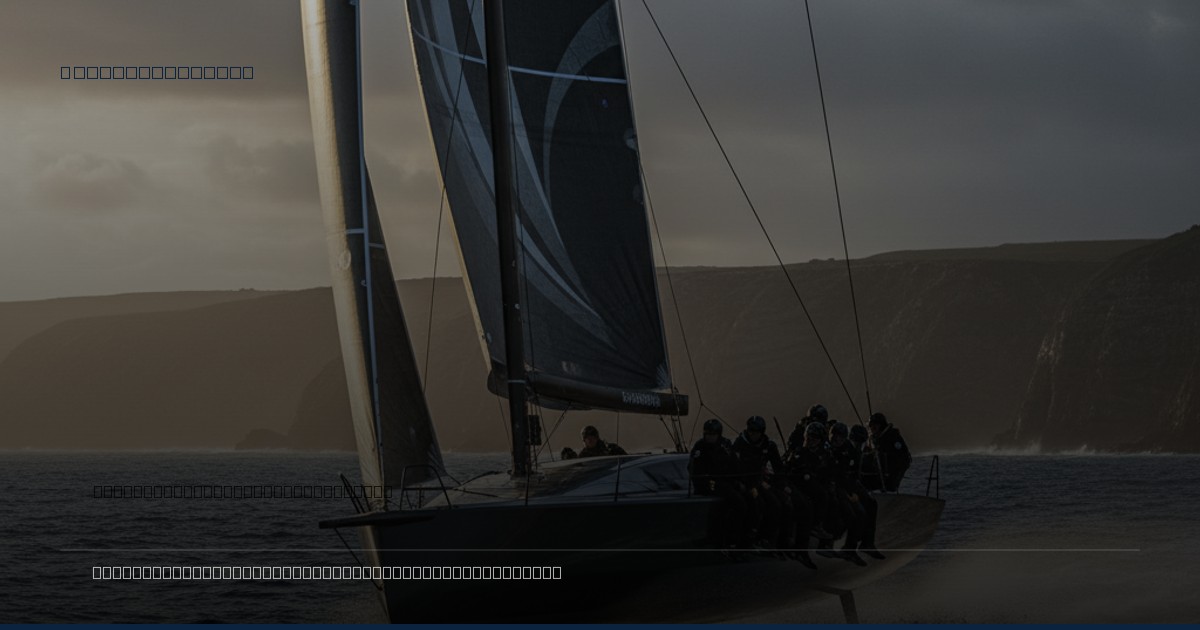
The recent musings from Mark Johnson, echoing the sentiments widely discussed on Scuttlebutt, hit a raw nerve for anyone who's spent a lifetime on the water. Is sailing, in its relentless pursuit of speed and spectacle, truly better than it was 50 years ago? Or are we, in our unbridled embrace of innovation, charting a course towards an uncertain future?
Consider the seismic shifts: the transition from displacement hulls to hydrofoiling marvels, the evolution from Dacron to 3Di, the advent of wing sails that make traditional mast and boom rigs look like relics. These aren't incremental changes; they are paradigm shifts, driven by the likes of Emirates Team New Zealand and the America's Cup's 'no rules' ethos, which has always been a double-edged sword. On one hand, it fosters unparalleled ingenuity – think of the design brilliance from Southern Spars or the winch systems from Harken that power these beasts. On the other, it creates an ever-widening chasm between the elite and the grassroots.
SailGP, with its identical F50s, offers a compelling counter-narrative, proving that high-octane, foiling action can be accessible and thrilling. But even there, the barrier to entry for teams remains astronomical. The Ocean Race, too, has embraced foiling, transforming the endurance classic into a high-speed sprint across oceans. Yet, the fundamental question remains: who is this sport for? Are we creating a spectacle for a privileged few, or are we fostering a broader, more inclusive sailing community?
World Sailing, the sport's governing body, finds itself in a precarious position. Its traditional role of setting class rules and promoting participation seems at odds with the 'anything goes' philosophy that has propelled the sport's technological vanguard. The lack of a strong, unifying vision from the top has allowed innovation to flourish, but perhaps at the cost of cohesion. The future of sailing, in my estimation, hinges on finding that delicate balance: embracing the technological marvels that captivate new audiences, while simultaneously nurturing the fundamental joy of sailing that has sustained us for centuries. Without it, we risk becoming a high-tech niche, rather than a global sport.