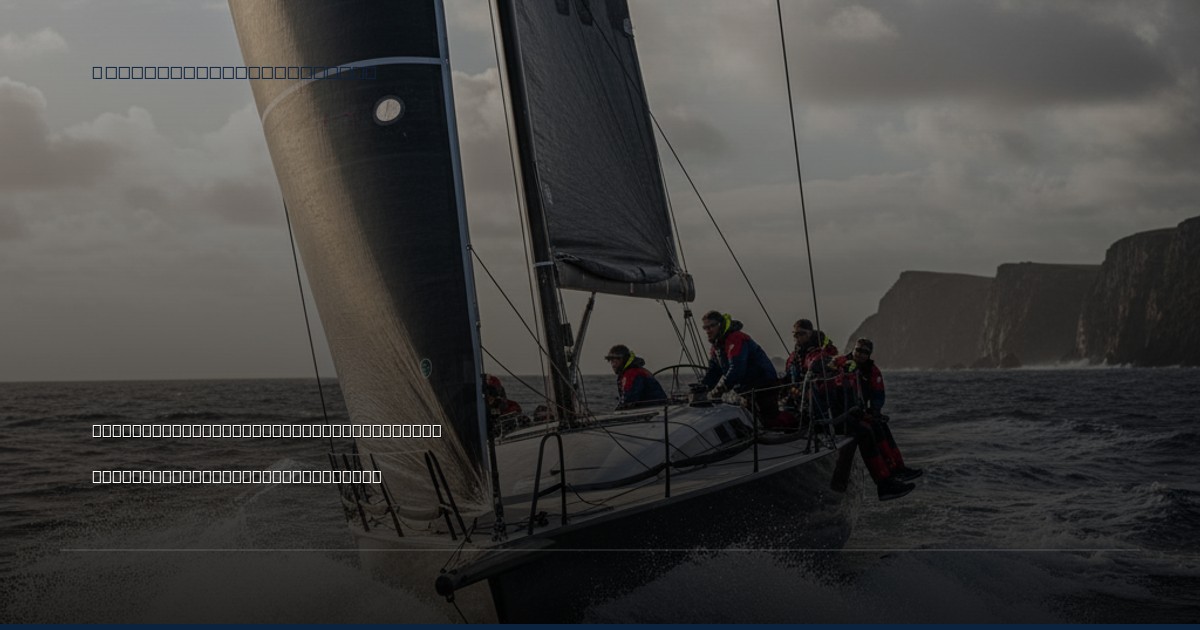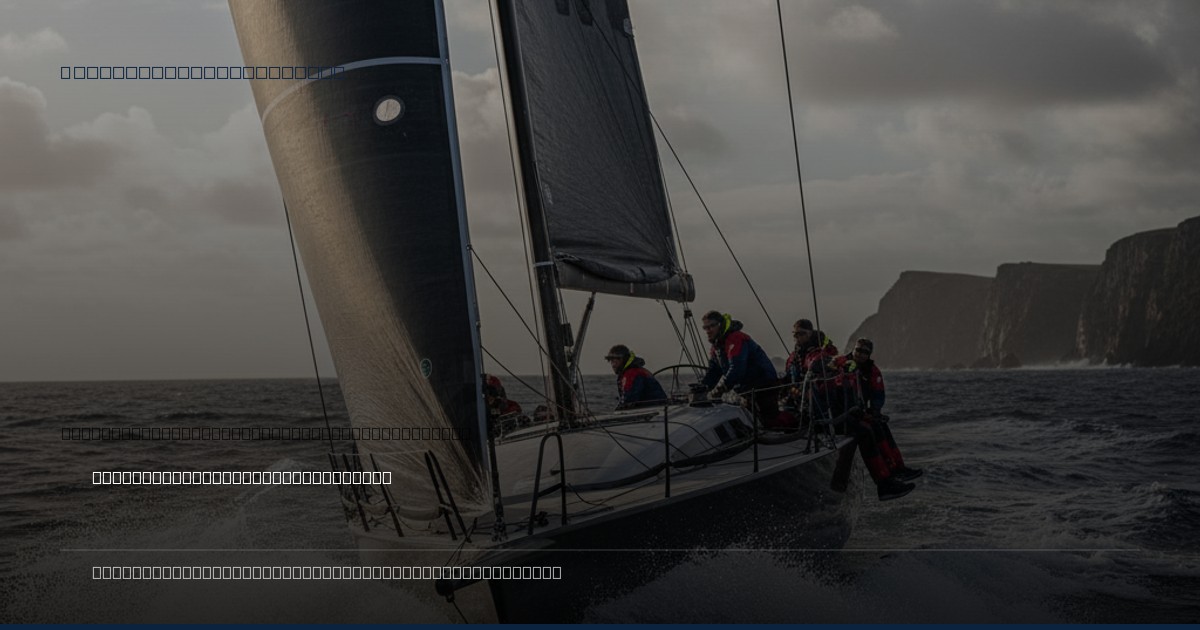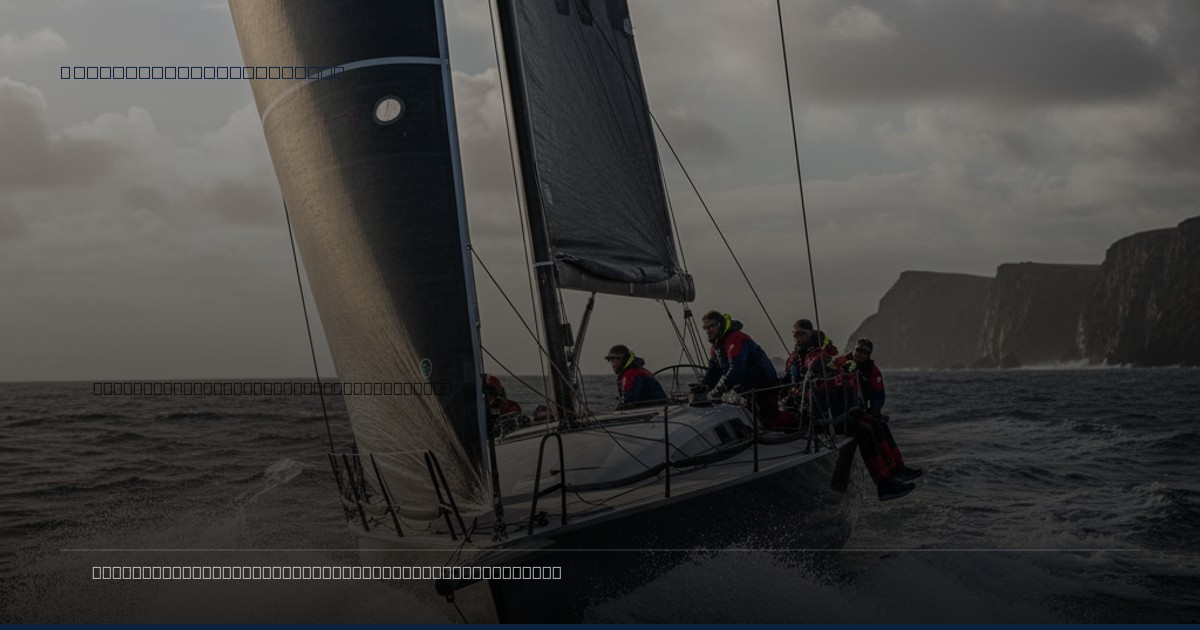
The latest from Sailing Scuttlebutt has thrown a fresh gust into the perennial debate surrounding collegiate sailing. For parents and promising young sailors alike, the allure of a top-tier university, often coupled with a competitive sailing program, can feel like the ultimate win-win. But as any veteran of the grand prix circuit or the America's Cup will tell you, the path to professional sailing is rarely paved with ivy-covered halls.
Indeed, for those with genuine Olympic aspirations or a vision of grinding out a career on the SailGP circuit or as a strategist on an AC75, four years spent chasing collegiate glory can be a significant, and expensive, diversion. While the discipline and teamwork honed in college programs are invaluable, the specialized skill sets required for foiling machines or the intricate weather routing of an Ocean Race campaign often demand an earlier, more focused immersion.
Consider the likes of Peter Burling or Tom Slingsby – their trajectories were marked by intense, early specialization, not necessarily a traditional college path. While many successful sailors have indeed completed degrees, the critical question for the truly elite is whether the opportunity cost of those four years outweighs the benefits. Is it better to be refining your wing-sail trim or mastering tidal gates in a professional environment, or balancing textbooks with regattas?
For the vast majority, college sailing offers an incredible experience, fostering a lifelong love of the sport and invaluable life skills. But for the select few eyeing the very pinnacle of competitive sailing, the Scuttlebutt piece serves as a timely reminder: sometimes, the most direct route to the podium isn't always through the quad.