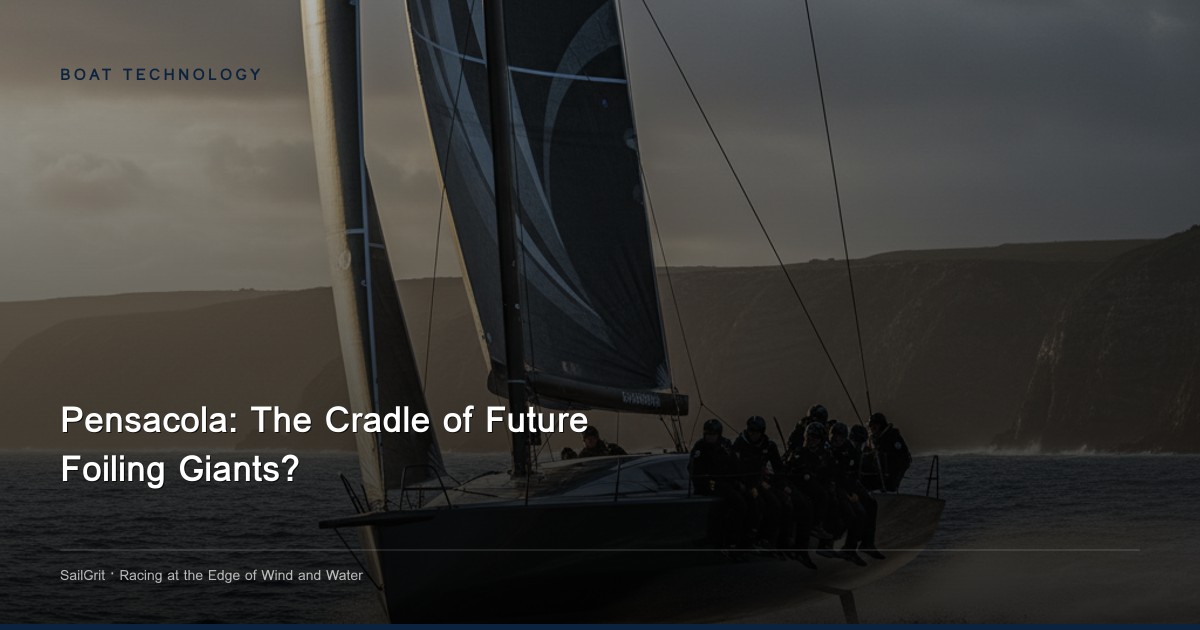
The relentless, high-octane spectacle of SailGP has captivated audiences, but behind the dazzling speed of the F50s lies a fundamental challenge: where do the next generation of foiling gladiators come from? Unlike the well-trodden paths of Olympic dinghy sailing or the grand prix keelboat circuits, the F50 demands a unique skillset, honed on a platform unlike any other.
This week, news from the Pensacola News Journal suggests SailGP CEO Russell Coutts is advancing a compelling solution: a 'minor league' based in Pensacola, Florida. Imagine 25-to-30-foot foiling catamarans, a scaled-down but equally demanding platform, providing the crucial stepping stone for aspiring professionals. This isn't just about 'upskilling'; it's about building a legitimate career trajectory in a sport that, until now, has relied on a handful of America's Cup veterans and Olympic medalists making a massive leap.
Pensacola, with its sheltered bay and consistent breezes, offers an ideal training ground. It's no coincidence the league has already established a training base there. This initiative, if realized, could transform the talent landscape, much like the AC45 circuit once served as a proving ground for early foiling talent. We've seen the likes of Peter Burling and Tom Slingsby dominate, but their ascent was often a direct result of early exposure to high-performance foiling. A dedicated feeder series, potentially leveraging accessible foiling platforms, would democratize that opportunity.
For SailGP to truly mature beyond its initial star power, a robust development system is paramount. This isn't just about finding the next Jimmy Spithill; it's about creating a deep bench of athletes intimately familiar with wing sails, complex hydrofoil dynamics, and the split-second decision-making required at 50 knots. Pensacola could very well become the Cape Cod of foiling, a crucible where future champions are forged, ready to tackle the ultimate challenge of the F50.