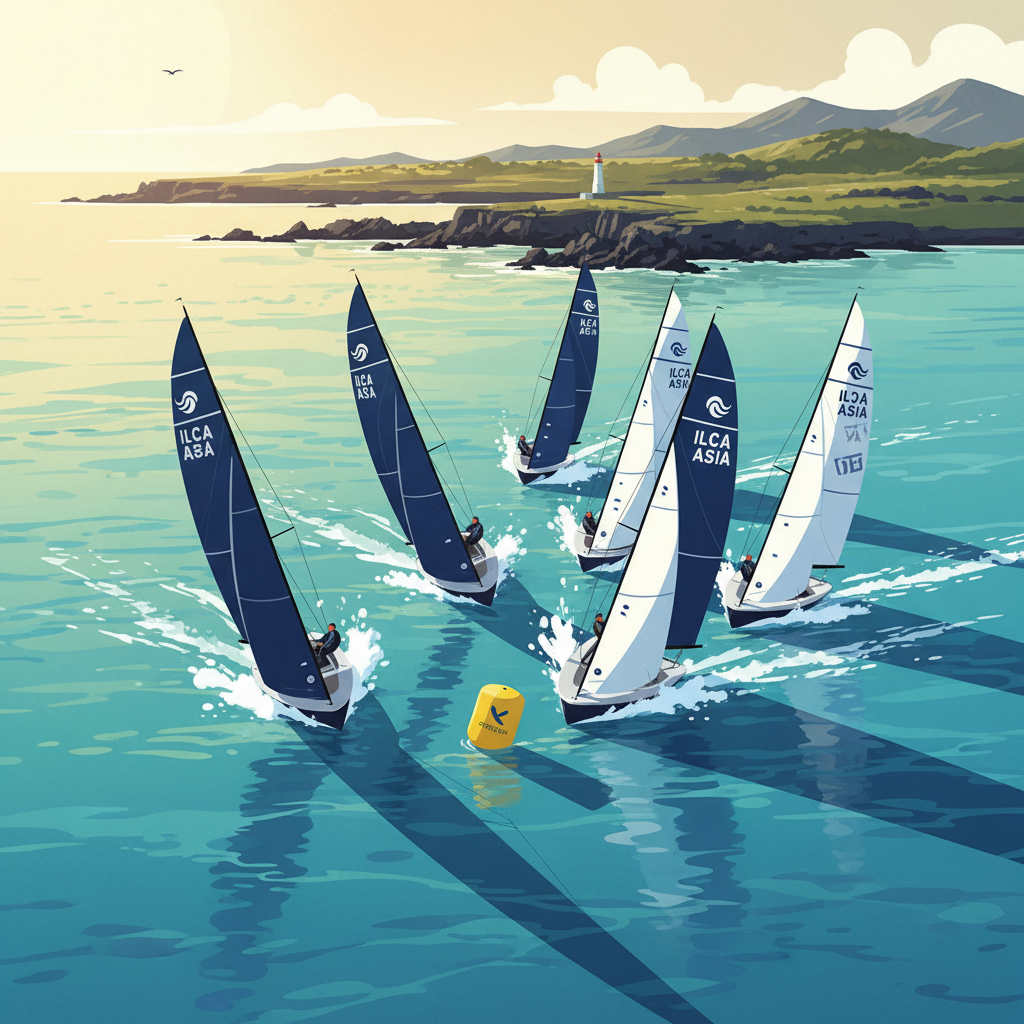
The azure waters of Penghu, Taiwan, recently played host to the 2026 ILCA Asian Open, a regatta that, by all accounts, was a resounding success. For four days, the fleet was treated to a consistent breeze and clear skies, conditions that allowed for a full spectrum of tactical decisions and boat handling prowess to shine through.
While the grand prix circuits and America's Cup campaigns often dominate headlines with their multi-million dollar budgets and cutting-edge hydrofoils, the ILCA class remains the bedrock of competitive sailing, a true test of a sailor's fundamental skills. Penghu delivered precisely that – a pure sailing challenge where wind shifts, current management, and precise mark roundings dictated the leaderboard, not the latest carbon fiber wizardry from Southern Spars or the intricate hydraulic systems from Harken.
This event wasn't just about the top finishers; it was a critical proving ground for the next generation of Olympic hopefuls and a barometer for the strength of Asian sailing programs. The consistent conditions meant that fluky results were minimized, and true talent rose to the surface. Coaches and national federations will be pouring over the data, analyzing performance metrics, and identifying potential stars who might one day find themselves on the Olympic podium or even in the sophisticated cockpits of an AC75.
The success of the Penghu event underscores the enduring appeal and importance of well-run, fair dinghy regattas. They are the crucible where champions are forged, where the nuanced understanding of wind and water is honed, and where the competitive spirit of sailing truly thrives, far from the glare of the superyacht circuit.