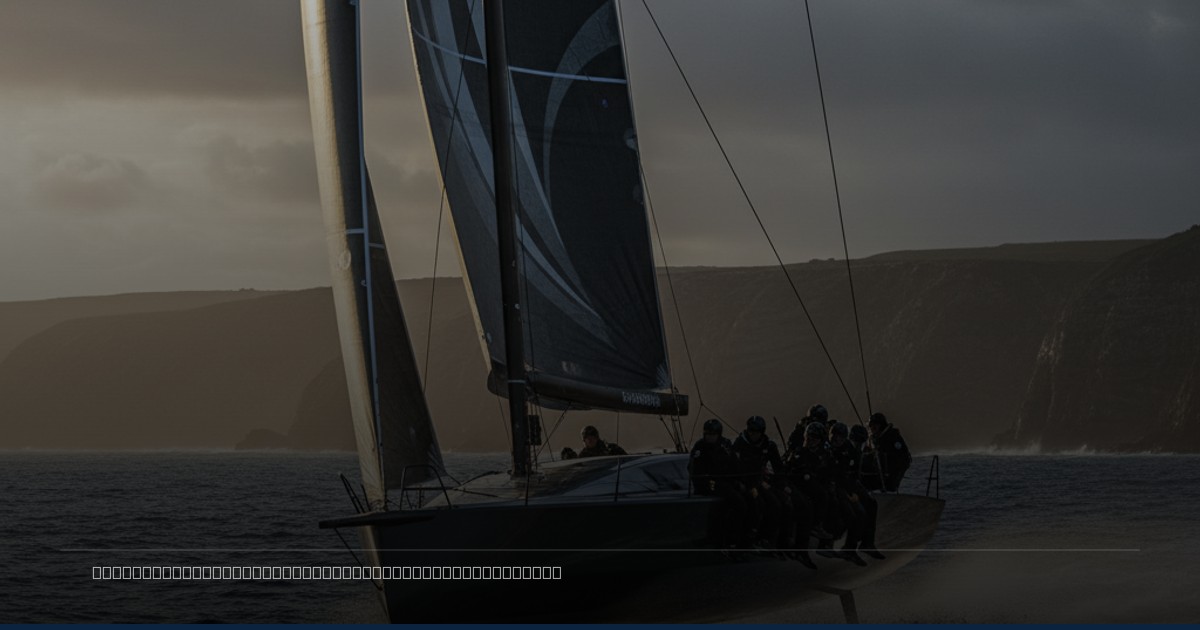
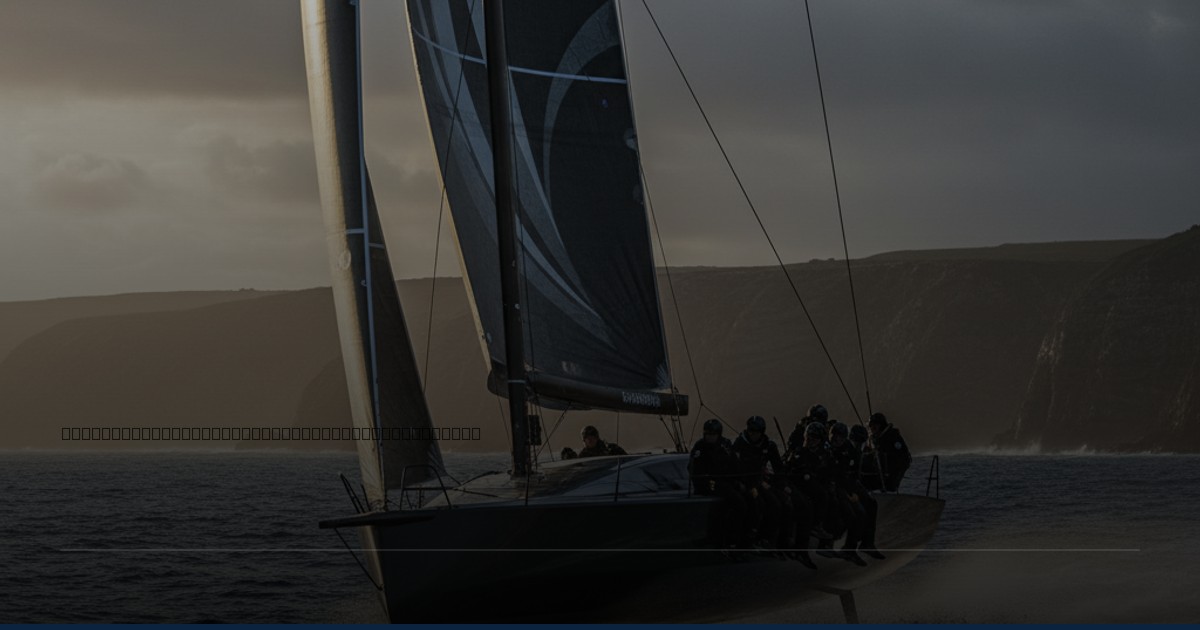
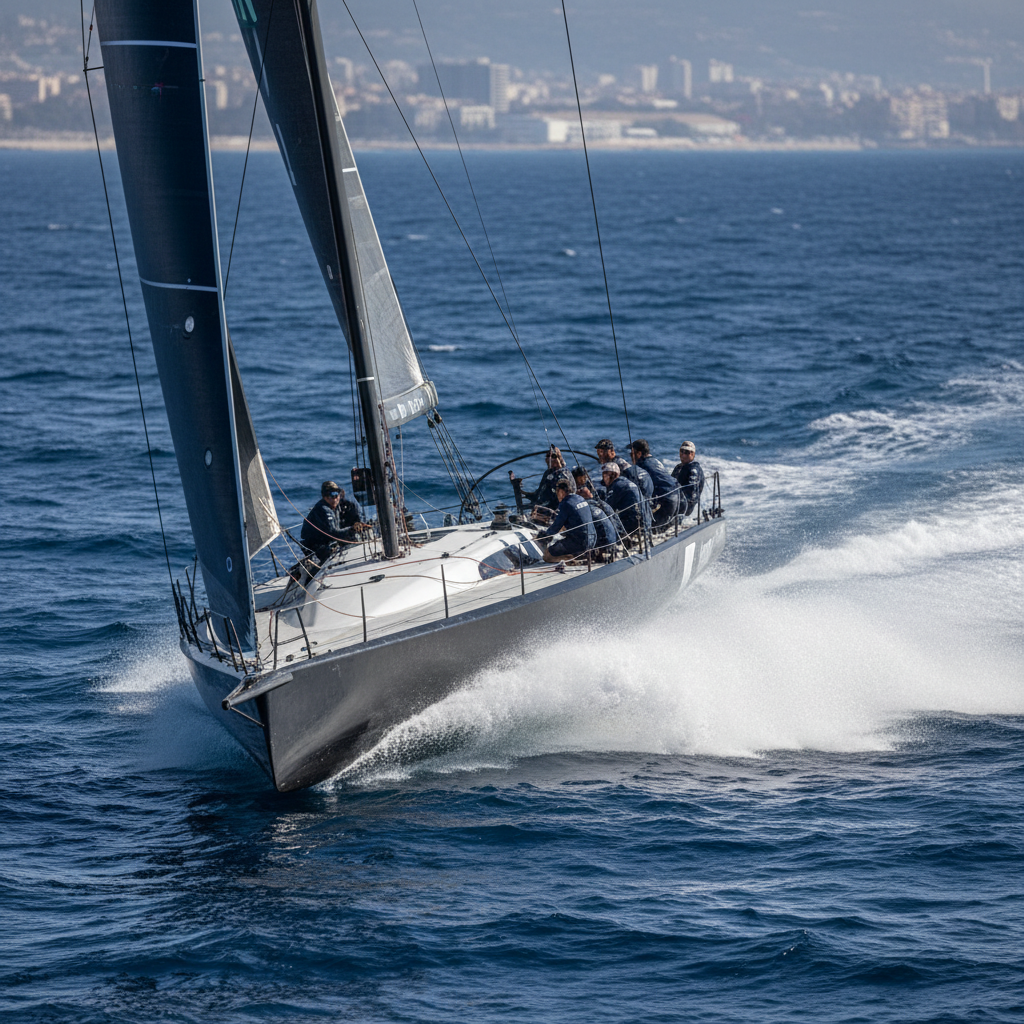
For decades, the sleek, pointed bow has been the undisputed symbol of offshore speed. But as Louay Habib's report in Yachting World vividly illustrates, the Mach 50 Palanad 4 is here to smash that paradigm. This isn't just a new boat; it's a defiant statement, scaling the once-niche scow-bow concept to a 50-foot offshore racer, and in doing so, forcing a re-evaluation of what constitutes 'fast' under IRC.
From the moment you lay eyes on Palanad 4, it's clear this isn't your grandad's cruiser-racer. The blunt, almost brutalist bow, a hallmark of the scow, promises immense volume forward – a characteristic that, on paper, should offer unparalleled lift and stability when driven hard in a seaway. This isn't about slicing through waves; it's about riding over them, generating dynamic lift that could translate into staggering VMG in specific conditions. The implications for offshore strategy are profound: imagine the ability to maintain higher speeds in confused seas, or to carry more sail area for longer without burying the bow.
Of course, such radical departures rarely come without trade-offs. The IRC rule, with its inherent biases towards more conventional hull forms, will undoubtedly present a rating challenge. How will the designers at Mach Yachts and the measurement committees reconcile the raw power and potential of this design with established handicapping principles? Will the drag penalties in lighter airs or upwind be offset by its downwind and reaching prowess? This isn't merely a design exercise; it's a high-stakes gamble on the future of offshore performance, reminiscent of the early days of canting keels or even the first attempts at foiling monohulls. Palanad 4 isn't just turning heads; it's demanding a new conversation about speed, stability, and the very definition of an offshore weapon.