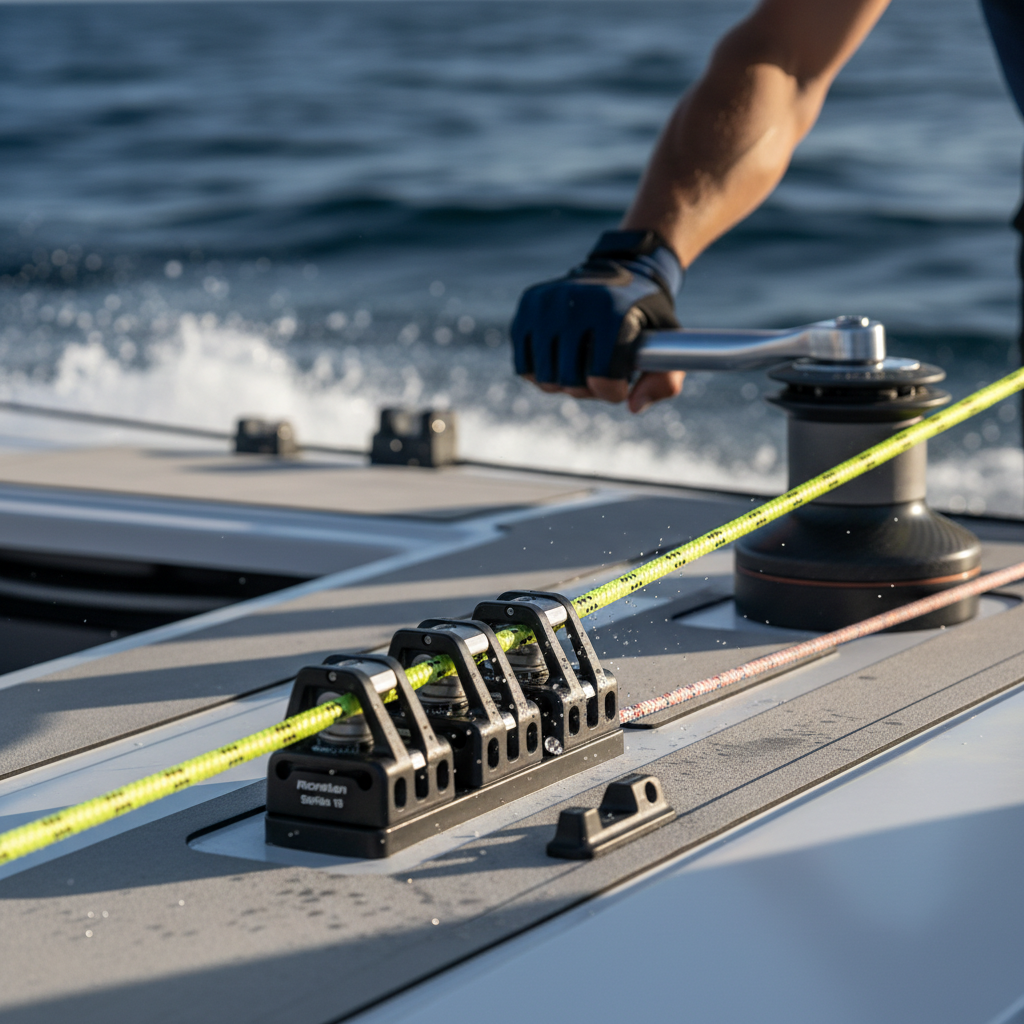
In the cutthroat world of competitive sailing, every gram saved and every fraction of friction eliminated contributes to the ultimate goal: speed. While our readers are more accustomed to the multi-million dollar budgets of America's Cup campaigns or the brutal demands of The Ocean Race, the fundamental engineering principles that drive performance trickle down to every class, including the burgeoning one-design circuits. The recent spotlight on Ronstan's Series 15 ball bearing blocks for the Switch One Design offers a stark reminder that even on a compact platform, the demands on hardware are anything but simple.
The Switch One Design, though small, is no docile dinghy. Its performance envelope, much like its larger foiling brethren, necessitates rapid load changes and precise control. This is where the Series 15 blocks earn their stripes. We're talking about a block designed for extreme lightweight applications, yet capable of handling the dynamic loads generated by modern sail plans – think the instantaneous shock loads when a wing sail trims or a foiling AC75 adjusts its rake. The 'micro-sheave' design, coupled with high-load ball bearings, ensures that even under significant tension, line runs freely, allowing for the instantaneous adjustments crucial for maintaining optimal trim and boat speed.
For competitive sailors, this isn't just about a new product; it's about the relentless innovation that underpins success. Whether it's a Harken mainsheet system on an IMOCA 60, Southern Spars rigging on Emirates Team New Zealand's AC75, or these Ronstan blocks on a one-design, the philosophy remains constant: optimize for low friction, high strength-to-weight, and absolute reliability. The ability to make quick, precise adjustments without battling friction is a tactical advantage, allowing sailors to react faster to wind shifts, tidal gates, or a competitor's move. It's a testament to the fact that even the smallest components play a pivotal role in the grand ballet of high-performance sailing.