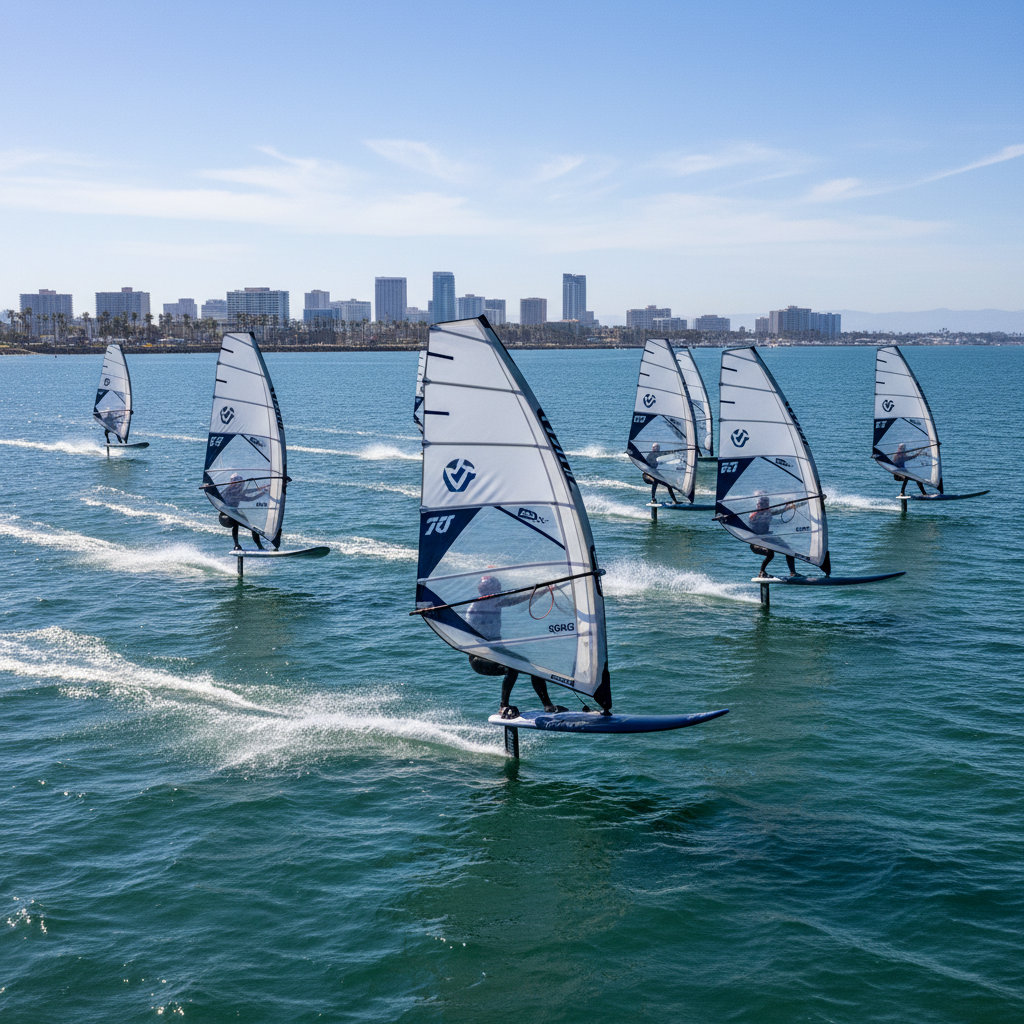
The announcement that the 2026 iQFOiL North American Championship will descend upon Long Beach, California, is far more than a mere scheduling update; it's a strategic declaration. Hosted by the venerable Alamitos Bay Yacht Club, this event isn't just about crowning a regional champion – it's a dress rehearsal, a reconnaissance mission, and a high-stakes proving ground for those with their sights firmly set on the LA28 Olympic Games.
For any serious Olympic campaign, understanding the racecourse is paramount. Long Beach, with its often-reliable afternoon sea breeze and unique harbor dynamics, presents a distinct set of challenges and opportunities. Competitors in 2026 will gain invaluable experience navigating these waters, deciphering the subtle shifts, and mastering the chop that will define the Olympic regatta. This isn't just about raw speed; it's about tactical acumen, about reading the water, and about fine-tuning equipment for these specific conditions. Will we see a prevalence of larger foils for light air performance, or the more aggressive, smaller wings for high-wind control? The answers will begin to emerge here.
While the iQFOiL class may be a relatively new addition to the Olympic pantheon, its integration of high-performance foiling technology demands the same meticulous preparation as any AC75 or SailGP F50. The athletes who perform well in 2026 will not only be vying for a North American title but also laying down a significant marker, demonstrating their mastery of the LA28 venue. This championship will offer a fascinating glimpse into the future of Olympic windsurfing, setting the stage for what promises to be a thrilling contest in four years' time.