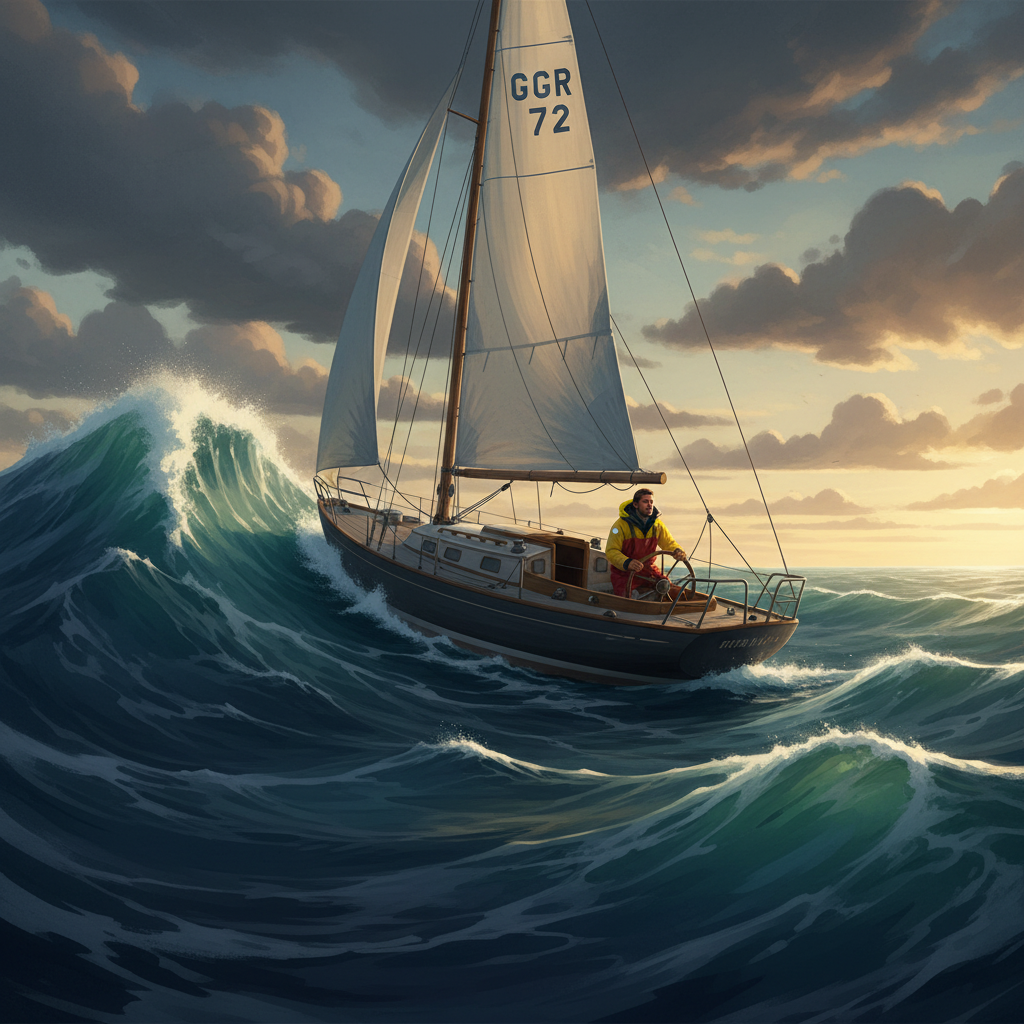
In a sailing landscape increasingly dominated by the breathtaking speeds of SailGP F50s and the multi-million dollar technological arms race of the America's Cup, the Golden Globe Race stands as a stark, almost anachronistic, counterpoint. While Emirates Team New Zealand and INEOS Britannia push the boundaries of foiling, wing sails, and real-time data analytics, the GGR asks its competitors to strip away all but the most fundamental elements of seamanship.
This dichotomy was brought into sharp focus recently with the story of an entrepreneur, a man accustomed to the relentless pace of business and the instant gratification of the digital age, who found his true calling not in the latest Harken winch system or North Sails 3Di, but in the timeless embrace of the open ocean. His journey into the GGR isn't merely a race; it's a profound meditation, a deliberate act of deceleration in a world obsessed with acceleration.
While Peter Burling and Jimmy Spithill dissect wind shifts and tidal gates with the precision of supercomputers, this GGR entrant is rediscovering the primal rhythm of the sea. For him, the vast, indifferent expanse of the ocean isn't a barrier to be conquered with Southern Spars and advanced composites, but a canvas for introspection. He speaks of the sea as a way to 'stop time,' a concept almost alien to the grand prix circuit where every second is meticulously measured and optimized.
In an industry where the business of sailing demands constant innovation and investment – think the $100M campaigns of American Magic or Luna Rossa – the GGR offers a refreshing, albeit brutal, reminder of sailing's core essence. It's a testament to the enduring power of the human spirit against the elements, a digital detox of the most extreme kind, and a poignant exploration of what truly matters when stripped of all modern conveniences. Perhaps there's a lesson here, even for those of us accustomed to chasing the next gust at 40 knots.