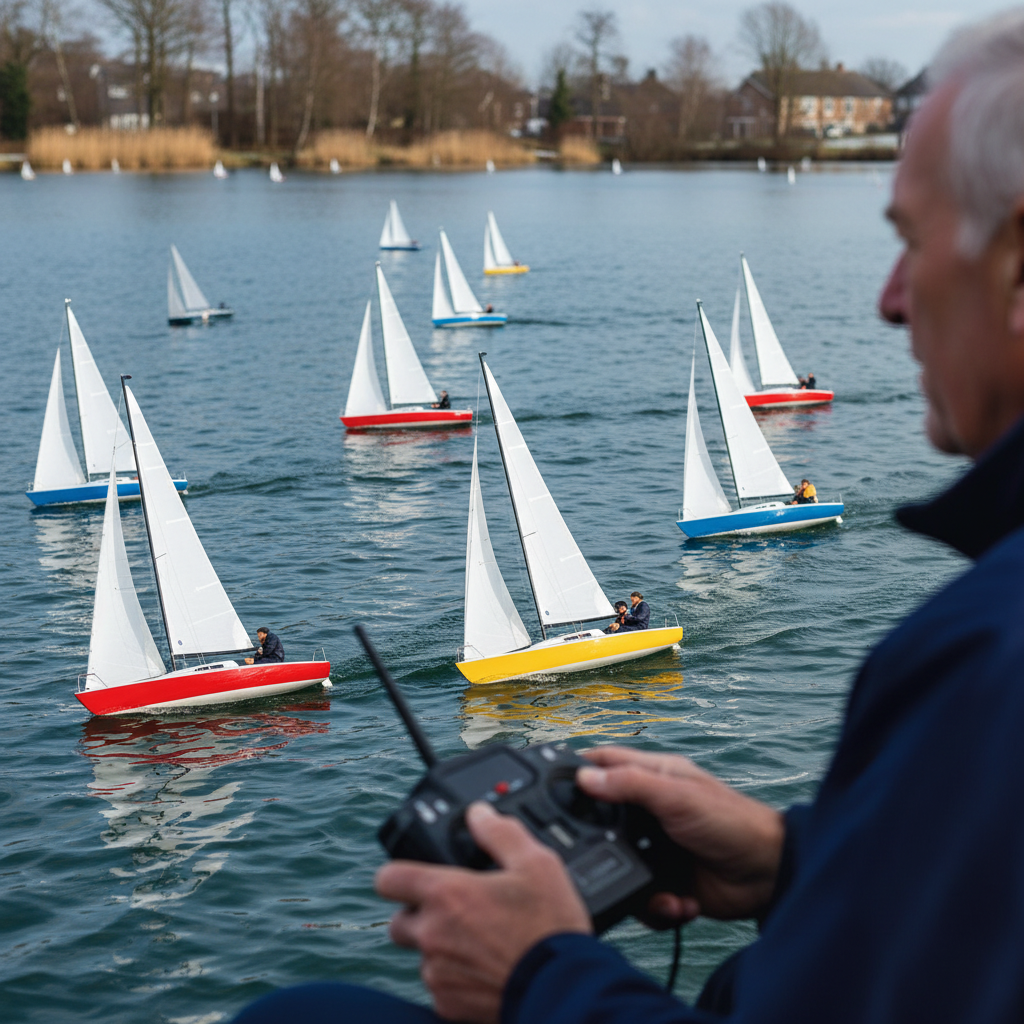
As the Medway RC Laser Club wrapped its Winter Series, a seemingly innocuous local event, the organizers' wry observation resonated deeply within the competitive sailing community: 'to sit on and make the same errors as the RC racing!' This sentiment, delivered with a knowing wink, underscores a fundamental truth of our sport, regardless of the scale of the vessel or the size of the budget.
Indeed, the intricate dance of wind shifts, current plays, and mark roundings that define a tight RC Laser race on a chilly Medway morning mirrors the high-stakes chess match unfolding in the America's Cup or a SailGP circuit event. The difference isn't in the strategic principles, but in the horsepower and the decimal points on the budget. A missed layline in an RC Laser might cost a heat; on an AC75, it could be a $100 million campaign's undoing. A poorly executed gybe in a 1:10 scale model is a minor frustration; for Peter Burling on an F50, it's a potential capsize and a significant points deficit.
The transition from these miniature battlegrounds to the grand prix circuit, or even just a club dinghy, often highlights the same fundamental flaws. Overstanding a mark, failing to anticipate a windward shift, or misjudging a port-starboard crossing are universal errors. The difference is the consequence. While the Medway sailors now prepare to 'sit on' their larger yachts, perhaps a valuable lesson has been reinforced: the relentless pursuit of perfection in boat handling and strategic acumen, honed on the smallest of boats, is the bedrock of success on the biggest stages. From the intricate foil canting systems of an AC75 to the simple sheet adjustments on an RC Laser, the principles of wind strategy, tidal gates, and optimal sail trim remain paramount. The errors, it seems, are just scaled up.