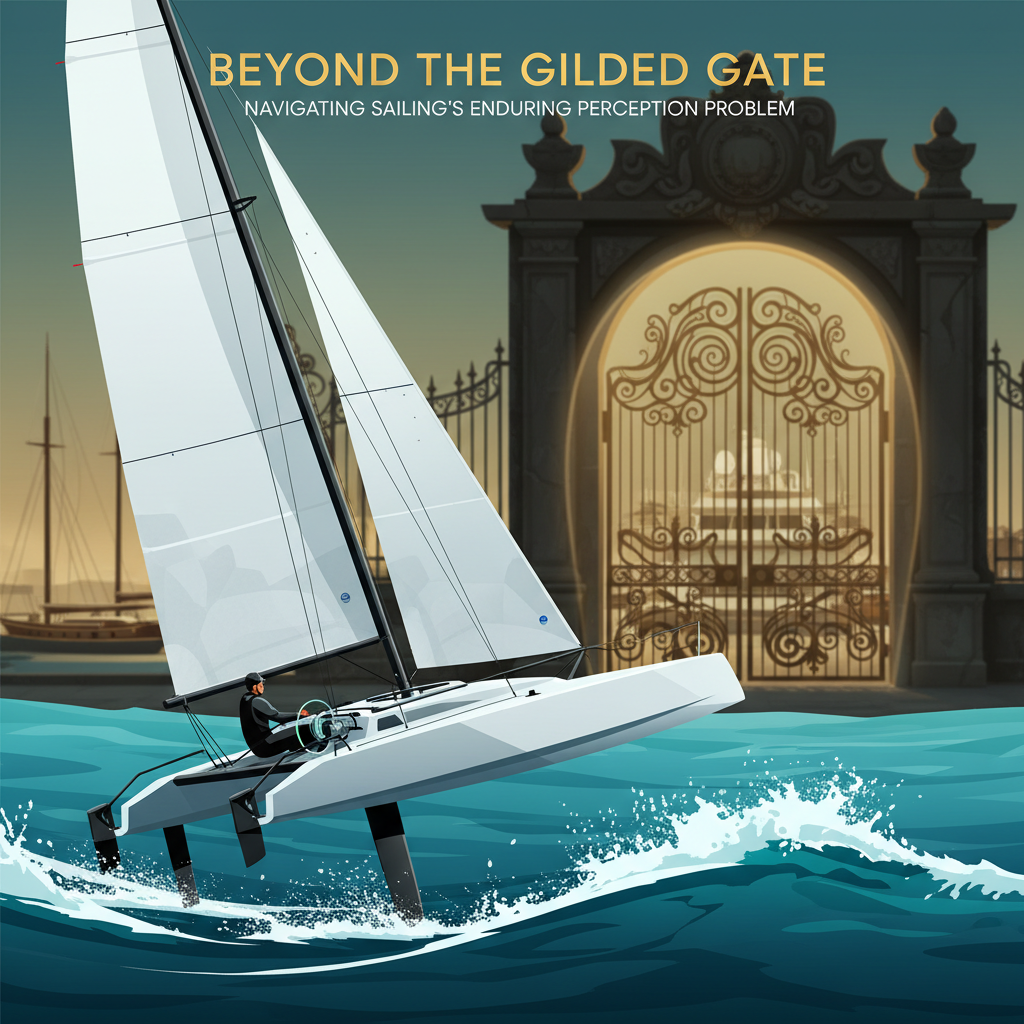
The recent musings from Sailing Scuttlebutt regarding sailing's 'posh narrative' strike a chord with anyone who's spent decades on the water, from the rough-and-tumble of an offshore classic to the rarefied air of an America's Cup village. It's an old chestnut, this perception of sailing as the exclusive domain of the privileged few, and one that the sport, despite its best efforts, struggles to shed.
Indeed, the rebranding from 'yachting' to 'sailing' for the Sydney 2000 Olympics was a telling, if largely cosmetic, attempt to democratize the image. Yet, when you look at the stratospheric budgets of an America's Cup campaign – think INEOS Britannia or Emirates Team New Zealand, each easily north of $100 million – or the sheer cost of a competitive grand prix program, it's hard to argue against the financial barriers. These aren't dinghy club dues; they're corporate war chests funding cutting-edge foiling technology, bespoke North Sails inventories, and Southern Spars rigs.
But to conflate the pinnacle of the sport with its entirety is a disservice. The reality for most sailors is far removed from the hydrofoiling AC75s or the globe-trotting Ocean Race yachts. Community sailing centers, local regattas, and even club-level keelboat racing offer accessible entry points. The challenge lies in bridging that perception gap. While the high-octane drama of SailGP, with its accessible, stadium-style racing, does wonders for engagement, the underlying narrative persists. It's a battle for hearts and minds, proving that the thrill of wind and water, the strategic chess match of a tidal gate, or the sheer physical demands of a Harken winch grind, are universal, not exclusive.