Craig Leweck's recent musings in Scuttlebutt hit a nerve that resonates deeply within the grand prix circuit and even the hallowed halls of the America's Cup syndicates: the enduring quest for participation. We, as an industry, are quick to laud the latest advancements – the meticulously engineered Southern Spars rigs, the intricate Harken hydraulics, or the ever-evolving North Sails inventories that define the bleeding edge of performance. Indeed, the technological arms race is a spectacle in itself, driving innovation from the AC75s of Emirates Team New Zealand to the F50s of SailGP.
Yet, Leweck astutely points out a critical oversight: while we obsess over the perfect wing sail or the optimal foil cant, the fundamental allure of the sport for a new generation might be far simpler. It's not the sheer speed of Peter Burling on an F50, nor the tactical brilliance of Ben Ainslie navigating a shifty Solent. It's the community. Think about it: the camaraderie forged during a transatlantic crossing, the shared triumph of a hard-fought America's Cup campaign, or even the simple joy of a club race on a Saturday afternoon. This sense of belonging, of being part of something larger than oneself, is a powerful magnet.
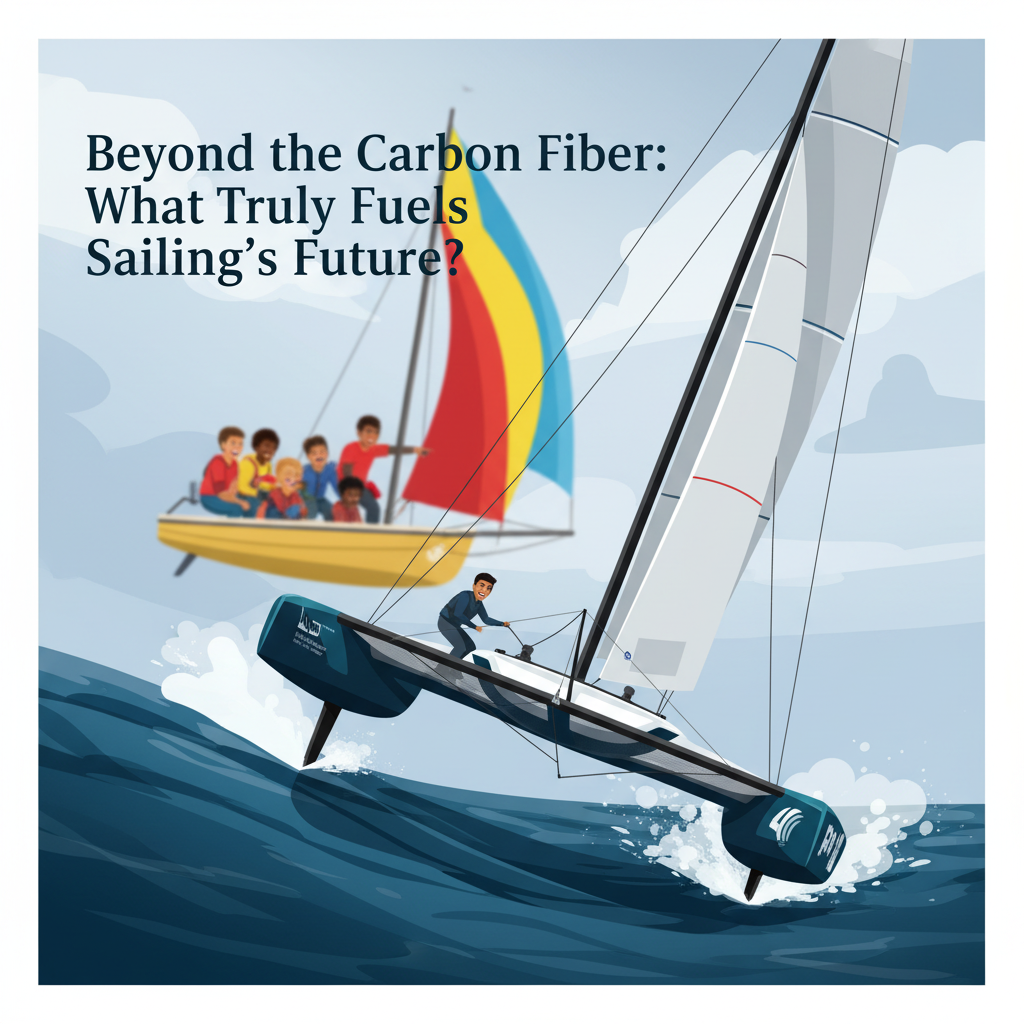
Contrast this with other sports where the 'equipment' is standardized – a basketball, a court. Sailing, with its infinite variables of boat design, sail plans, and even the very elements, often prioritizes the hardware. But perhaps the true 'equipment' we should be focusing on is the human connection. The next generation isn't just looking for the fastest boat; they're looking for a tribe. And in that quest for community, not just carbon fiber, lies the true path to sustained growth and a vibrant future for our sport.