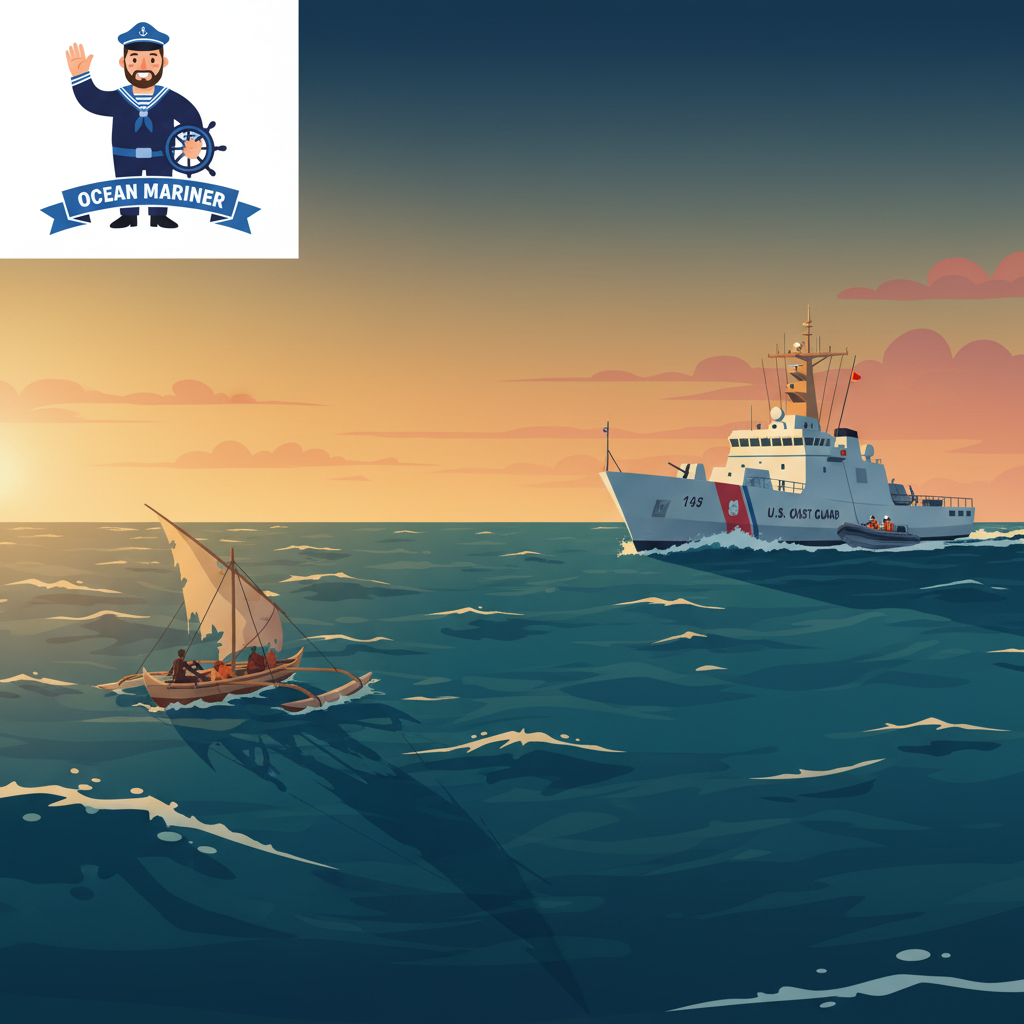
While our gaze is often fixed on the high-octane drama of SailGP hydrofoiling across Sydney Harbour or the strategic chess match unfolding in the America's Cup, it's crucial to remember the foundational pillars of maritime safety that underpin all ocean activity. A recent incident off the coast of Micronesia serves as a stark reminder of the U.S. Coast Guard's expansive and often unheralded global reach, a reach that extends far beyond domestic waters.
A family, undertaking what should have been a straightforward passage in their 23-foot single-outboard skiff, found themselves adrift when their engine failed. In the vast, unforgiving expanse of the Pacific, such an occurrence can quickly escalate from inconvenience to catastrophe. Enter the USCGC Midgett, a 418-foot Legend-class cutter, a vessel more accustomed to patrolling international waters for drug interdiction or enforcing fisheries regulations than performing search and rescue in such a remote locale. Yet, when the call came, the Midgett, with its advanced surveillance capabilities and highly trained crew, was ready.
This incident underscores the critical role played by organizations like the Coast Guard. Whether it's a broken rudder on a grand prix yacht in the Southern Ocean or a stalled outboard in the Western Pacific, the fundamental principles of seamanship and emergency response remain paramount. While we dissect the nuances of wing sails versus soft sails or the tactical brilliance of Peter Burling, let's not forget the silent guardians of the sea, whose vigilance and capability ensure that even the most remote maritime misadventures can have a positive outcome. It's a testament to the enduring spirit of maritime service, a spirit that resonates with every sailor who has ever pushed off from a dock.