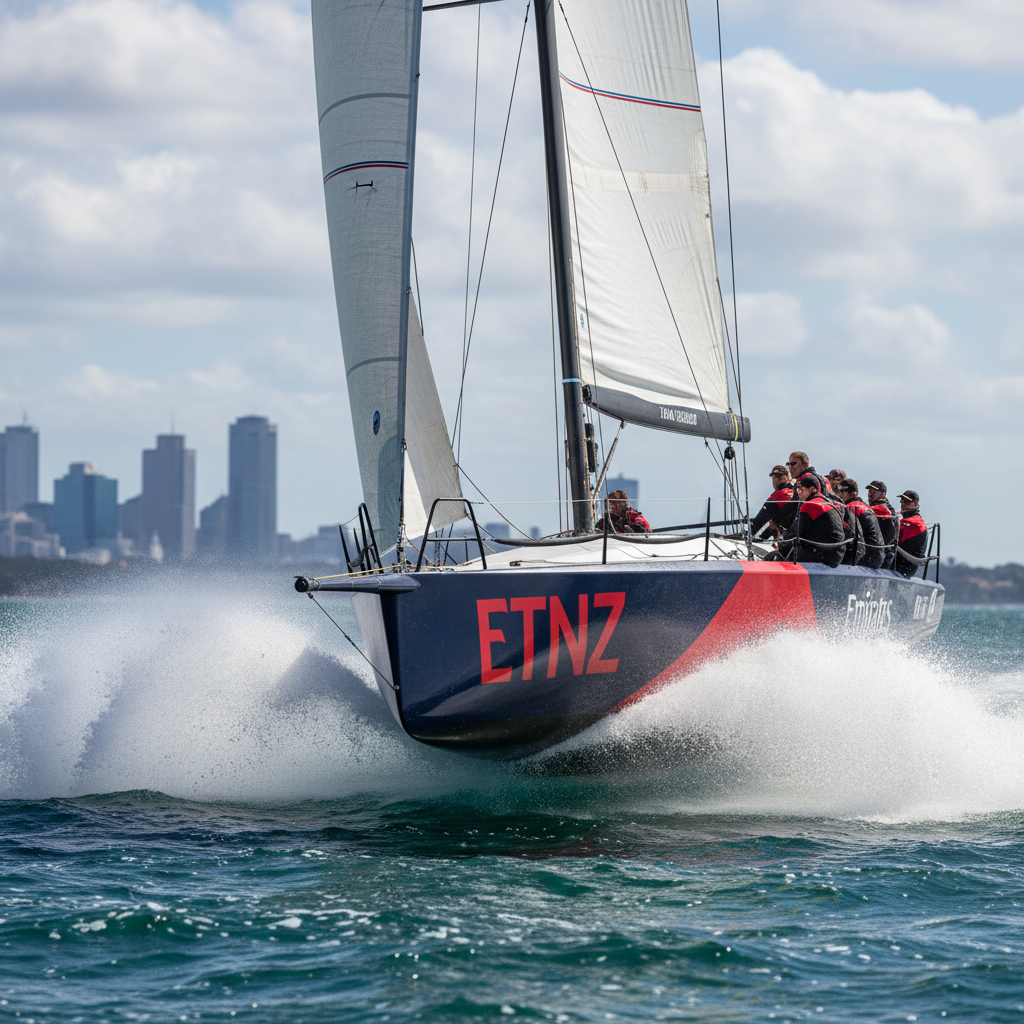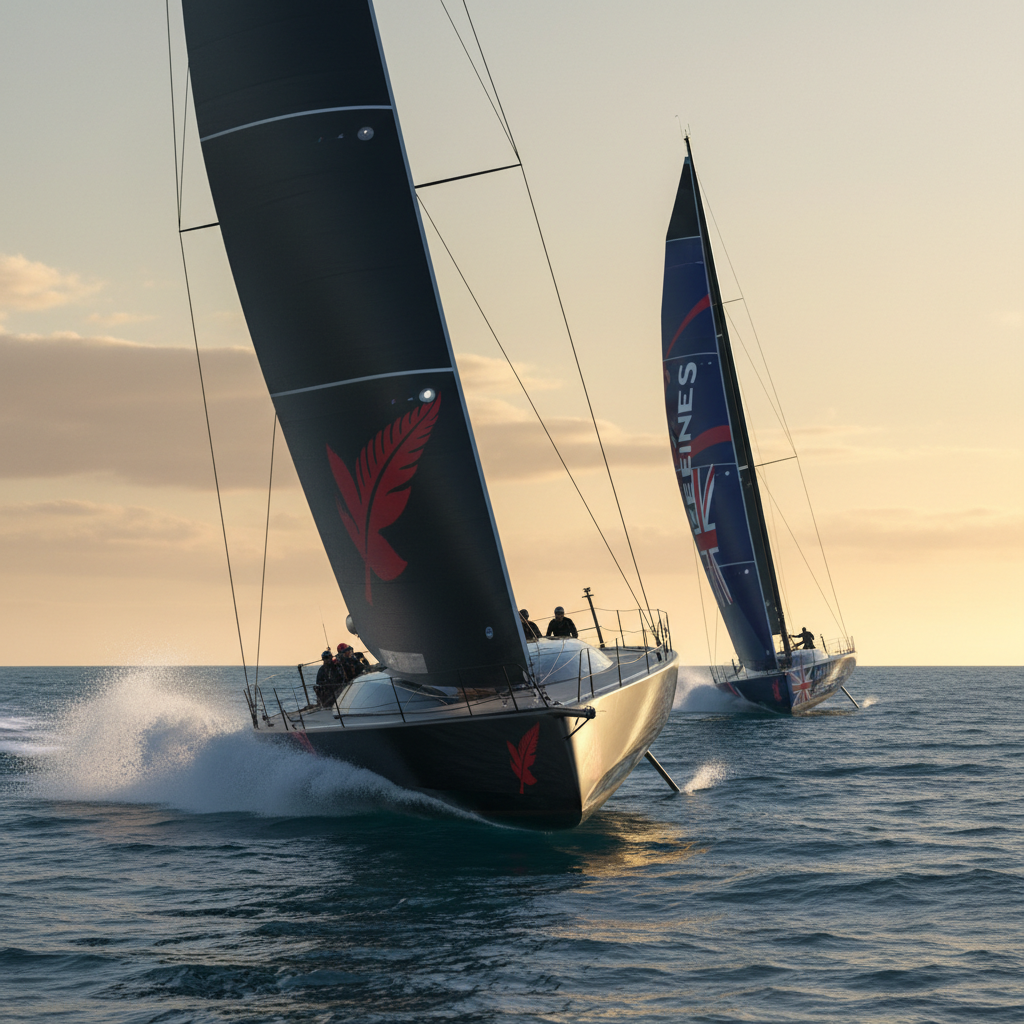
The Hauraki Gulf, a crucible for America's Cup dreams, once again played host to the cutting edge of sailing technology this Monday. Emirates Team New Zealand, ever the meticulous hosts and defenders, clocked their fifth day of AC75 testing, capitalising on a robust sea breeze that swept across the East Coast Bays.
Sources from the recon diary indicate a productive session for the Kiwis, likely focusing on systems integration and sail trim in conditions that will undoubtedly mirror some of the race days to come. With their custom-built AC75, every gust and lull offers invaluable data for their North Sails and Southern Spars packages, refining the intricate dance between hull, foils, and wing. For Peter Burling and the afterguard, these early hours on the water are crucial for developing the nuanced feel required to extract every fraction of a knot from these demanding machines.
Meanwhile, across the globe, a significant development emerged from Cagliari. INEOS Britannia, under the seasoned leadership of Sir Ben Ainslie, made its first foray onto the water with not one, but two AC40s. This dual-boat approach is a shrewd tactical move, allowing for simultaneous data acquisition, direct comparative analysis of setups, and perhaps even early match-racing drills. While not the full-fat AC75, the AC40s provide a vital platform for crew training, foiling development, and the integration of Harken systems, all without the astronomical operational costs of the larger platform. The British entry's early start with these smaller, yet potent, foiling monohulls signals a serious intent to hit the ground running when their AC75 eventually splashes down.