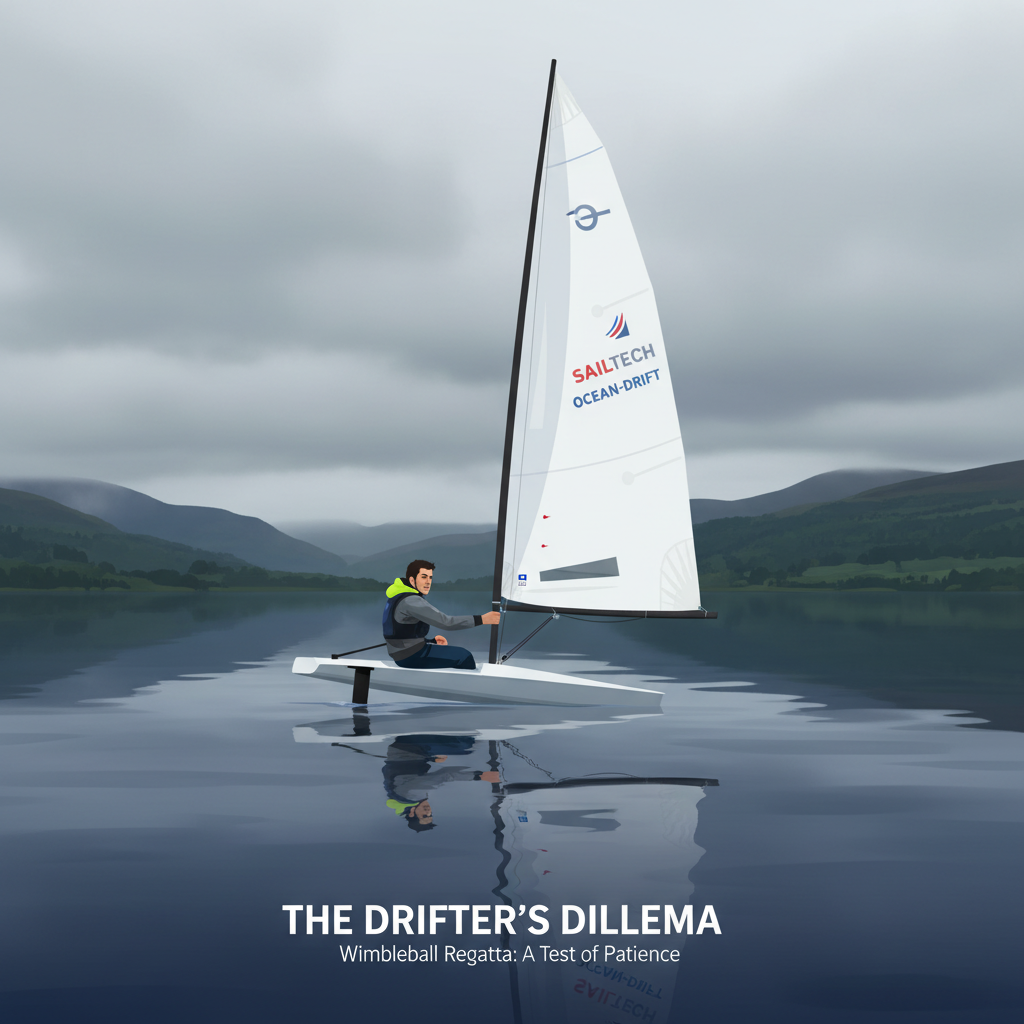
Wimbleball Lake, a venue typically associated with the bluster and bite one expects from an event dubbed the 'Exmoor Beastie,' delivered a decidedly un-beast-like performance for its 2026 iteration. Far from the gale-force theatrics and driving rain that often characterize British inland racing, competitors were instead met with a meteorological paradox: a severe, almost defiant, lack of wind.
This wasn't merely a light air day; it was a masterclass in the drifter's dilemma. What zephyrs did materialize were capricious, arriving from every point of the compass with the unpredictable whimsy of a child's kite. For sailors accustomed to reading consistent shifts and executing precise tactical plays, this was a cruel twist. Forget the intricate dance of wing sails or the power delivery of a North 3Di main; this was about finding the ghost of an air current, about the almost imperceptible ripple on the water that might, just might, carry you forward.
Indeed, the greatest challenge wasn't the boat-on-boat combat, but the relentless sun. With the wind gods seemingly on holiday, the oppressive heat became a genuine concern, with sunstroke a very real possibility for those baking under the summer sky. This wasn't the America's Cup, where a $100M campaign can afford a dedicated meteorologist to divine every micro-shift. This was grassroots sailing, where ingenuity and sheer bloody-mindedness were the only tools against an uncooperative atmosphere.
The Exmoor Beastie 2026 will undoubtedly be remembered, not for its ferocity, but for its profound calm. It was a regatta that tested a different kind of sailing skill – the ability to remain focused, to spot the unseeable, and to endure the frustration of a racecourse that refused to cooperate. Sometimes, the greatest challenges come not from too much wind, but from too little.