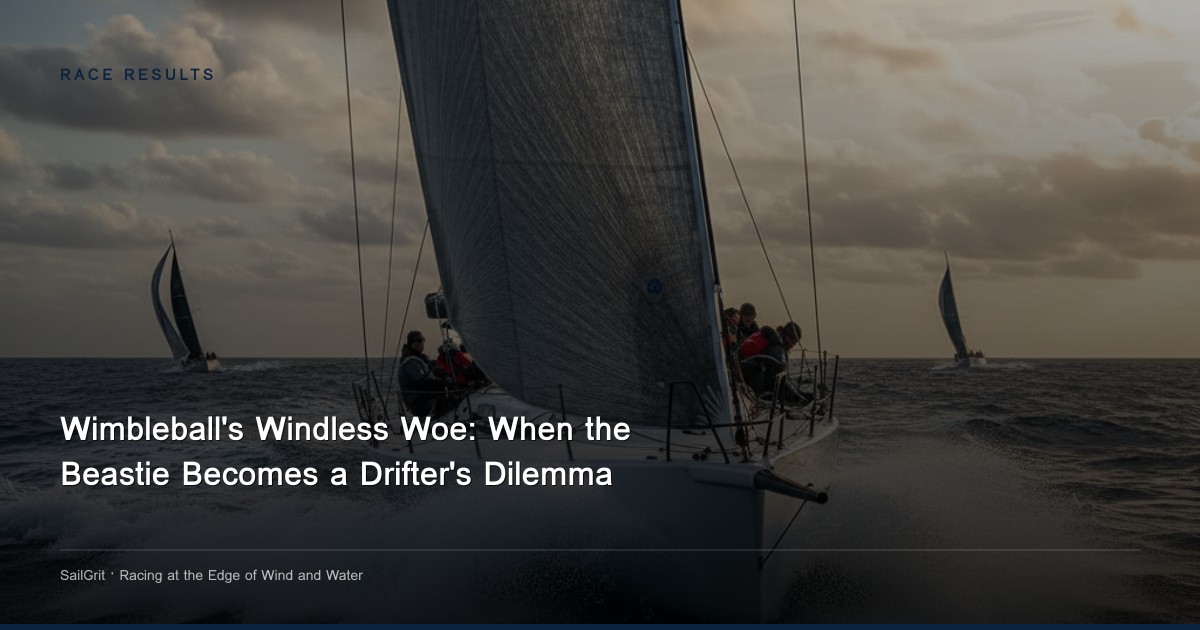
The siren song of speed often drowns out the quiet hum of caution, a lesson learned with brutal clarity by a crew battling gale-force conditions off Haiti. As recounted by James Evenson on Sailing Scuttlebutt, this wasn't a grand prix circuit sprint, but a stark reminder that even the most finely tuned machines can be humbled by the unforgiving expanse of the ocean.
Thirty-five knots, gusting to 45 – a proper blow, the kind that separates the sailors from the joyriders. Triple-reefed mainsails are a testament to the conditions, not a luxury. But the ominous thrum of a bilge pump, cycling with increasing frequency, signals a deeper malaise than just heavy weather. The initial checks, the frantic search for a breach, the growing dread – these are the moments that define offshore sailing, stripping away the glamour of carbon fiber and hydraulic systems to reveal the raw vulnerability of man and machine against the elements.
This isn't the carefully choreographed ballet of an America's Cup AC75, where shore teams are on standby with a spare foil or a new wing sail. This is the wild, untamed frontier where a single point of failure can cascade into catastrophe. The design philosophy of 'fast, not far' is a double-edged sword. While it delivers exhilarating performance in controlled environments, it often leaves little margin for error when the sea decides to test the limits of structural integrity and human endurance.
Such incidents serve as a stark reminder to the competitive sailing community, from the high-stakes world of SailGP to the demanding crucible of The Ocean Race. No amount of North Sails technology or Harken hardware can entirely negate the inherent risks. It's a sobering thought, a whisper of humility in the face of our relentless pursuit of speed and glory.