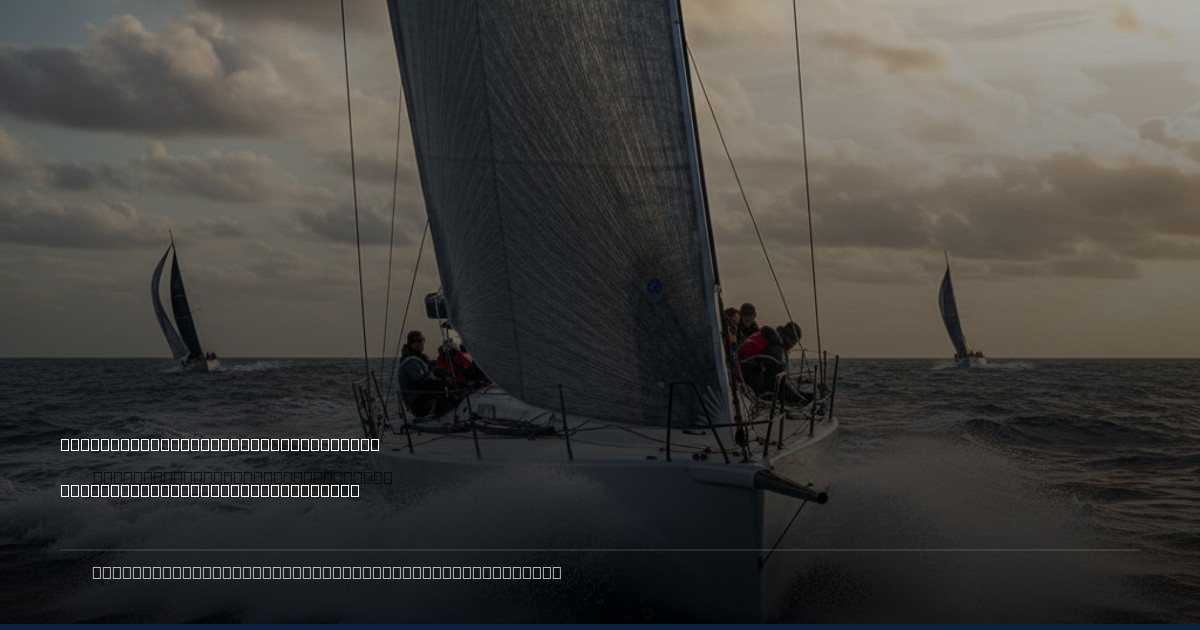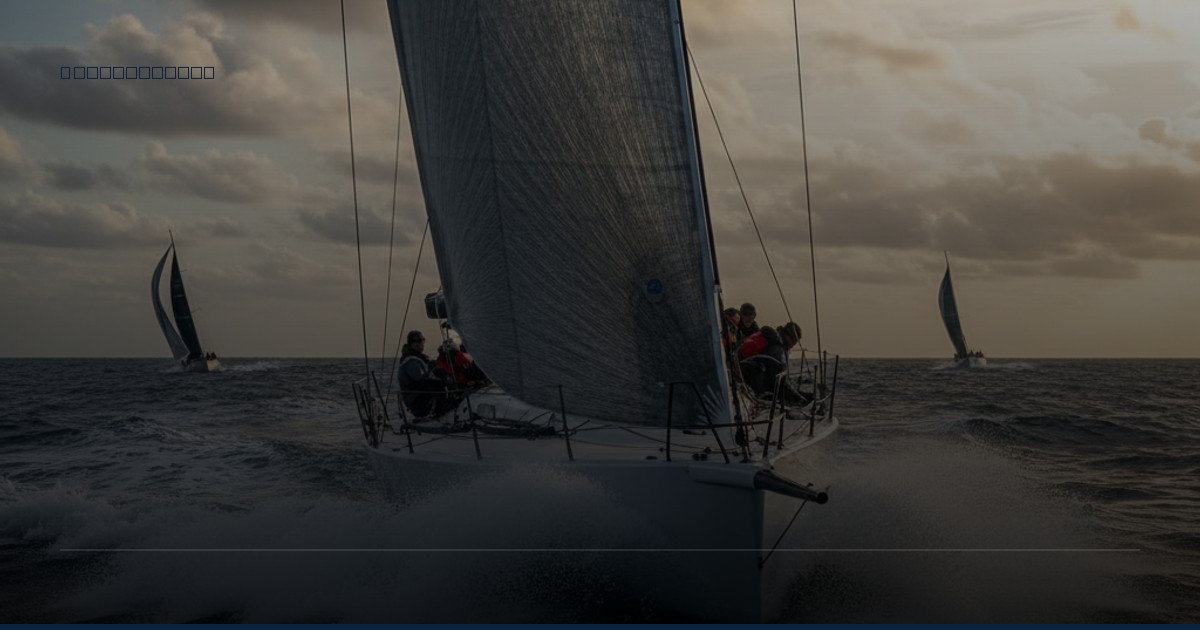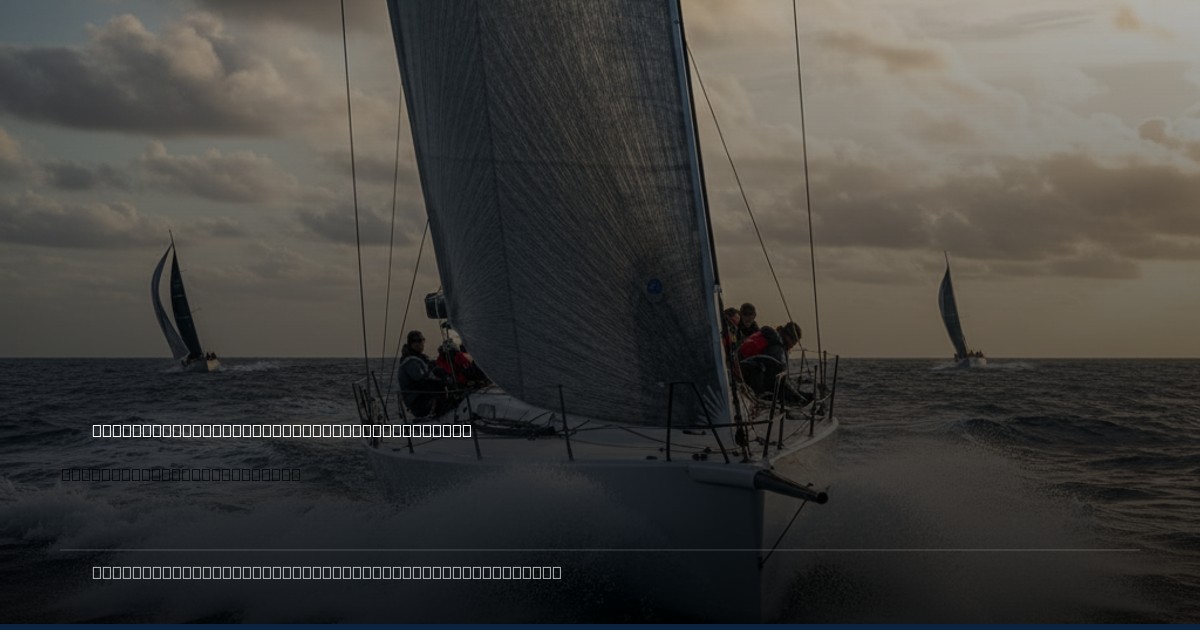
In the high-stakes world of offshore racing, where every fractional knot can mean the difference between glory and an also-ran finish, the adage that 'you can't manage what you don't measure' rings truer than ever. Yet, as seasoned offshore coach Stuart Greenfield astutely points out, many otherwise well-sailed boats are perpetually underperforming, not due to a lack of talent or effort, but because they are quite simply looking at the wrong numbers.
Greenfield, a man who has likely seen more sunrises and sunsets from a racing cockpit than most of us have from solid ground, identifies a pervasive and insidious problem: instrument calibration. It’s a moment, he explains, early in any coaching engagement, when the truth of a boat's actual performance versus its displayed data becomes glaringly apparent. This isn't about faulty Harken winches or a poorly tuned Southern Spars rig; it's about the very foundation of performance analysis.
Think about it: how many times have you seen a boat, bristling with the latest B&G or Raymarine electronics, meticulously tracking VMG, only to find themselves perpetually a few tenths off the pace? The issue often lies in subtle, uncorrected errors in boat speed through water, wind angle, or even heel compensation. A transducer that's off by a mere half-knot, or an anemometer that's consistently reading a few degrees askew, can cascade into entirely flawed strategic decisions. Your North Sails inventory, optimized for precise wind angles, becomes less effective when the data guiding its trim is fundamentally flawed.
This isn't just about chasing theoretical polars; it's about understanding the real-world performance envelope of your vessel. Without accurate data, weather routing becomes a guessing game, tidal gates are misjudged, and the critical decisions made at 20 knots in a squall are based on a house of cards. Greenfield's insight is a stark reminder to every competitive sailor, from the weekend warrior to the Grand Prix circuit professional: before you blame the wind, the current, or even your crew, take a hard, honest look at the numbers your boat is feeding you. They might just be the silent saboteur of your offshore ambitions.