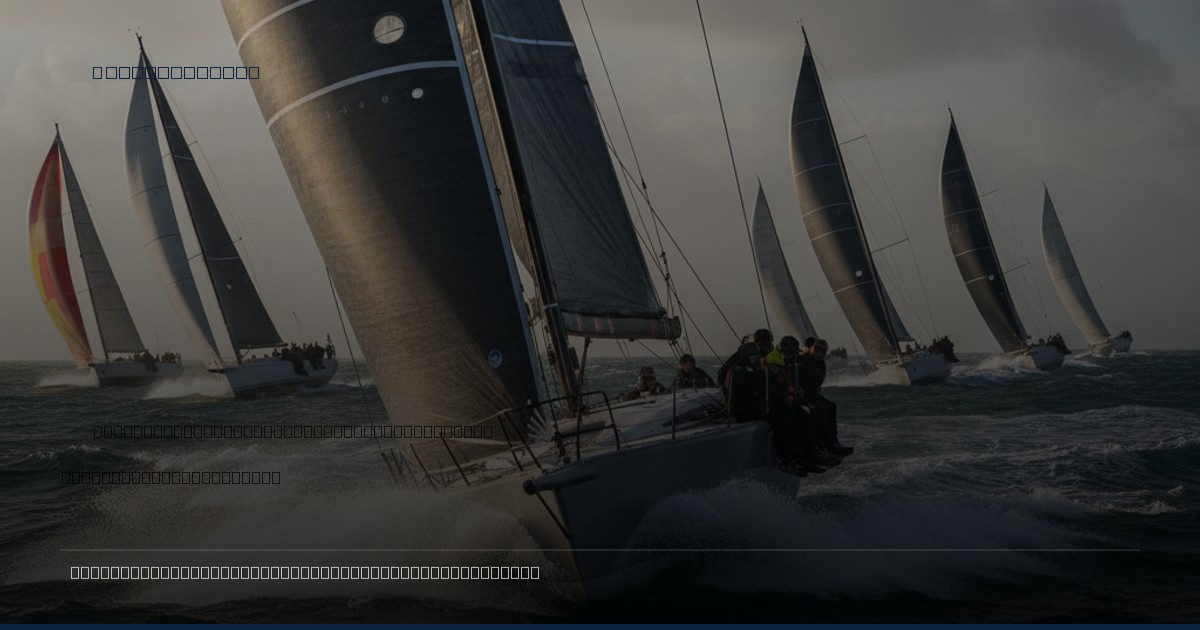
The sailing world, from the grand prix circuit to your local club race, operates under the immutable laws of the Racing Rules of Sailing. Yet, even for the most seasoned tacticians, the nuances of avoidance, particularly under Rule 14, can be a minefield. The latest 2025-2028 Case Book, a vital companion to the RRS, has just dropped a stark reminder with Case 87, and it's a lesson every helmsman and crew boss needs to internalize.
The scenario is classic: a right-of-way boat, S, is struck amidships by P3, a give-way boat that 'made no attempt to avoid S.' The protest committee's verdict? Both disqualified. P3 for the obvious breach of Rule 10 (Port tack boat keeps clear), and S under Rule 14 (Avoiding Contact).
This isn't just a dry rule interpretation; it's a fundamental principle of competitive sailing. While a right-of-way boat 'need not act to avoid contact until it is clear that the other boat is not keeping clear,' that 'clear' moment is often a blink-and-you-miss-it decision. For S, the moment P3's inaction became undeniable, the obligation to avoid contact, even if it meant sacrificing a tactical advantage or a perfect line, became paramount. The damage sustained, 'considerable' and 'amidships at right angles,' suggests S held her course too long, perhaps banking on P3's compliance or simply misjudging the give-way boat's intent.
In the high-stakes environment of SailGP, where foiling catamarans scream across the water at 50 knots, or during an America's Cup pre-start, these decisions are made in fractions of a second. Imagine Peter Burling on an AC75, pushing the limits, only to have a competitor misjudge. That 'clear' moment for avoidance becomes a matter of millions of dollars and potentially catastrophic damage. This case underscores that while the right-of-way is a powerful tool, it doesn't grant immunity from the responsibility to prevent a collision. It's a sobering reminder that even when you're 'in the right,' you still have a duty to avoid the crash.