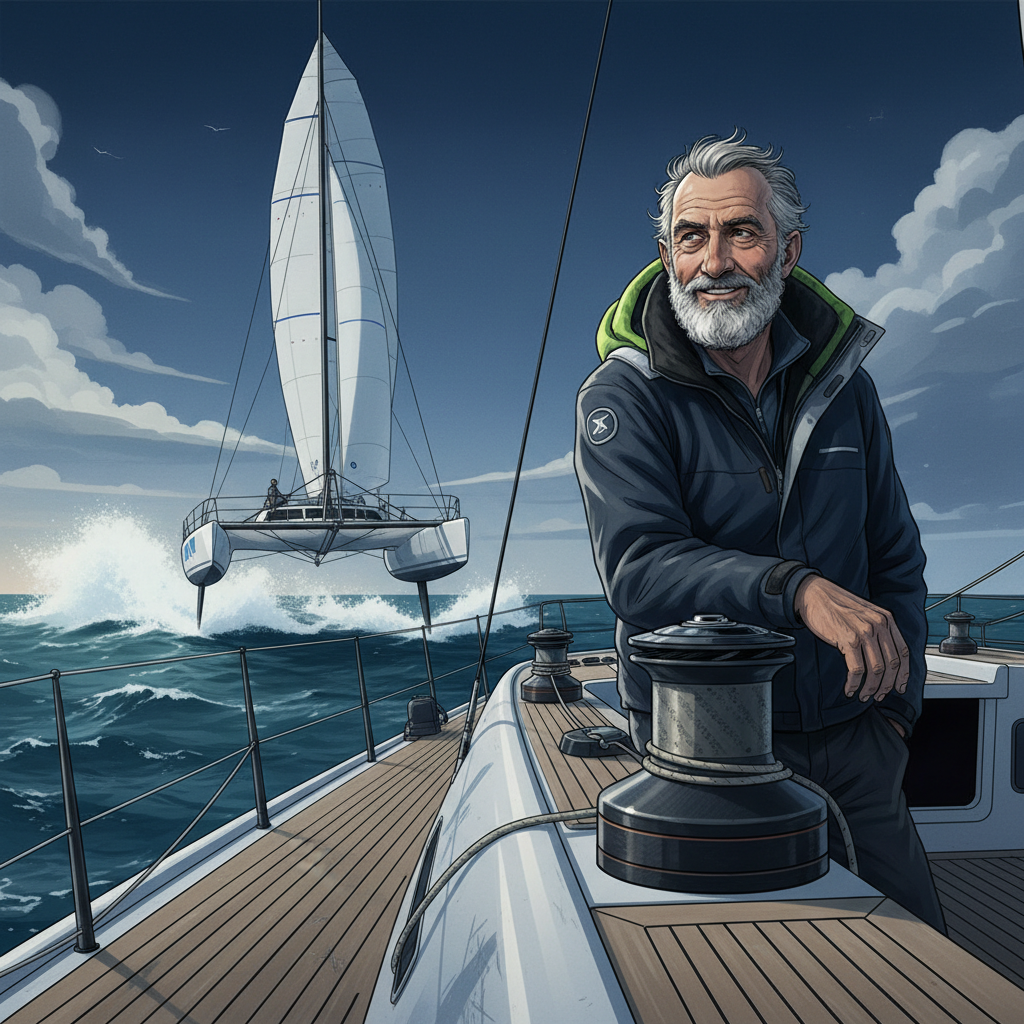
For those of us who've spent more time on the water than on solid ground, the Scuttlebutt Newsletter's 'Curmudgeon’s Observation' has long been a delightful, if sometimes perplexing, fixture. This week's gem – the one about lost socks returning as misfit Tupperware lids – might seem far removed from the hydrofoiling AC75s or the relentless grind of The Ocean Race. Yet, as I reflect on decades covering this sport, the curmudgeon's wisdom resonates with an uncanny accuracy for the challenges faced by even the most well-funded campaigns.
Consider Emirates Team New Zealand's relentless pursuit of perfection, only to find a crucial sensor glitch on a new foil design just days before a key test. Or INEOS Britannia pouring millions into R&D, only for a sudden, unforecasted wind shift to unravel a perfectly executed race strategy. It’s the maritime equivalent of that rogue Tupperware lid – an unexpected, ill-fitting anomaly that throws a wrench into the meticulously planned machine.
From a Harken winch failing at a critical moment to a North Sails inventory arriving with a subtle, unforeseen cut, the variables are endless. These aren't just minor annoyances; in a sport where $100 million campaigns hinge on milliseconds and millimeters, these 'misfit lids' can derail an America's Cup challenge or cost a SailGP event. The best teams, like Luna Rossa or American Magic, aren't just good at sailing; they're masters at adapting to the curmudgeon's unpredictable universe, turning those rogue elements into, if not a perfect fit, at least a workable solution. It’s a testament to the resilience and ingenuity that defines our sport.