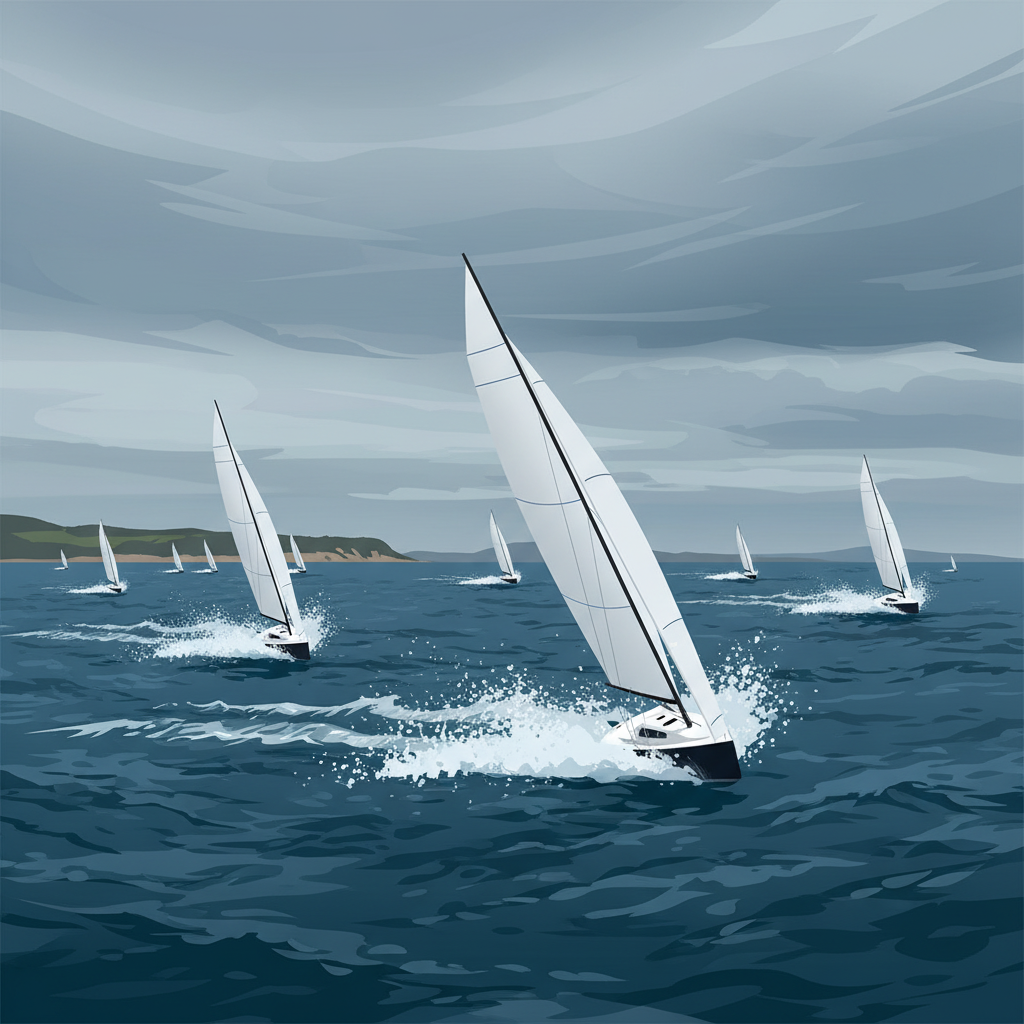
The Thames Estuary, a crucible for competitive sailing for centuries, once again played host to a spirited display of tactical prowess, albeit on a slightly smaller scale. Week four of East Kent's DF95 Spring Series at Barton's Point on the Isle of Sheppey saw a double-digit fleet of DragonFlite 95s battle a persistent ENE breeze, gusting from a steady 13 knots to a punchy 16.
While the grand prix circuits like SailGP or the America's Cup command headlines with their multimillion-dollar budgets and cutting-edge foiling technology, the grassroots of our sport, exemplified by events like this DF95 series, are where the true passion for wind and water is cultivated. These radio-controlled yachts, though diminutive, demand the same fundamental understanding of wind shifts, current, and sail trim that defines success on any racecourse, from a local club regatta to the Southern Ocean.
Fifteen races were contested, a testament to the dedication of the East Kent contingent. An ENE wind on the south side of the Thames and Medway presents a unique set of challenges, often bringing with it a choppy, confused sea state and potential for significant wind bends around the local topography. Sailors would have been acutely aware of the need for precise sail settings – perhaps a slightly flatter jib and a depowered main – to maintain control and speed in the gusts, while constantly looking for subtle lifts and headers across the course.
This consistent turnout and high race count underscore the vibrant health of the DF95 class, offering accessible, competitive sailing that hones skills applicable to any larger keelboat or dinghy. It's a reminder that whether you're trimming a wing sail on an AC75 or adjusting the sheets on a DF95, the fundamental principles of harnessing the wind remain timeless.