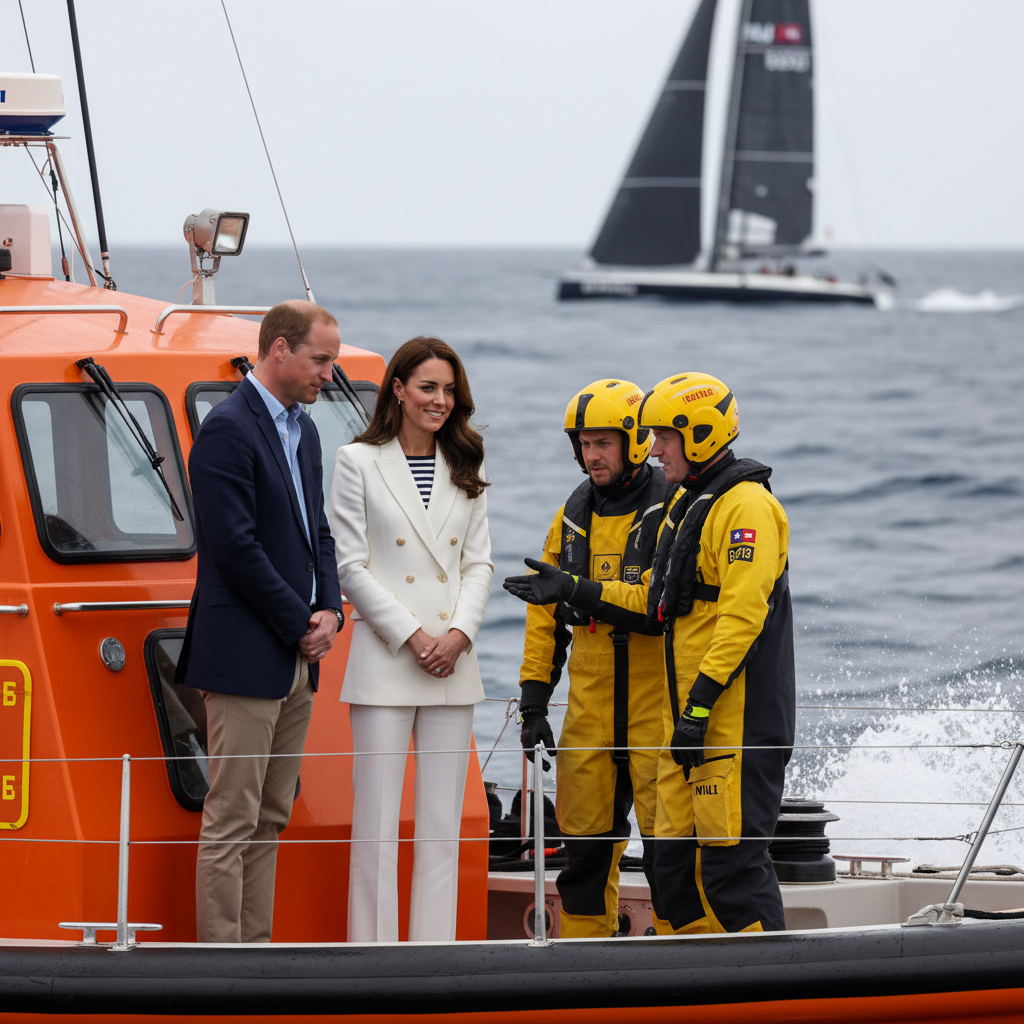
While our gaze is often fixed on the cutting-edge hydrofoils of an AC75, the tactical chess match of a SailGP F50, or the relentless grind of The Ocean Race, there's a foundational element of the maritime world that underpins it all: safety at sea. This week, the Royal National Lifeboat Institution (RNLI) received a well-deserved moment in the sun, welcoming Their Royal Highnesses, The Prince and Princess of Wales, to their Waterloo Bridge station.
For those of us who've spent countless hours offshore, whether racing or delivering, the RNLI represents an invaluable, often silent, guardian. Their presence, particularly in the challenging tidal flows of the Thames, is a testament to their unwavering commitment. While we debate the merits of a North Sails 3Di RAW mainsail versus a traditional panelled solution, or the engineering marvels of a Southern Spars rig, the RNLI is out there, often in conditions that would make even a seasoned grand prix sailor think twice, rescuing those in peril.
This royal visit, reported by Sail-World, isn't just a photo opportunity; it's a critical endorsement. It draws attention to the tireless volunteers and staff who operate state-of-the-art rescue craft – vessels that, in their own right, are paragons of marine engineering, albeit designed for resilience and rescue, not outright speed. In a sport increasingly reliant on multi-million dollar campaigns and bespoke Harken winch systems, it's a humbling reminder of the human element and the selfless dedication required to keep our waterways safe. It’s a call to remember the broader maritime community, beyond the regatta circuit, and the essential services that allow us all to pursue our passion on the water.