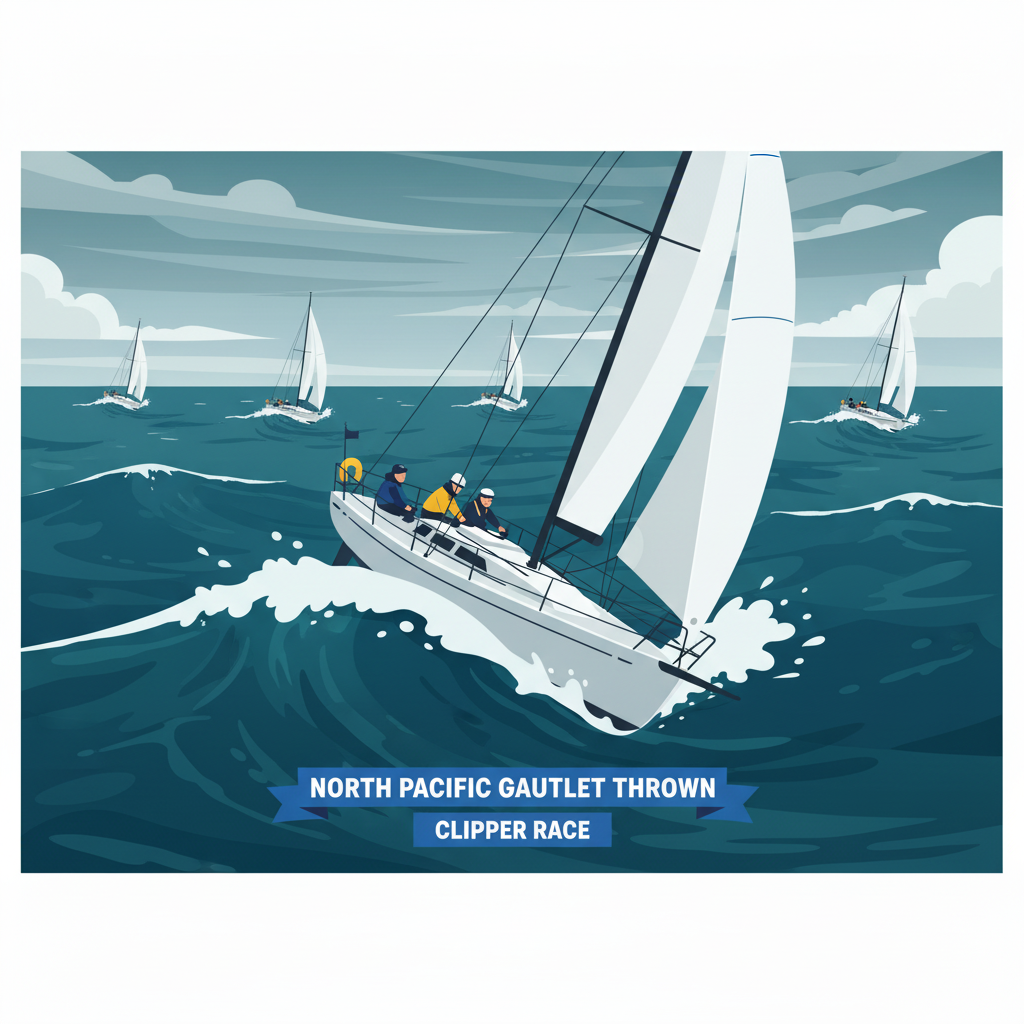
As the grand prix circuit gears up for its European summer and the America's Cup teams refine their AC75s in Barcelona, a different kind of sailing drama is unfolding in the vastness of the North Pacific. This week, the Clipper Round the World Yacht Race fleet departed Tongyeong, South Korea, setting their bows towards Seattle, USA, and into the teeth of one of the planet's most unforgiving ocean passages.
For the 200 adventurers aboard these 70-foot yachts, this leg isn't about foiling at 50 knots or optimizing a wing sail's angle of attack. It's about raw endurance, seamanship, and the sheer grit required to navigate thousands of miles of open ocean. The North Pacific, particularly at this time of year, is a crucible, renowned for its colossal waves, often driven by the relentless fetch across the Bering Sea, and the unpredictable, often violent, low-pressure systems that sweep across its surface. Weather routing here is less about finding a fast lane and more about avoiding catastrophic conditions.
Unlike the hyper-optimized machines of SailGP or the America's Cup, the Clipper yachts, while robust, demand constant vigilance. These sailors will face everything from ice-cold squalls to the profound isolation that only the world's most remote oceans can deliver. This isn't just a race; it's a profound test of human spirit against nature's grandeur. While the global sailing spotlight often focuses on carbon fiber and cutting-edge technology, the Clipper Race reminds us of sailing's fundamental challenge: the timeless battle between man and the sea.