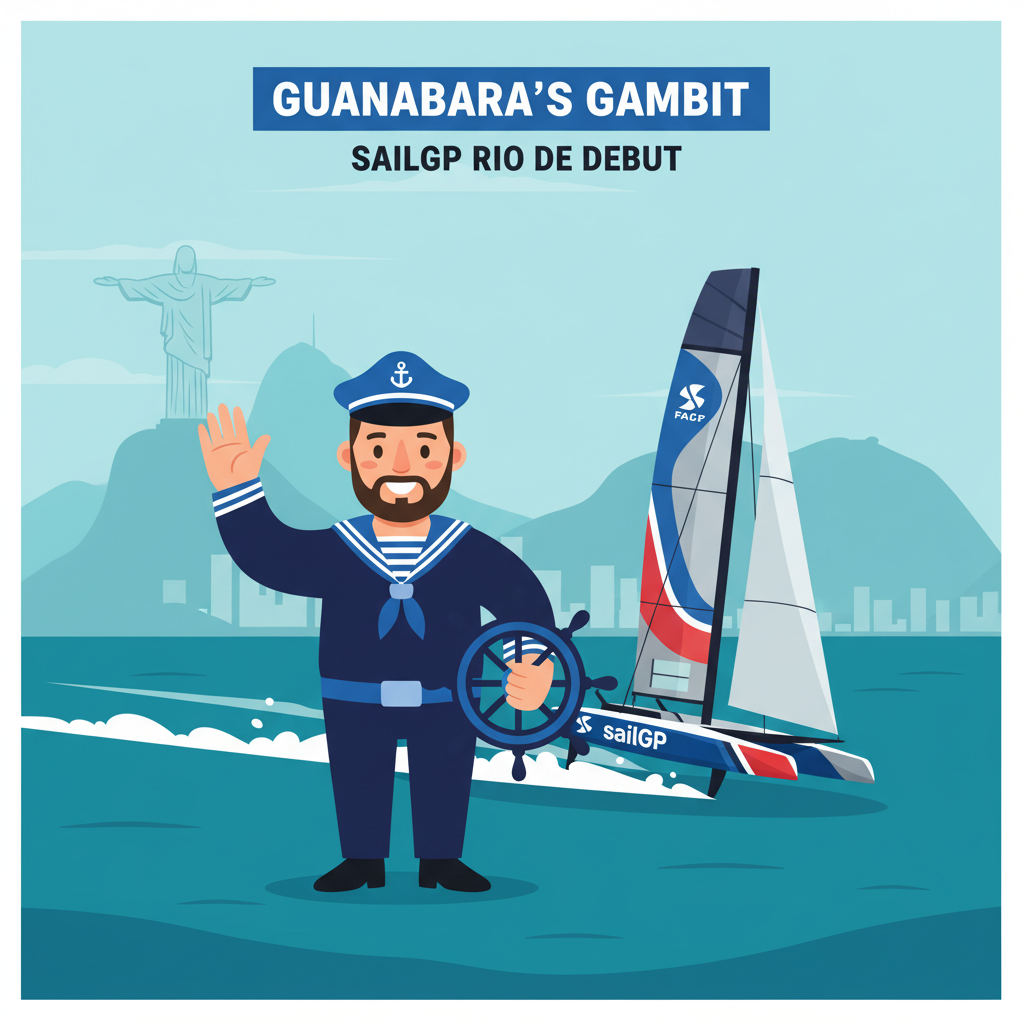
Rio de Janeiro, Brazil – The F50 fleet is poised to carve its way through the historic waters of Guanabara Bay this weekend, marking SailGP's long-awaited South American debut. This isn't merely another stop on the global circuit; it’s a return to a venue steeped in Olympic sailing lore, a place where the fickle breezes and tidal nuances can, and often do, rewrite the script.
For those of us who recall the 2016 Games, Guanabara Bay is a masterclass in meteorological caprice. The 'ladders and snakes' analogy couldn't be more apt. One moment, you're riding a thermal up the fleet, the next, a localized pressure drop or a tidal eddy, perhaps influenced by the Sugarloaf Mountain itself, can send you plummeting. This isn't just about raw boat speed; it's a profound test of tactical acumen and real-time decision-making, the kind that separates the Peter Burlings from the pretenders.
The F50s, with their Southern Spars rigs and Harken-powered control systems, demand absolute precision in these conditions. The wing sail's efficiency is legendary, but in a venue where the wind angle can shift dramatically, the crew's ability to depower and repower, to find those elusive gusts, will be paramount. We’ll be watching closely to see which teams have done their homework on the local conditions, not just in terms of wind strategy but also the subtle tidal gates that can offer a significant advantage or a crippling penalty.
This event carries significant weight in the overall championship standings. With the season progressing, every point is gold. Expect the usual suspects – Tom Slingsby's Australia, Emirates Team New Zealand – to be in the mix, but don't count out a dark horse performance from a team that can truly master Guanabara's complexities. This isn't just a race; it's a high-stakes chess match on foiling platforms.
