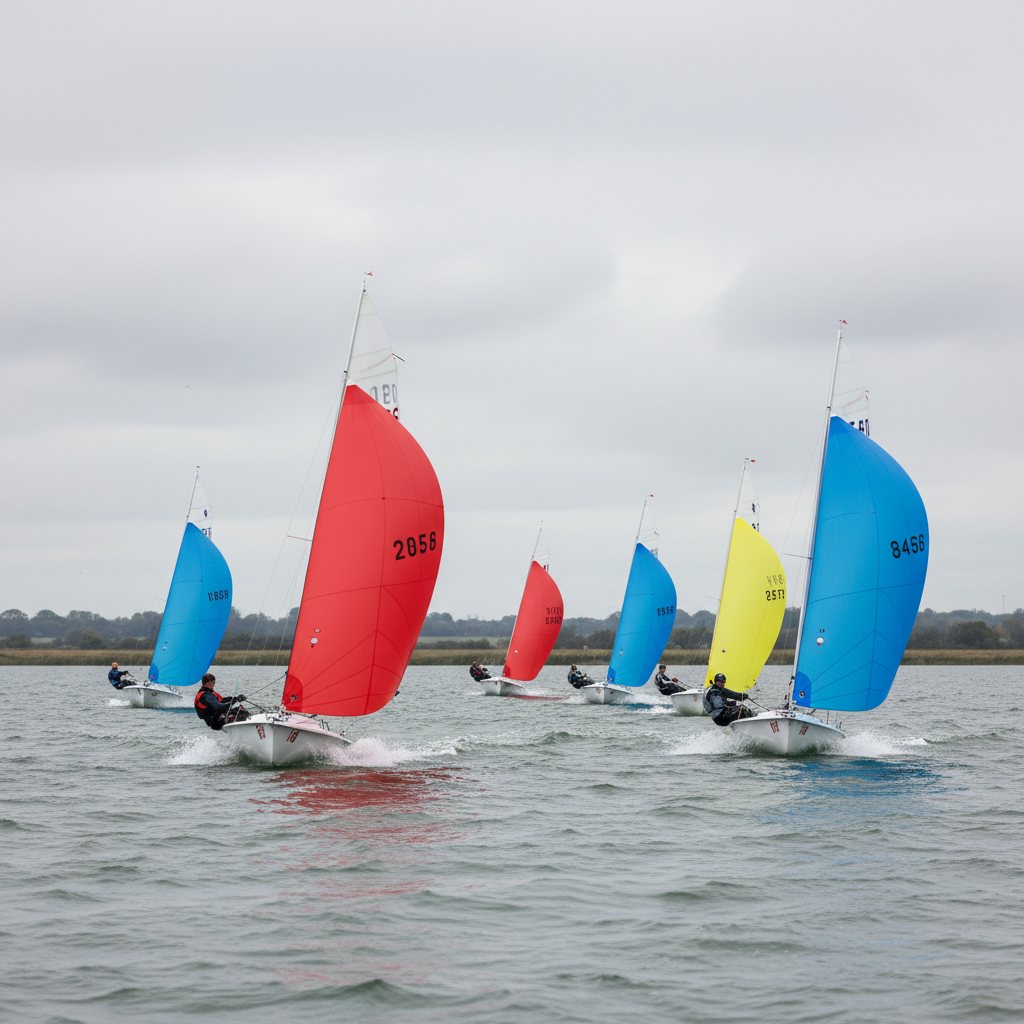
Draycote Water, a familiar and often challenging inland battleground, recently played host to the annual Fireball Spring Championship. While the racing, as always, promised tight tactical duels and the exhilarating prospect of a well-sailed Fireball planing across the reservoir, the numbers told a slightly different story this year. Twenty-three boats graced the starting line, a respectable turnout by any measure, but a noticeable dip from previous editions.
The whispers around the boat park, as ubiquitous as the scent of damp neoprene, quickly coalesced around two primary factors. Firstly, the relentless march of inflation, particularly the eye-watering price of diesel nudging £2 a litre, is undoubtedly making competitive dinghy sailing a more expensive proposition. For many, the cost of towing a boat across the country for a weekend regatta is no longer a trivial consideration. This isn't just a Fireball-specific issue; it's a macroeconomic headwind facing all amateur classes.
Secondly, the Fireball class, a vibrant and well-supported circuit, appears to be a victim of its own success. A busy calendar, while offering ample opportunity for racing, can also lead to difficult choices for sailors balancing family, work, and the sheer logistics of attending every event. For a class that prides itself on accessibility and keen competition, these are not insignificant challenges.
While the on-water action at Draycote undoubtedly delivered the usual Fireball thrills – the precision of a well-executed gybe, the subtle shifts in wind strategy dictated by the inland topography – the reduced fleet serves as a timely reminder. Even in the seemingly insulated world of competitive sailing, external forces, from global economics to scheduling conflicts, can shape the very fabric of our sport. It’s a delicate balance, ensuring that the passion for racing remains accessible and sustainable for the next generation of Fireball enthusiasts.