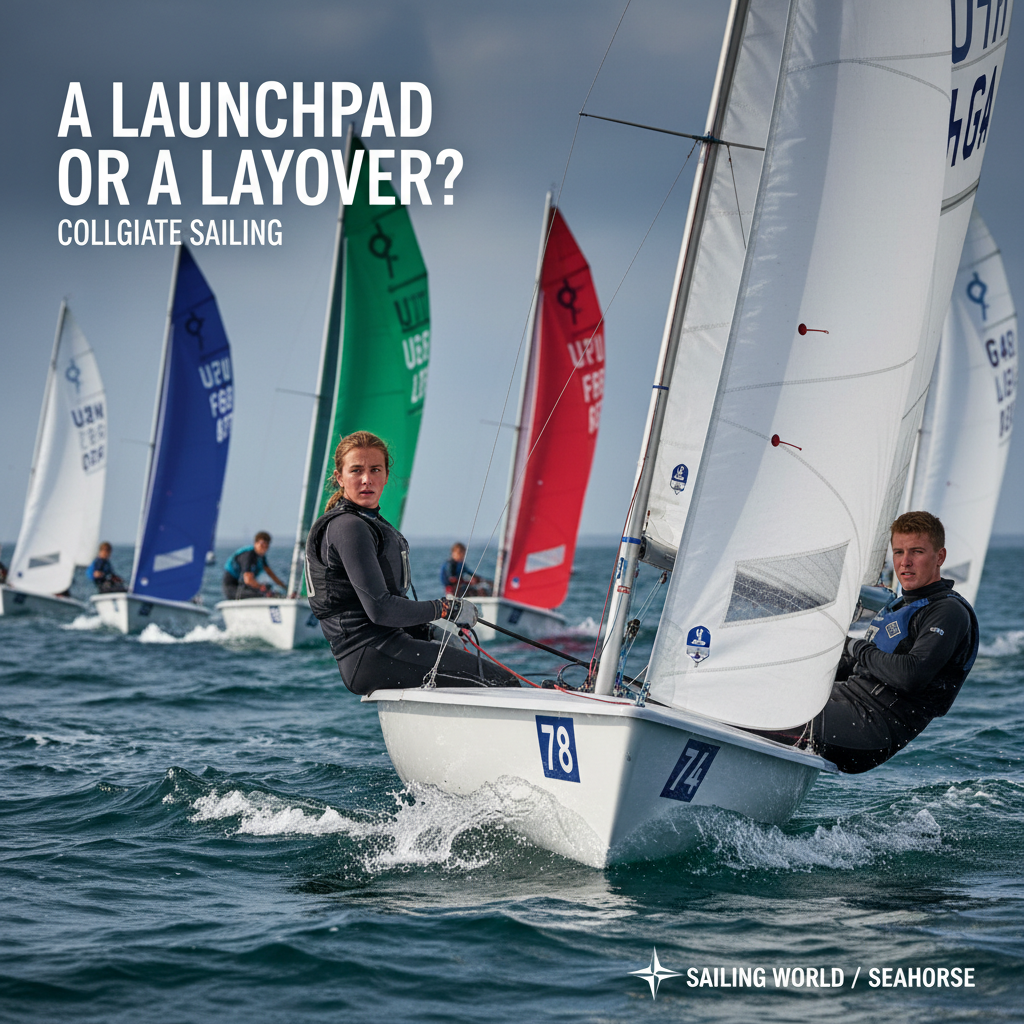
The collegiate sailing circuit, once a revered proving ground, is now a complex strategic decision for high-performance youth sailors and their ambitious parents. The landscape of professional sailing, from the high-octane SailGP circuit to the relentless grind of The Ocean Race, demands an almost singular focus from an early age. The question isn't just about balancing academics with athletics; it's about optimizing a trajectory towards the sport's highest echelons.
For a Peter Burling or a Tom Slingsby, who cut their teeth in Olympic classes and quickly transitioned to the grand prix circuit, a four-year collegiate stint might indeed be viewed as a costly delay. The foiling revolution, the intricate design work with Southern Spars, the bespoke sail programs from North Sails – these aren't learned in a lecture hall. They're mastered on the water, in the design sheds, and in the high-pressure environment of professional campaigns like Emirates Team New Zealand or INEOS Britannia.
However, for the vast majority, college sailing offers invaluable experience. The team racing format, the intense short-course tactical battles, the exposure to diverse boat types – these hone skills that are directly transferable. It’s a chance to develop wind strategy and tidal gate understanding in a competitive, yet less financially burdensome, environment. The network built within college sailing can also be a crucial stepping stone, opening doors to opportunities on larger programs or even connecting future America's Cup hopefuls.
The real challenge lies in discerning the true objective. Is it to secure a degree as a fallback, or is it to leverage collegiate sailing as a springboard to professional aspirations? The answer dictates whether those four years are a judicious investment or a potentially misdirected tack in a career that demands unwavering commitment from the outset.