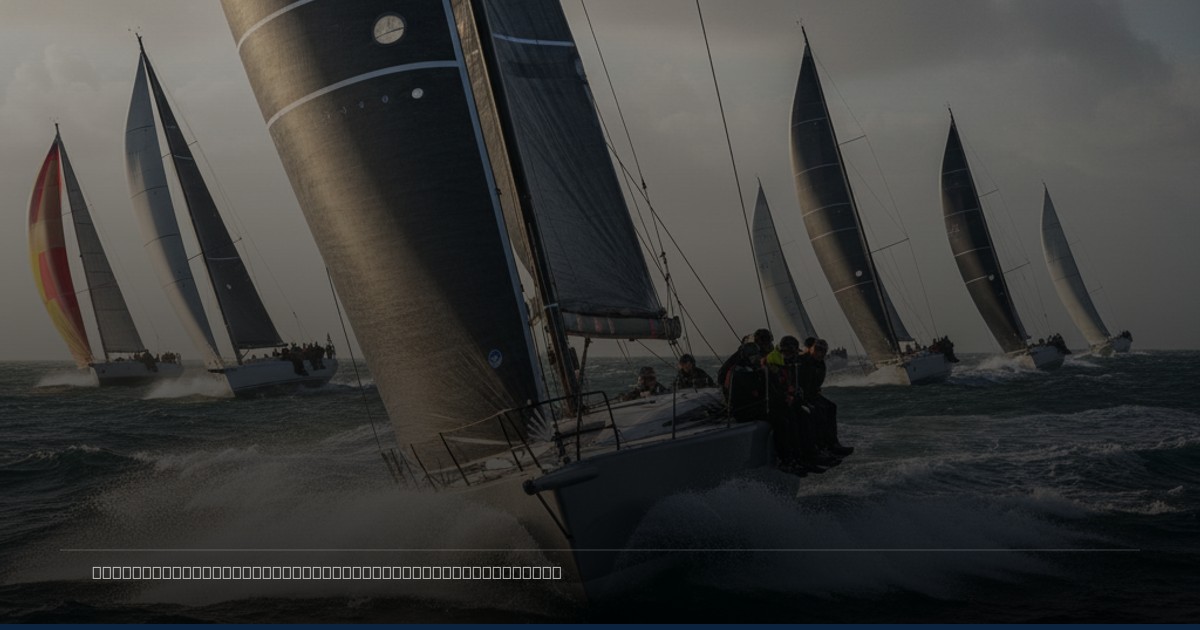
In the adrenaline-fueled world of competitive sailing, where multi-million dollar campaigns like Emirates Team New Zealand or INEOS Britannia push the boundaries of hydrodynamics and wing-sail technology, it's easy to forget the fundamental, often life-saving, work that underpins all maritime activity. The U.S. Coast Guard, an organization more commonly associated with domestic security and enforcement, recently demonstrated its global reach and unwavering commitment to mariners, regardless of their vessel's pedigree or their proximity to a grand prix circuit.
The incident, unfolding in the vast, unforgiving waters off Micronesia, saw a family adrift in a 23-foot single-outboard skiff after an engine failure. Far from the meticulously planned wind strategies and tidal gates that define a modern America's Cup race, this was a raw, existential struggle against the elements. It was the 418-foot Legend-class cutter Midgett that answered the call, a testament to the Coast Guard's extensive operational capabilities and its vital role as a global maritime first responder.
This rescue serves as a potent reminder that while we laud the engineering prowess of Southern Spars rigs and the tactical brilliance of a Peter Burling or a Ben Ainslie, the ocean remains an unpredictable and often perilous domain. Whether it's a multi-million dollar foiling catamaran or a humble skiff, the principles of seamanship and the availability of robust search and rescue infrastructure are paramount. This isn't just about saving lives; it’s about enabling the very freedom that allows sailing, in all its forms, to thrive. The Coast Guard's work, often unseen by the competitive sailing world, is a critical, irreplaceable component of the global maritime ecosystem.