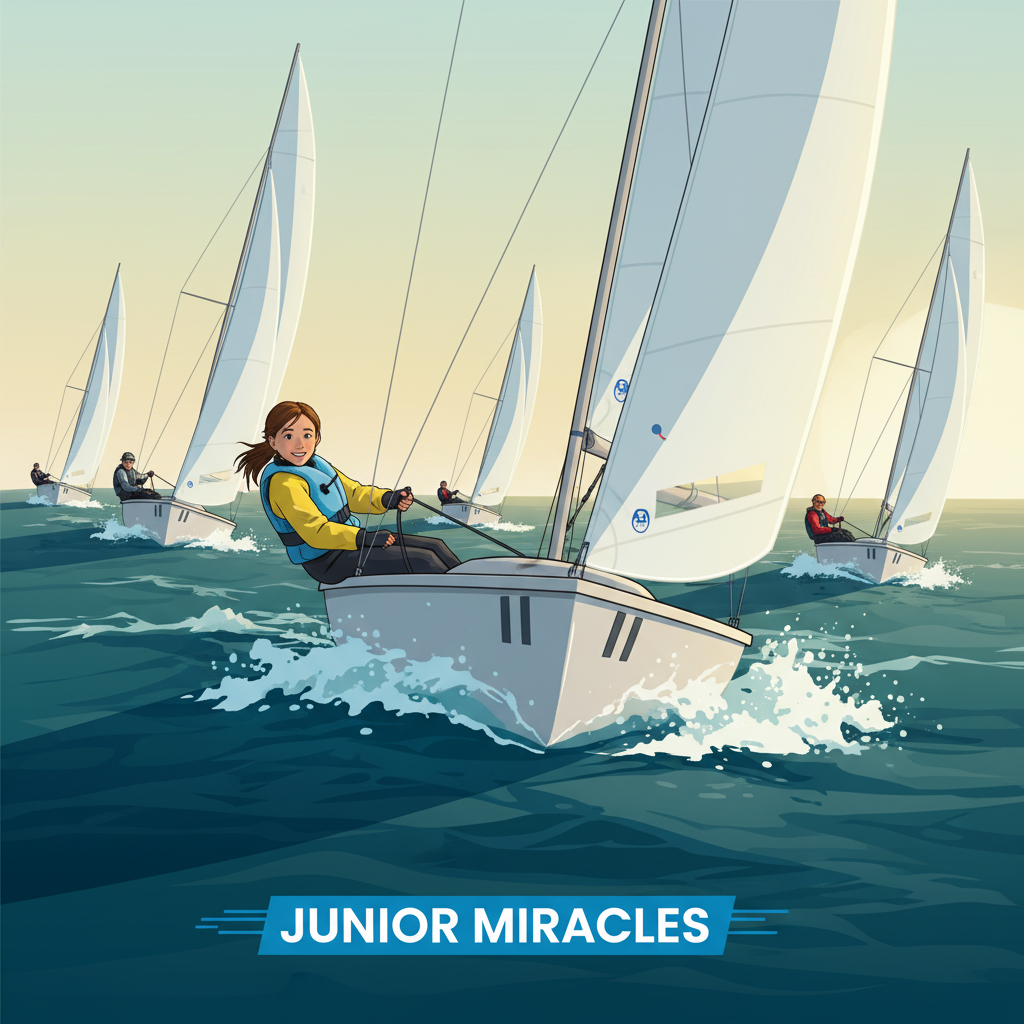
The placid waters of Delph recently played host to a refreshing twist on the traditional Miracle dinghy circuit, as the Miracle Junior National Championships sailed in alongside the established Miracle Northerns. While the familiar two-races-Saturday, three-races-Sunday format held true for the senior fleet, it was the integration of the junior nationals that truly caught the eye of this seasoned observer.
For too long, the pipeline for competitive sailing has been a topic of hushed concern in yacht club bars, particularly for classes that aren't the latest foiling marvel. The Miracle class, with its enduring appeal and robust community, has now taken a proactive step. This innovative co-location of events isn't just a scheduling convenience; it's a strategic investment in the future of the class, and indeed, in the sport itself.
Imagine the impression on a young sailor, fresh from their own national championship, to witness the tactical nuances and boat handling precision of the senior fleet up close. Conversely, the senior sailors, many of whom have honed their skills over decades, undoubtedly felt a renewed sense of purpose, seeing the enthusiasm and raw talent of the juniors. This cross-pollination of experience and youthful vigor is precisely what keeps classes vibrant and relevant.
While the full results and tactical breakdowns of both events will undoubtedly be dissected in detail, the real victory at Delph was the foresight to bridge the generational gap. It's a lesson many other classes, from the Olympic Finn to the Grand Prix TP52s, could well heed. Nurturing the next generation isn't just good for the Miracle class; it's essential for the health of competitive sailing as a whole.